
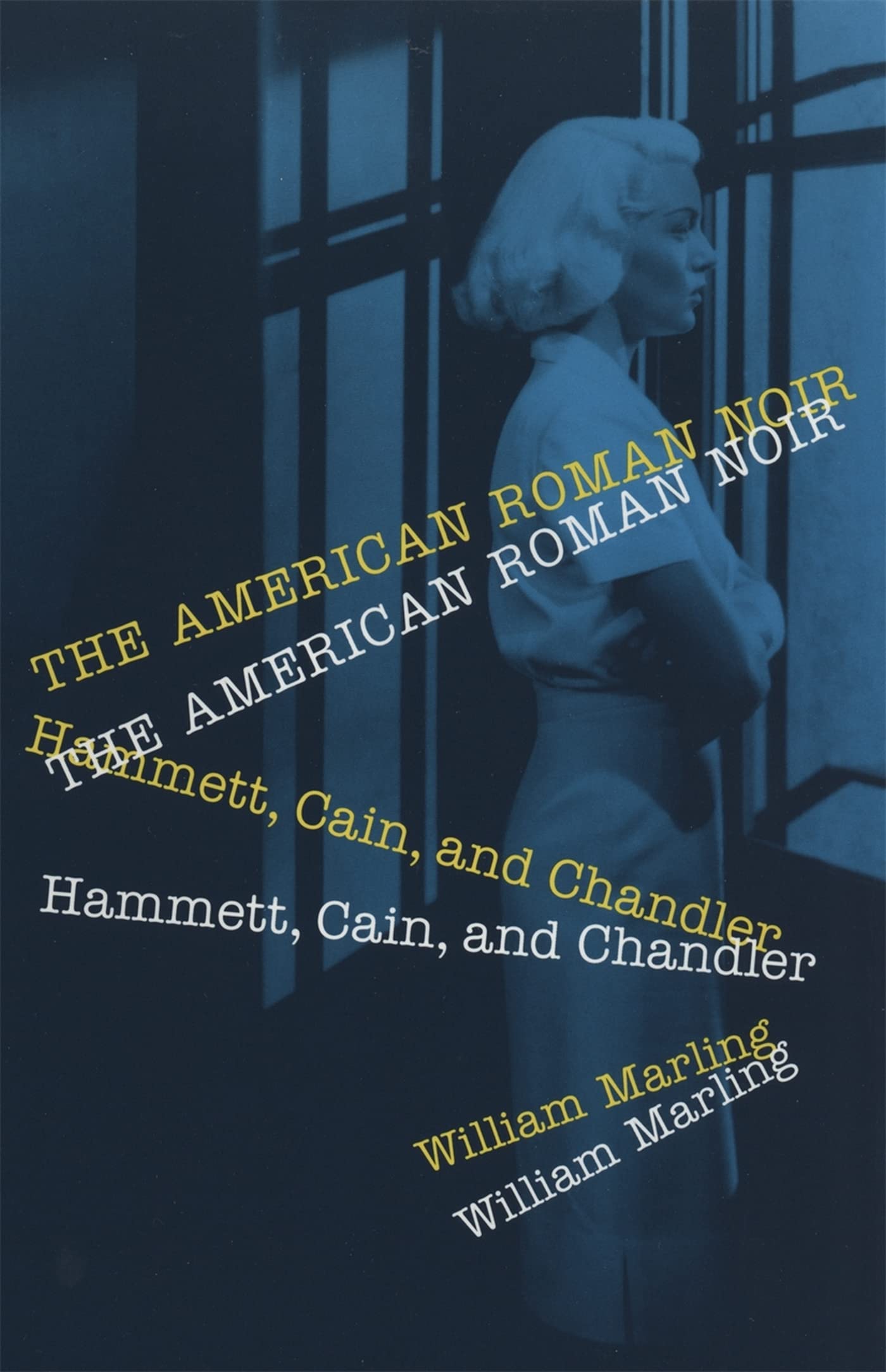
Title
The American Roman Noir: Hammett, Cain, And Chandler,Used
Sold by Ergodebooks, an authorized reseller.
Returns accepted within 30 days | support@ergodebooks.com
Shipping Information
- Free Standard Shipping — United States only
- Processing Time: 3–5 business days
- Estimated Delivery: 6–10 business days after dispatch
- Double-boxed, fully insured & discreetly packaged
- Tracking number sent via email once dispatched
Returns & Refund
Returns accepted within 30 days of delivery.
Damaged or Defective Item
Free return shipping + replacement or full refund
Wrong Item Received
Free return shipping + replacement or full refund
Change of Mind
Return shipping at customer's expense · 25% restocking fee applies
Payment Option

In The American Roman Noir, William Marling reads classic hardboiled fiction and film in the contexts of narrative theories and American social and cultural history. His search for the origins of the dark narratives that emerged during the 1920s and 1930s leads to a sweeping critique of JazzAge and Depressionera culture. Integrating economic history, biography, consumer product design, narrative analysis, and film scholarship, Marling makes new connections between events of the 1920s and 1930s and the modes, styles, and genres of their representation.At the center of Marling's approach is the concept of 'prodigality': how narrative represents having, and having had, too much. Never before in the country, he argues, did wealth impinge on the national conscience as in the 1920s, and never was such conscience so sharply rebuked as in the 1930s. What, asks Marling, were the paradigms that explained accumulation and windfall, waste and failure? Marling first establishes a theoretical and historical context for the notion of prodigality. Among the topics he discusses are such watershed events as the trial of Sacco and Vanzetti and the premiere of the first sound movie, The Jazz Singer; technology's alteration of Americans' perceptive and figurative habits; and the shift from synecdochical to metonymical values entailed by a consumer society.Marling then considers six noir classics, relating them to their authors' own lives and to the milieu of prodigality that produced them and which they sought to explain: Dashiell Hammett's Red Harvest and The Maltese Falcon, James M. Cain's The Postman Always Rings Twice and Double Indemnity, and Raymond Chandler's The Big Sleep and Farewell My Lovely. Reading these narratives first as novels, then as films, Marling shows how they employed the prodigality fabula's variations and ancillary value systems to help Americans adaptfor better or worseto a society driven by economic and technological forces beyond their control.
⚠️ WARNING (California Proposition 65):
This product may contain chemicals known to the State of California to cause cancer, birth defects, or other reproductive harm.
For more information, please visit www.P65Warnings.ca.gov.