If you have any questions, you are always welcome to contact us. We'll get back to you as soon as possible, withing 24 hours on weekdays.
Customer service
All questions about your order, return and delivery must be sent to our customer service team by e-mail at yourstore@yourdomain.com
Sale & Press
If you are interested in selling our products, need more information about our brand or wish to make a collaboration, please contact us at press@yourdomain.com
Help
If you have any questions, you are always welcome to contact us. We'll get back to you as soon as possible, withing 24 hours on weekdays.
Customer service
All questions about your order, return and delivery must be sent to our customer service team by e-mail at yourstore@yourdomain.com
Sale & Press
If you are interested in selling our products, need more information about our brand or wish to make a collaboration, please contact us at press@yourdomain.com
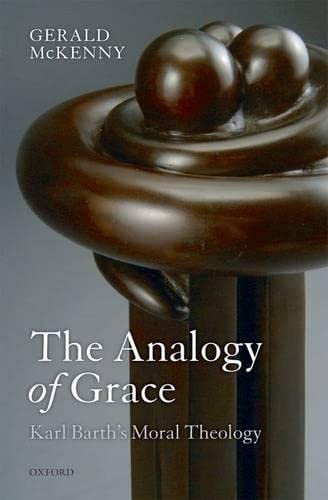
Once considered inimical to ethics, Karl Barth's theology is now rightly recognized for the central role ethics plays in it. But can Barth be safely placed in the mainstream tradition of Christian moral theology or does he offer a challenge to the latter? Gerald McKenny argues that the claim that God not only establishes the good from eternity but also brings it about in time is of fundamental importance to Barth's mature ethics. The good confronts us from the site of its fulfilment in Jesus Christ, who has accomplished it in our place. The result is a vision of the moral life as a human analogy to God's grace, a vision which contrasts with the bourgeois vision of the moral life as an expression of human capability.Barth's moral theology is presented here as the attempt to reorder ethical thought and practice in light of this fundamental claim. This lucid and wellargued study is the most comprehensive treatment of Barth's ethics to date, offering a thorough account of the development of Barth's ethical thought and a wideranging analysis of its chief concepts and arguments. McKenny explains why certain widespread assumptions about Barth's moral theology are mistaken and explores the rich, complex, and often surprising ways in which Barth's position engages the traditions of Christian ethics and modern continental moral thought. Above all, McKenny shows why Barth's moral theology deserves our attention in spite of, or rather because of, its uneasy fit in the mainstream tradition of Christian moral theology.
⚠️ WARNING (California Proposition 65):
This product may contain chemicals known to the State of California to cause cancer,
birth defects, or other reproductive harm.
For MAP (Minimum Advertised Price) violations and Intellectual Property (IP) or Trademark concerns, please contact:
support@ergodebooks.com
⚠️ California Proposition 65 Warning: Some products sold on this website may expose you to chemicals known to the State of California to cause cancer, birth defects, or other reproductive harm. For more information, visit www.P65Warnings.ca.gov.