
Title
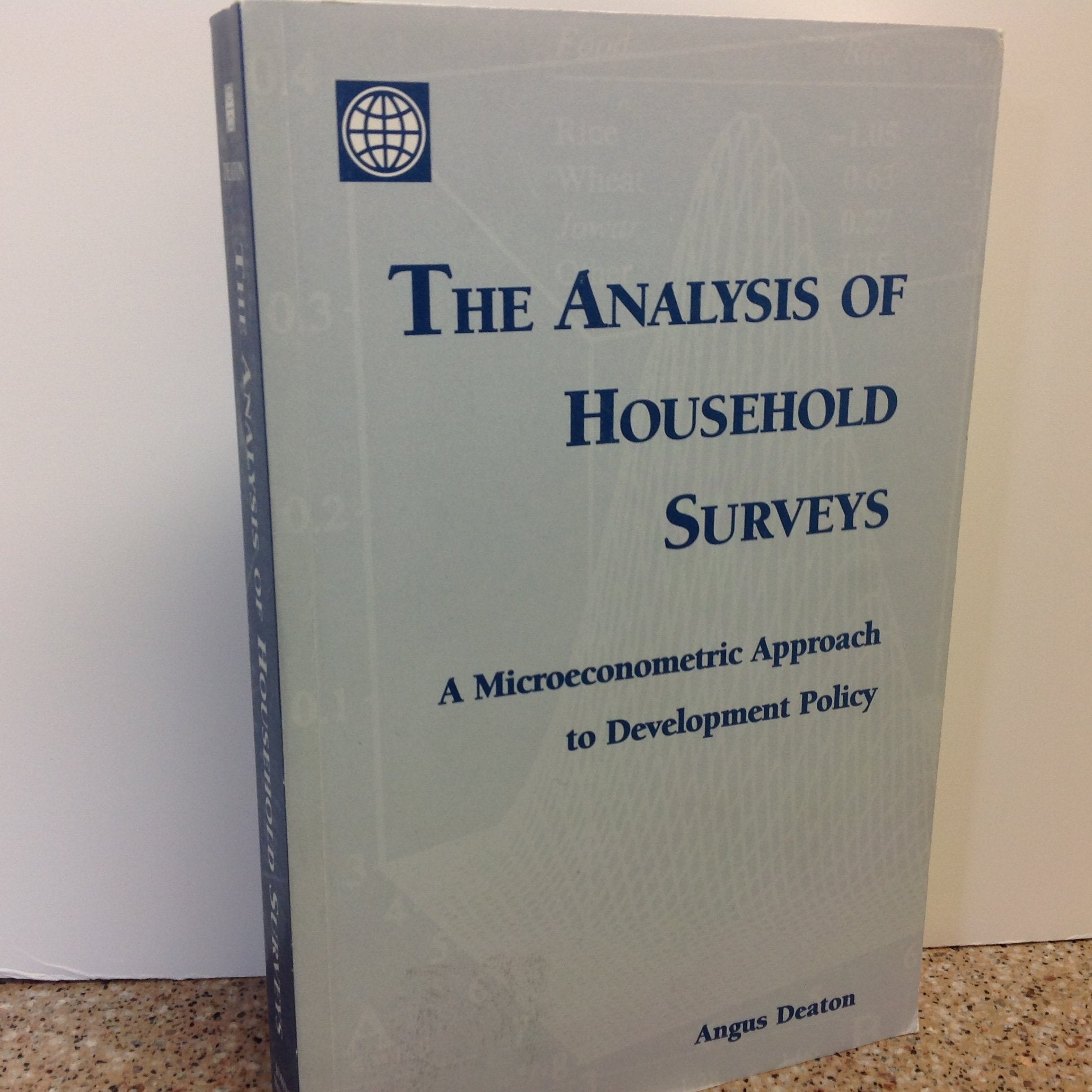
The Analysis of Household Surveys: A Microeconometric Approach to Development Policy (World Bank),Used
Sold by Ergodebooks, an authorized reseller.
Returns accepted within 30 days | support@ergodebooks.com
Shipping Information
- Free Standard Shipping — United States only
- Processing Time: 3–5 business days
- Estimated Delivery: 6–10 business days after dispatch
- Double-boxed, fully insured & discreetly packaged
- Tracking number sent via email once dispatched
Returns & Refund
Returns accepted within 30 days of delivery.
Damaged or Defective Item
Free return shipping + replacement or full refund
Wrong Item Received
Free return shipping + replacement or full refund
Change of Mind
Return shipping at customer's expense · 25% restocking fee applies
Payment Option

Over the past 15 years, the availability of cheap and convenient microcomputers has changed the collection methods and analysis of household survey data in developing countries, making the data available within months, rather than years. Simultaneously, analysts have become more interested in exploring ways in which such data may be used to inform and improve the steps involved in policymaking. This book reviews the analysis of household survey data, including the construction of household surveys, the econometric tools that are the most useful for such analysis, and a range of problems in development policy for which the econometric analysis of household surveys is useful and informative. The author's approach remains close to the data, relying on transparent econometric and graphical techniques to present the data so that policy and academic debates are clearly informed.
⚠️ WARNING (California Proposition 65):
This product may contain chemicals known to the State of California to cause cancer, birth defects, or other reproductive harm.
For more information, please visit www.P65Warnings.ca.gov.
- Q: What is the main focus of 'The Analysis of Household Surveys' by John Hopkins University Press? A: The book focuses on the analysis of household survey data, exploring how it can inform development policy and improve policymaking processes.
- Q: How many pages does this book have? A: The book contains 480 pages.
- Q: What type of binding does this book have? A: This book is available in paperback binding.
- Q: Is this book suitable for beginners in econometrics? A: Yes, the author's approach is transparent and relies on clear econometric and graphical techniques, making it accessible for beginners.
- Q: What year was 'The Analysis of Household Surveys' published? A: The book was published on August 1, 1997.
- Q: Who is the author of this book? A: The author of the book is John Hopkins University Press.
- Q: What condition is this book in? A: The book is listed as 'New' condition.
- Q: Does the book include any illustrations? A: Yes, this edition of the book is illustrated.
- Q: What topics are covered in this book? A: The book covers the construction of household surveys, useful econometric tools, and various development policy problems informed by household survey analysis.
- Q: Can this book help in understanding data collection methods in developing countries? A: Yes, it reviews the evolution of data collection methods and their impact on the analysis of household survey data in developing countries.