
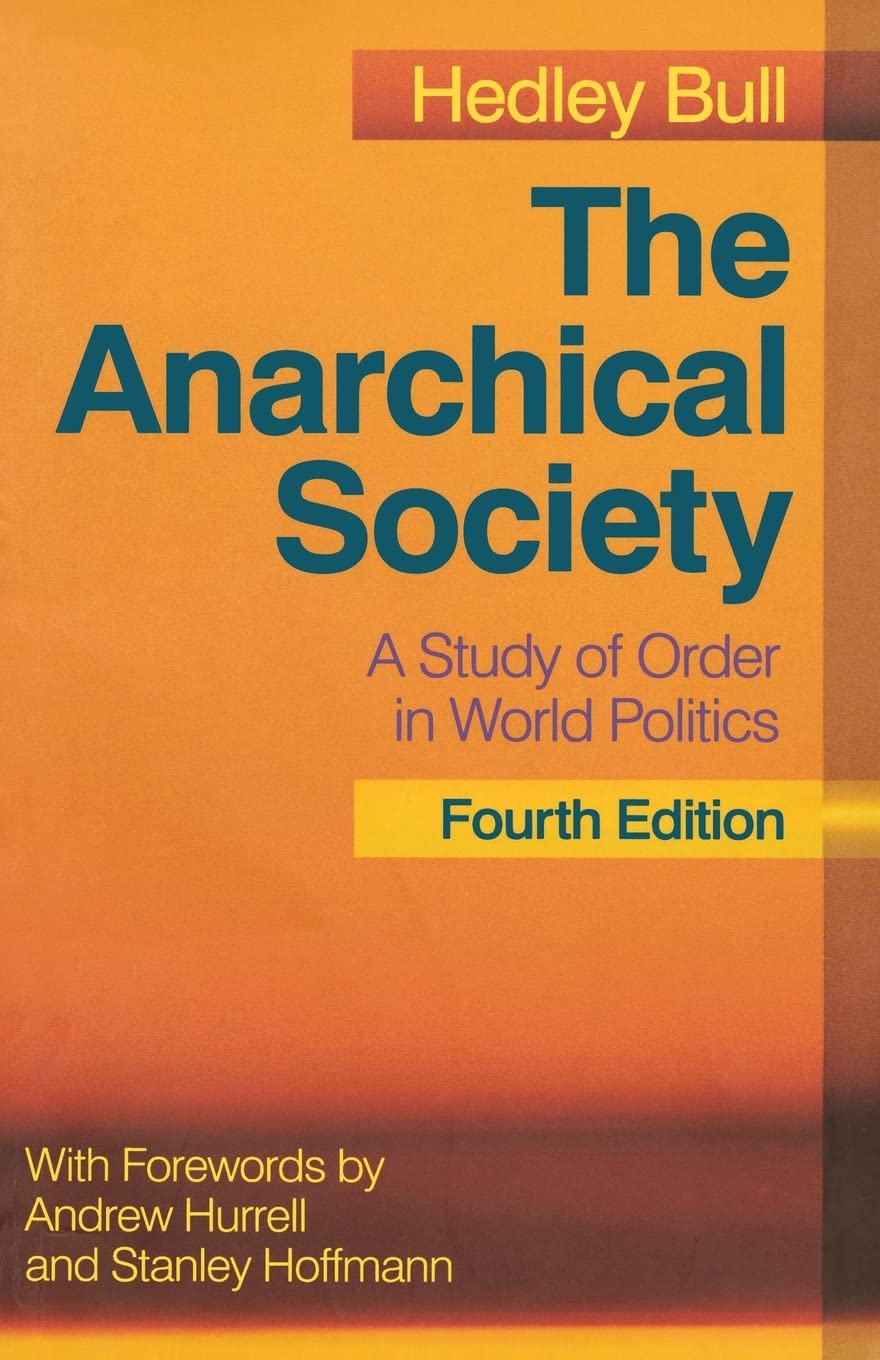
Title
The Anarchical Society: A Study Of Order In World Politics
Sold by Ergodebooks, an authorized reseller.
Returns accepted within 30 days | support@ergodebooks.com
Shipping Information
- Free Standard Shipping — United States only
- Processing Time: 3–5 business days
- Estimated Delivery: 6–10 business days after dispatch
- Double-boxed, fully insured & discreetly packaged
- Tracking number sent via email once dispatched
Returns & Refund
Returns accepted within 30 days of delivery.
Damaged or Defective Item
Free return shipping + replacement or full refund
Wrong Item Received
Free return shipping + replacement or full refund
Change of Mind
Return shipping at customer's expense · 25% restocking fee applies
Payment Option

In This Fundamental Text, Hedley Bull Explores Three Key Questions: What Is The Nature Of Order In World Politics? How Is It Maintained Within The Contemporary States System? And Do Desirable And Feasible Alternatives To The States System Exist? Contrary To Common Claims, Bull Asserts That The Sovereign States System Is Not In Decline. Rather, It Persists And Thrives, As It Is Essential To Maintaining An International World Order.More Than Three Decades After Its Publication, Bull'S Classic Work Continues To Define And Direct Research In International Relations. In This Thirtyfifth Anniversary Edition, The Text Has Been Updated And Includes A New Interpretive Foreword By The World'S Leading Expert On Bull And His Contributions To The Theory, Structures, And Practices Of World Politics. The Anarchical Society Identifies And Confronts The Unwritten Rules Supporting The International Order Across History, Despite Sweeping Changes In Laws And Institutions. It Considers And Rejects The Idea That The States System Is Giving Way To An Alternative World Government Or Some Method Of Neomedieval Rule Or That The States System Has Ceased To Be Viable Or Compatible With Objectives Such As Peace, Economic Justice, And Ecological Control. Bull Also Reviews And Comments Upon A Variety Of Proposals For States System Reform.
⚠️ WARNING (California Proposition 65):
This product may contain chemicals known to the State of California to cause cancer, birth defects, or other reproductive harm.
For more information, please visit www.P65Warnings.ca.gov.
- Q: What is the page count of 'The Anarchical Society'? A: This book has three hundred sixty-eight pages, providing in-depth analysis and discussion on world politics.
- Q: What type of binding does this book have? A: It is a paperback edition, making it lightweight and easy to handle.
- Q: What are the dimensions of the book? A: The book measures five point five one inches in length, one inch in width, and eight point five inches in height.
- Q: Who is the author of 'The Anarchical Society'? A: The author is Hedley Bull, a prominent figure in international relations theory.
- Q: What is the main focus of the book? A: The book explores the nature of order in world politics and challenges the notion of the decline of the sovereign states system.
- Q: How should I read this book for better understanding? A: It is ideal for readers interested in international relations, suggesting a thoughtful reading approach to grasp its complex themes.
- Q: Is this book suitable for beginners in political science? A: Yes, it provides foundational insights, though some prior knowledge of international relations may enhance comprehension.
- Q: Can I use this book for academic research? A: Absolutely, it is a classic text widely referenced in scholarly discussions about world politics.
- Q: How do I care for this paperback book? A: Keep it in a cool, dry place and avoid exposing it to direct sunlight to preserve its condition.
- Q: Is there a specific way to store the book? A: Store it upright on a shelf to prevent warping and ensure it remains in good condition.
- Q: What should I do if the book arrives damaged? A: Contact the seller for a return or exchange, as they typically provide support for damaged items.
- Q: Are there any specific shipping options for this book? A: Yes, discrete shipping options are often available, ensuring privacy during delivery.
- Q: What if I have issues with the book’s content? A: You can refer to supplementary materials or academic discussions on Bull’s theories for clarification.
- Q: How does this book compare to other texts in international relations? A: It is considered foundational, focusing on order and the states system, unlike many texts that emphasize conflict.
- Q: Is 'The Anarchical Society' good for advanced studies? A: Yes, it remains influential in advanced studies, challenging readers to think critically about international order and governance.