If you have any questions, you are always welcome to contact us. We'll get back to you as soon as possible, withing 24 hours on weekdays.
Customer service
All questions about your order, return and delivery must be sent to our customer service team by e-mail at yourstore@yourdomain.com
Sale & Press
If you are interested in selling our products, need more information about our brand or wish to make a collaboration, please contact us at press@yourdomain.com
Help
If you have any questions, you are always welcome to contact us. We'll get back to you as soon as possible, withing 24 hours on weekdays.
Customer service
All questions about your order, return and delivery must be sent to our customer service team by e-mail at yourstore@yourdomain.com
Sale & Press
If you are interested in selling our products, need more information about our brand or wish to make a collaboration, please contact us at press@yourdomain.com
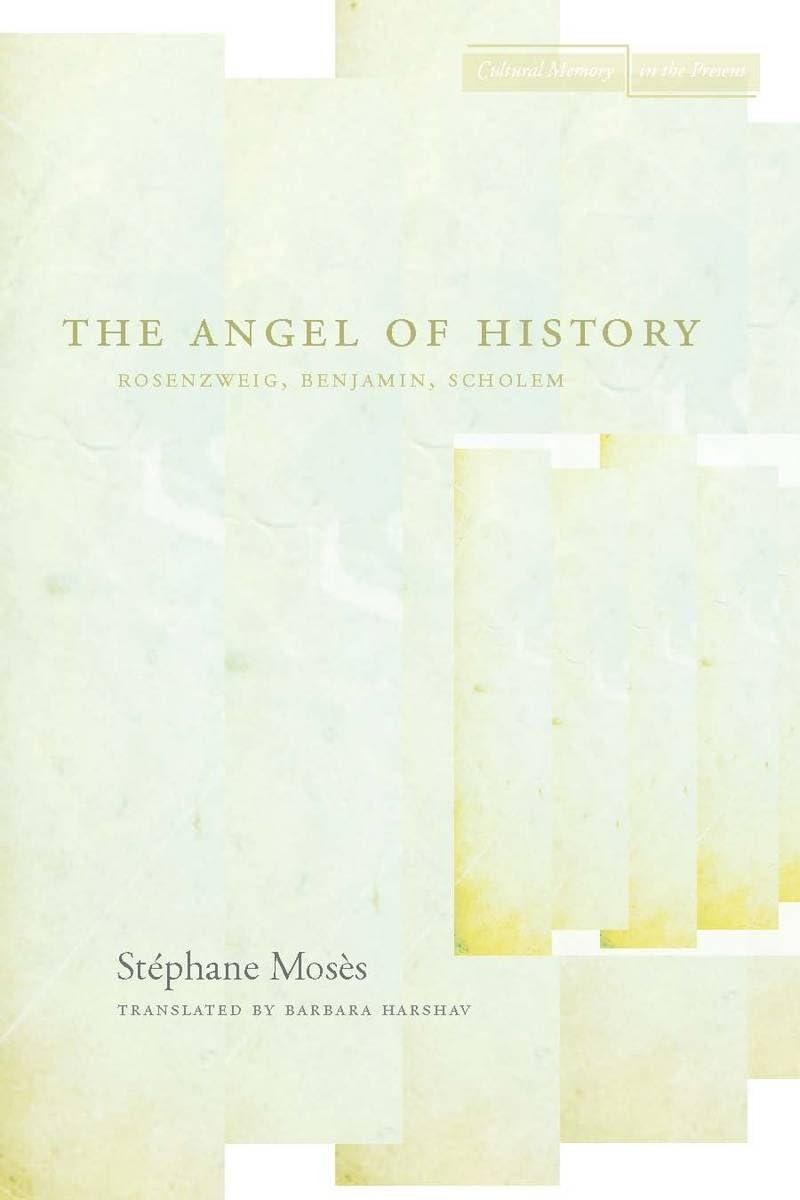
In The Angel of History, Moss looks at three Jewish philosophersFranz Rosenzweig, Walter Benjamin, and Gershom Scholemwho formulated a new vision of history in 1920s Germany by moving away from the spirit of assimilation and the Enlightenment belief in humanity's inevitable progress. Instead, they imagined history as discontinuous, made of moments that form no totality but whose ruptures are both more significantand more promisingthan any apparent homogeneity.Their direct experience of the twentieth century's great upheavals led these three thinkers to abandon the old models of causality that had previously accounted for human experience, and their cultural and religious background allowed them to turn to the Jewish experience of history. Jewish messianism always had to confront the experience of catastrophe, deception, and failure. Moss shows how this tradition informed a genuine Jewish conception of history in which redemption mayor may notoccur at any moment, giving a new chance for hope by locating utopia in the heart of the present.
⚠️ WARNING (California Proposition 65):
This product may contain chemicals known to the State of California to cause cancer,
birth defects, or other reproductive harm.
For MAP (Minimum Advertised Price) violations and Intellectual Property (IP) or Trademark concerns, please contact:
support@ergodebooks.com
⚠️ California Proposition 65 Warning: Some products sold on this website may expose you to chemicals known to the State of California to cause cancer, birth defects, or other reproductive harm. For more information, visit www.P65Warnings.ca.gov.