
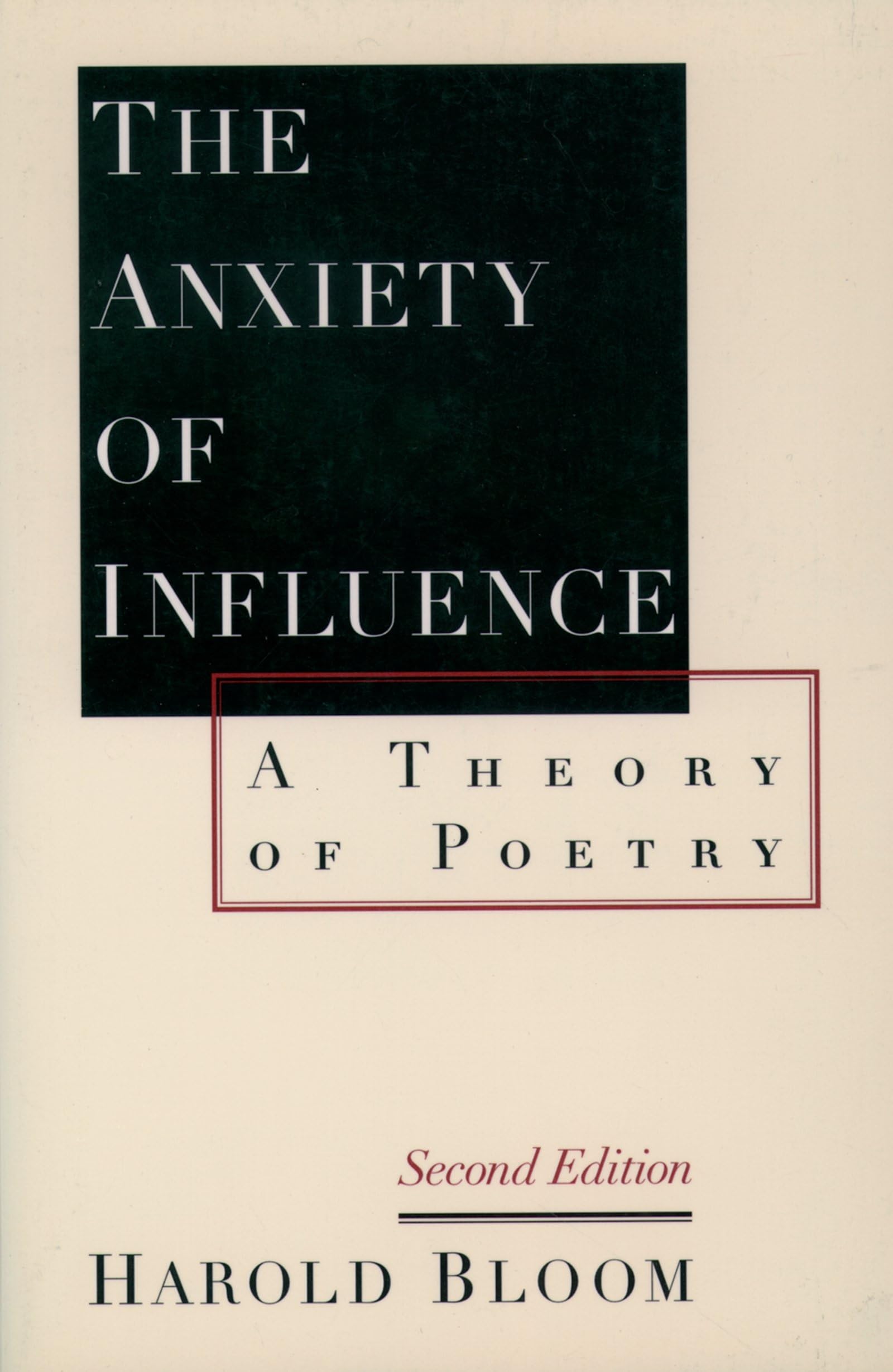
Title
The Anxiety of Influence: A Theory of Poetry,New
Sold by Ergodebooks, an authorized reseller.
Returns accepted within 30 days | support@ergodebooks.com
Shipping Information
- Free Standard Shipping — United States only
- Processing Time: 3–5 business days
- Estimated Delivery: 6–10 business days after dispatch
- Double-boxed, fully insured & discreetly packaged
- Tracking number sent via email once dispatched
Returns & Refund
Returns accepted within 30 days of delivery.
Damaged or Defective Item
Free return shipping + replacement or full refund
Wrong Item Received
Free return shipping + replacement or full refund
Change of Mind
Return shipping at customer's expense · 25% restocking fee applies
Payment Option

Harold Bloom's The Anxiety of Influence has cast its own long shadow of influence since it was first published in 1973. Through an insightful study of Romantic poets, Bloom puts forth his central vision of the relations between tradition and the individual artist. Although Bloom was never the leader of any critical 'camp,' his argument that all literary texts are a response to those that precede them had an enormous impact on the practice of deconstruction and poststructuralist literary theory in this country. The book remains a central work of criticism for all students of literature and has sold over 17,000 copies in paperback since 1984. Written in a moving personal style, anchored by concrete examples, and memorably quotable, Bloom's book maintains that the anxiety of influence cannot be evadedneither by poets nor by responsible readers and critics.This second edition contains a new Introduction, which explains the genesis of Bloom's thinking and the subsequent influence of the book on literary criticism of the past twenty years.criticism of the past twenty years. Here, Bloom asserts that the anxiety of influence comes out of a complex act of strong misreading, a creative interpretation he calls 'poetic misprision.' The influenceanxiety does not so much concern the forerunner but rather is an anxiety achieved in and by the story, novel, play, poem, or essay. In other words, without Keats's reading of Shakespeare, Milton, and Wordsworth, we could not have Keats's odes and sonnets and his two Hyperions.Given the enormous attention generated by Bloom's controversial The Western Canon, this new edition is certain to find a readymade audience among the new generation of scholars, students, and layreaders interested in the Bloom cannon.
⚠️ WARNING (California Proposition 65):
This product may contain chemicals known to the State of California to cause cancer, birth defects, or other reproductive harm.
For more information, please visit www.P65Warnings.ca.gov.