
Title
The Arabic Hermes: From Pagan Sage to Prophet of Science (Oxford Studies in Late Antiquity),New
Sold by Ergodebooks, an authorized reseller.
Returns accepted within 30 days | support@ergodebooks.com
Shipping Information
- Free Standard Shipping — United States only
- Processing Time: 3–5 business days
- Estimated Delivery: 6–10 business days after dispatch
- Double-boxed, fully insured & discreetly packaged
- Tracking number sent via email once dispatched
Returns & Refund
Returns accepted within 30 days of delivery.
Damaged or Defective Item
Free return shipping + replacement or full refund
Wrong Item Received
Free return shipping + replacement or full refund
Change of Mind
Return shipping at customer's expense · 25% restocking fee applies
Payment Option

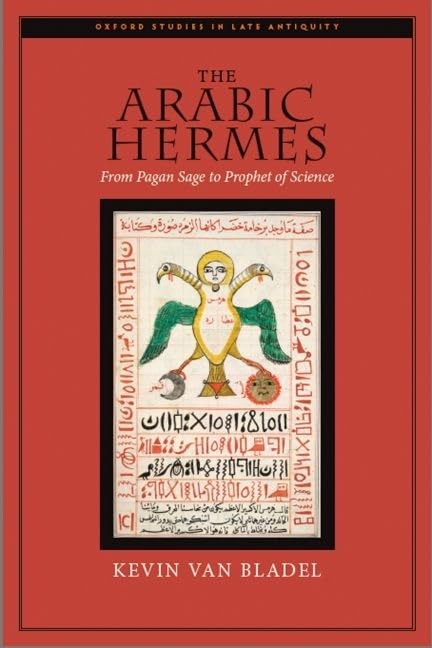
This is the first major study devoted to the early Arabic reception and adaption of the figure of Hermes Trismegistus, the legendary Egyptian sage to whom were ascribed numerous works on astrology, alchemy, talismans, medicine, and philosophy. Before the more famous Renaissance European reception of the ancient Greek Hermetica, the Arabic tradition about Hermes and the works under his name had been developing and flourishing for seven hundred years. The legendary Egyptian Hermes Trismegistus was renowned in Roman antiquity as an ancient sage whose teachings were represented in books of philosophy and occult science. The works in his name, written in Greek by Egyptians living under Roman rule, subsequently circulated in many languages and regions of the Roman and Sasanian Persian empires. After the rise of Arabic as a prestigious language of scholarship in the eighth century, accounts of Hermes identity and Hermetic texts were translated into Arabic along with the hundreds of other works translated from Greek, Middle Persian, and other literary languages of antiquity. Hermetica were in fact among the earliest translations into Arabic, appearing already in the eighth century. This book explains the origins of the Arabic myth of Hermes Trismegistus, its sources, the reasons for its peculiar character, and its varied significance for the traditions of Hermetica in Asia and northern Africa as well as Europe. It shows who premodern Arabic scholars thought Hermes was and how they came to that view.
⚠️ WARNING (California Proposition 65):
This product may contain chemicals known to the State of California to cause cancer, birth defects, or other reproductive harm.
For more information, please visit www.P65Warnings.ca.gov.