
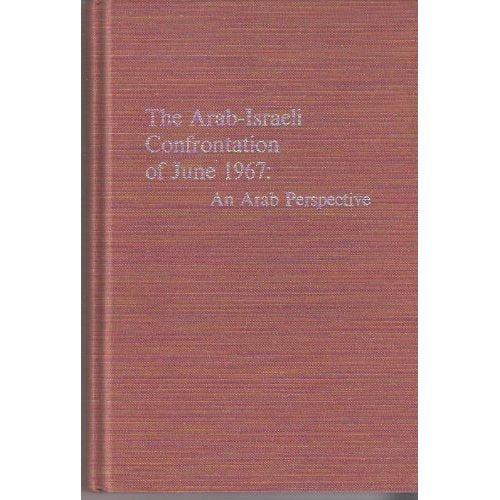
The ArabIsraeli Confrontation of June 1967: An Arab perspective,Used
$39.52
Title
The ArabIsraeli Confrontation of June 1967: An Arab perspective,Used
Free Standard Shipping Across USA
Quantity
Sold by Ergodebooks, an authorized reseller.
Returns accepted within 30 days | support@ergodebooks.com
Shipping Information
- Free Standard Shipping — United States only
- Processing Time: 3–5 business days
- Estimated Delivery: 6–10 business days after dispatch
- Double-boxed, fully insured & discreetly packaged
- Tracking number sent via email once dispatched
Returns & Refund
Returns accepted within 30 days of delivery.
Damaged or Defective Item
Free return shipping + replacement or full refund
Wrong Item Received
Free return shipping + replacement or full refund
Change of Mind
Return shipping at customer's expense · 25% restocking fee applies
All returns require a Return Authorization (RA) number before sending.
View Full Return & Refund Policy
Payment Option

Book by AbuLughod
⚠️ WARNING (California Proposition 65):
This product may contain chemicals known to the State of California to cause cancer, birth defects, or other reproductive harm.
For more information, please visit www.P65Warnings.ca.gov.
- Q: How many pages does the book have? A: The book has two hundred one pages. This makes it a substantial read, providing in-depth insights into the Arab perspective of the 1967 confrontation.
- Q: What is the binding type of this book? A: This book is a hardcover edition. Hardcover books are known for their durability and are often preferred for their longevity.
- Q: Who is the author of this book? A: The author is Abu-Lughod. He provides a unique perspective on the events surrounding the Arab-Israeli confrontation.
- Q: What category does this book belong to? A: This book is categorized under Subjects. It focuses specifically on historical and political themes relevant to the Arab-Israeli conflict.
- Q: Is this book suitable for all ages? A: Yes, this book is suitable for adults and older teens. It covers complex historical subjects that may require prior knowledge for full comprehension.
- Q: How do I read this book effectively? A: To read this book effectively, take notes and reflect on the historical context provided. Engaging with supplementary materials can also enhance your understanding.
- Q: Can I use this book for academic purposes? A: Yes, this book is suitable for academic research. It provides a detailed analysis that can support various scholarly discussions on Middle Eastern history.
- Q: Is there a specific reading level for this book? A: This book is aimed at a college-level audience. It assumes familiarity with historical and political concepts related to the Arab-Israeli conflict.
- Q: How should I store this book? A: Store this book upright on a shelf or flat to avoid warping. Keep it away from direct sunlight to preserve the cover and pages.
- Q: What is the best way to clean this book? A: To clean this book, dust it gently with a soft cloth. Avoid using liquids, as they can damage the pages and binding.
- Q: Is this book environmentally friendly? A: Yes, the book is printed on recycled paper. Northwestern University Press often focuses on sustainable publishing practices.
- Q: What if the book arrives damaged? A: If the book arrives damaged, contact the retailer for a return or exchange. Most retailers have policies in place for such situations.
- Q: Can I return this book if I don't like it? A: Yes, you can typically return this book within a specified time frame. Check the retailer's return policy for specific details.
- Q: What should I do if I have a question about the content? A: If you have questions about the content, consider joining a discussion group or online forum focused on Middle Eastern studies.
- Q: Is this book available in digital format? A: Currently, this book is available only in hardcover format. Check with the publisher for any future digital releases.
- Q: How does this book compare to other histories of the Arab-Israeli conflict? A: This book offers a unique Arab perspective, differing from many Western histories. It emphasizes narratives often overlooked in mainstream accounts.