
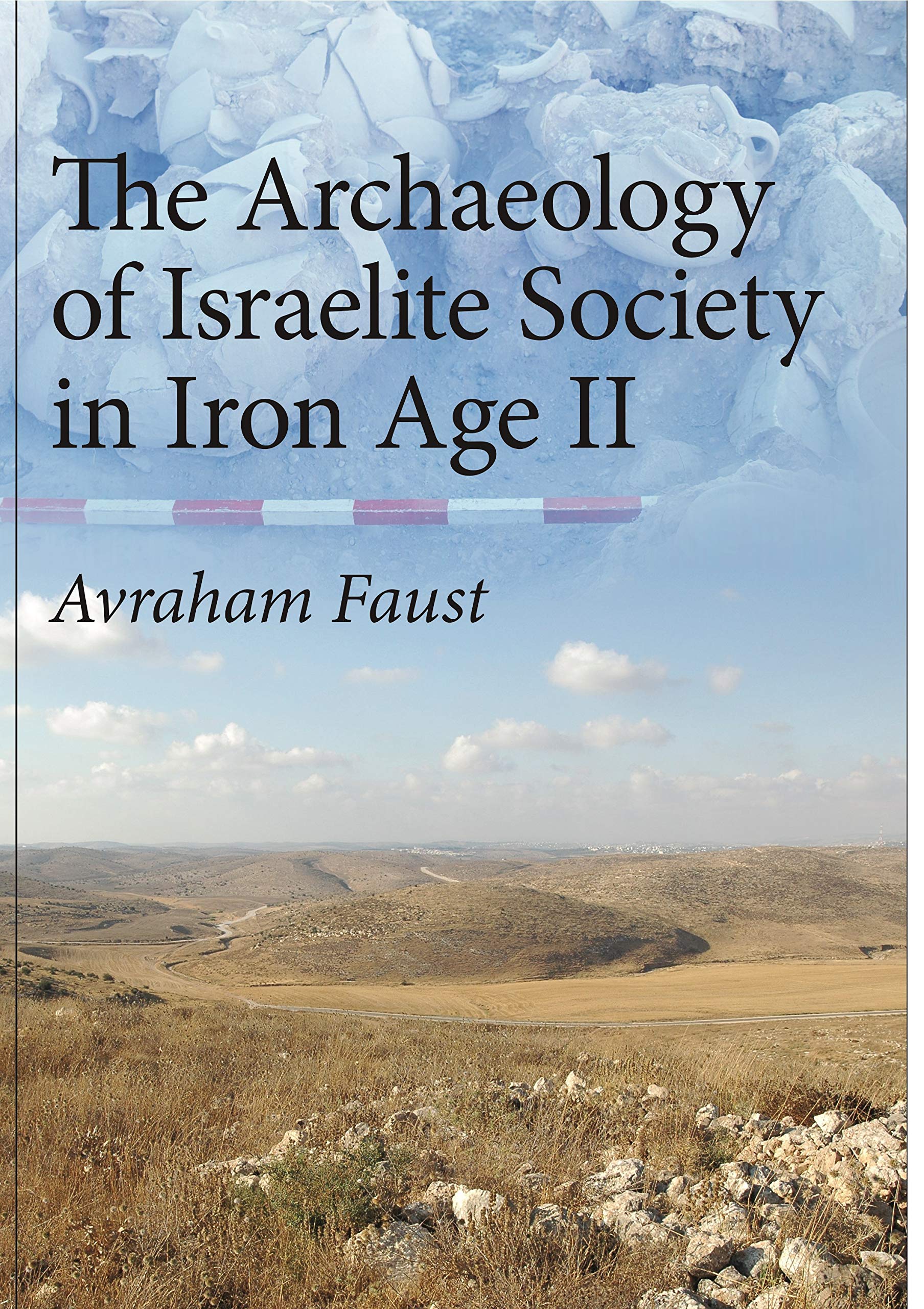
Title
The Archaeology Of Israelite Society In Iron Age Ii
Processing time: 1-3 days
US Orders Ships in: 3-5 days
International Orders Ships in: 8-12 days
Return Policy: 15-days return on defective items
Payment Option

Referring To Several Important Introductory Books Written About The Archaeology Of The Land Of Israel, William Dever Once Stated: However Adequate These May Be As Introductions To The Basic Data, None Makes Any Attempt To Organize The Data In Terms Of Social Structure. . . . This Is A Serious Deficiency In Syropalestinian And Biblical Archaeology, When One Considers That The General Field Of Archaeology Has Been Moving Toward Social Archaeology For 20 Years Or More. (Dever, Social Structure In Palestine In The Iron Age Ii Period On The Eve Of Destruction, In The Archaeology Of Society In The Holy Land [Ed. T. E. Levy, London, 1995, P. 416]).Lack Of Discussion Of Social Questions Has Characterized The Archaeology Of The Land Of Israel For Some Time, Even Though Around The World These Questions Constitute An Important Component Of Archaeological Research (See, For Instance, The Work Of Renfrew, Flannery, Gibbon, Blanton, Dark, Bahn, Hodder, Trigger, And Many Others).The Archaeology Of Israelite Society In Iron Age Ii Fills This Gap And Analyzes The Structure Of Society In The Ancient Kingdoms Of Israel And Judah From An Archaeological Viewpoint. It Also Applies Models And Theories From The Field Of Social And Cognitive Archaeology, Using The Tools Of Various Socialscience Disciplines (Anthropology, Sociology, Economics, Geography, And So On).Due To His Ability To Use What Is Probably The Largest Archaeological Data Set In The Worldhundreds Of Planned Excavations, Thousands Of Salvage Excavations, And Extensive Surveys, All From The Small Region That Was Ancient Israelavi Faust Contributes Not Only To The Study Of Ancient Israelite Society But To The Most Fundamental Questions About Ancient Societies. These Questions Include The Identification Of Socioeconomic Stratification In The Archaeological Record, The Study Of Family And Community Organization, The Significance Of Pottery, Small Finds And Architecture As Indicators Of Wealth, And More.This Groundbreaking Monograph Is One Of The First Attempts At A Largescale Study Of Israelite Society Based Primarily On The Archaeological Evidence.The Following Acknowledgments Were Inadvertently Omitted From The Front Matter Of The Volume:Amihai Mazar: Figure 31Amnon Bentor: Figures 40, 41Israel Antiquities Authority: Figures 21, 24, 25, 26, 29, 30., 32, 33, 36, And Photo 5Israel Exploration Society: Figures 11, 13, 15, 17, 18, 19, 27, 42Israel Finkelstein: Figure 28Izhak Beit Arieh: Figures 34, 35Shimon Dar: Figures 22, 23The Institute Of Archaeology, Tel Aviv University: Figures 7, 8The Institute Of Archaeology, The Hebrew University: Figures 40, 41Zeev Herzog: Figures 6, 9, 10, 12, 14, 16, 20
⚠️ WARNING (California Proposition 65):
This product may contain chemicals known to the State of California to cause cancer, birth defects, or other reproductive harm.
For more information, please visit www.P65Warnings.ca.gov.
- Q: How many pages does the book have? A: The book has three hundred fifty-two pages. This provides an in-depth exploration of Israelite society during the Iron Age II.
- Q: What is the binding type of this book? A: This book is a hardcover edition. Hardcover bindings are known for their durability and longevity.
- Q: What is the size of the book? A: The book measures seven point zero one inches in length, one point two three inches in width, and ten inches in height. These dimensions make it suitable for reading on a desk or a bookshelf.
- Q: What is the main subject of this book? A: The main subject is the archaeology of Israelite society during the Iron Age II. It focuses on social structures using archaeological evidence.
- Q: Who is the author of this book? A: The author is Avraham Faust. He is known for his expertise in the archaeology of ancient Israel.
- Q: What theories does the book apply? A: The book applies models and theories from social and cognitive archaeology. This includes insights from anthropology, sociology, and economics.
- Q: Is this book suitable for beginners? A: Yes, this book is suitable for readers interested in archaeology and ancient civilizations. It provides a comprehensive introduction to social structures in ancient Israel.
- Q: How is the book structured? A: The book is structured to analyze the social organization of ancient Israel and Judah. It combines archaeological data with social science disciplines.
- Q: Does the book include illustrations or figures? A: Yes, the book includes several figures and illustrations to support the text. These visuals help clarify archaeological findings and social structures.
- Q: What type of reader would benefit from this book? A: Scholars, students, and anyone interested in ancient societies would benefit from this book. It offers a detailed analysis of archaeological data.
- Q: Are there any acknowledgments in the book? A: Yes, there are acknowledgments for contributions from various scholars and institutions. This highlights the collaborative nature of archaeological research.
- Q: Is the book available in other formats? A: The primary format is hardcover, but it may also be available in digital formats. Check with retailers for availability.
- Q: What is the book's publication year? A: The publication year is not specified in the details provided. For the most accurate information, please refer to the publisher.
- Q: Is the book part of a series? A: The details do not indicate if this book is part of a series. It appears to be a standalone monograph.
- Q: Can this book be used for academic research? A: Yes, this book is suitable for academic research in archaeology and ancient history. It contributes to the understanding of ancient societal structures.