If you have any questions, you are always welcome to contact us. We'll get back to you as soon as possible, withing 24 hours on weekdays.
Customer service
All questions about your order, return and delivery must be sent to our customer service team by e-mail at yourstore@yourdomain.com
Sale & Press
If you are interested in selling our products, need more information about our brand or wish to make a collaboration, please contact us at press@yourdomain.com
Help
If you have any questions, you are always welcome to contact us. We'll get back to you as soon as possible, withing 24 hours on weekdays.
Customer service
All questions about your order, return and delivery must be sent to our customer service team by e-mail at yourstore@yourdomain.com
Sale & Press
If you are interested in selling our products, need more information about our brand or wish to make a collaboration, please contact us at press@yourdomain.com
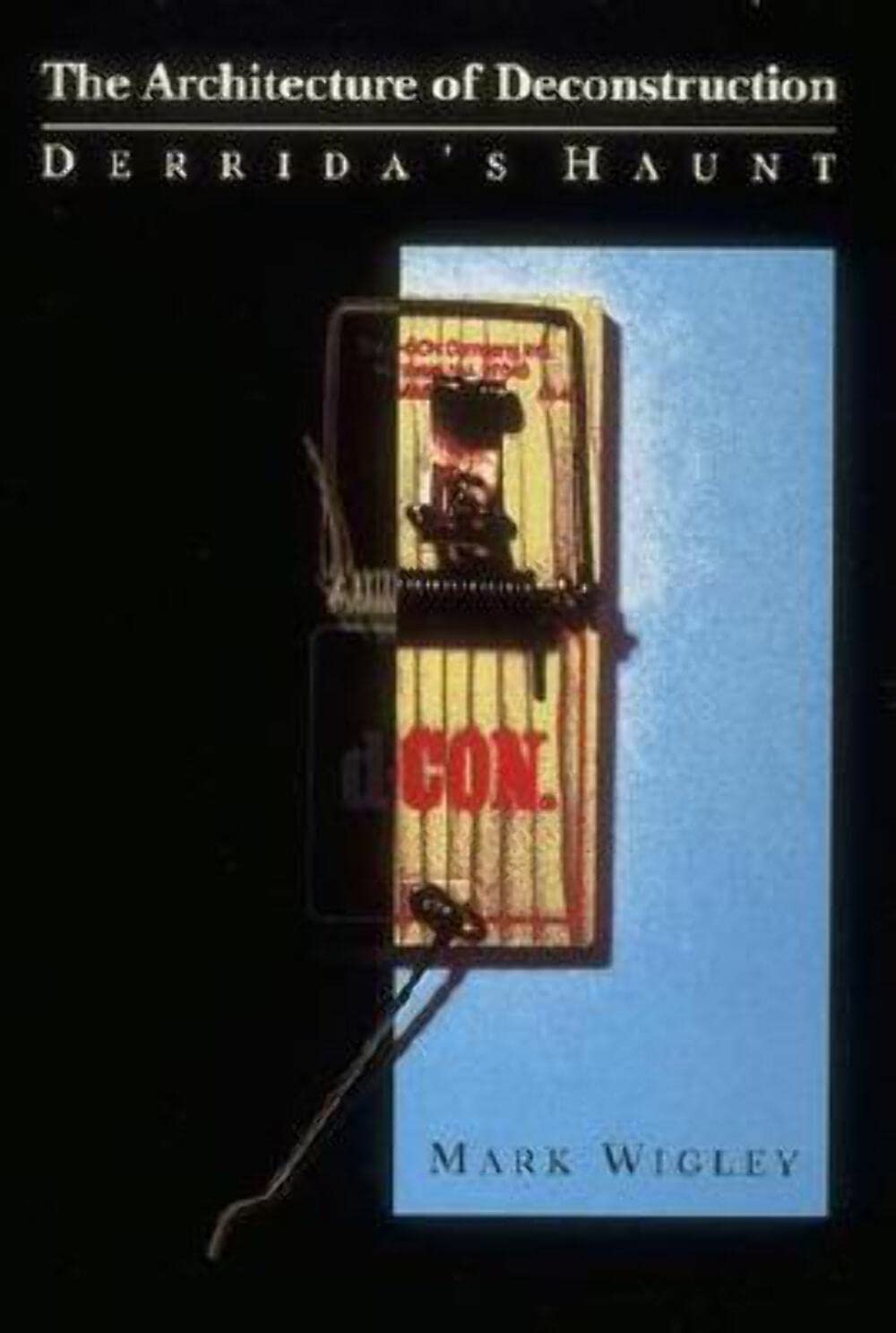
Nowhere, Mark Wigley asserts, are the stakes higher for deconstruction than in architecturearchitecture is the Achilles' heel of deconstructive discourse, the point of vulnerability upon which all of its arguments depend. In this book Wigley redefines the question of deconstruction and architecture. By locating the architecture already hidden within deconstructive discourse, he opens up more radical possibilities for both architecture and deconstruction, offering a way of rethinking the institution of architecture while using architecture to rethink deconstructive discourse.Wigley relentlessly tracks the tacit argument about architecture embedded within Jacques Derrida's discourse, a curious line of argument that passes through each of the philosopher's texts. He argues that this seemingly tenuous thread actually binds those texts, acting as their source of strength but also their point of greatest weakness. Derrida's work is seen to render architecture at once more complex, uncanny, pervasive, unstable, brutal, enigmatic, and devious, if not insidious, while needing itself to be subjected to an architectural interrogation.Wigley provocatively turns Derrida's reading strategy back on his texts to expose the architectural dimension of their central notions like law, economy, writing, place, domestication, translation, vomit, spacing, laughter, and dance. Along the way he highlights new aspects of the relationship between Heidegger and Derrida, explores the structural role of ornament and the elusive architecture of haunting, while presenting a fascinating account of the institutional politics of architecture.
⚠️ WARNING (California Proposition 65):
This product may contain chemicals known to the State of California to cause cancer,
birth defects, or other reproductive harm.
For MAP (Minimum Advertised Price) violations and Intellectual Property (IP) or Trademark concerns, please contact:
support@ergodebooks.com
⚠️ California Proposition 65 Warning: Some products sold on this website may expose you to chemicals known to the State of California to cause cancer, birth defects, or other reproductive harm. For more information, visit www.P65Warnings.ca.gov.