
Title
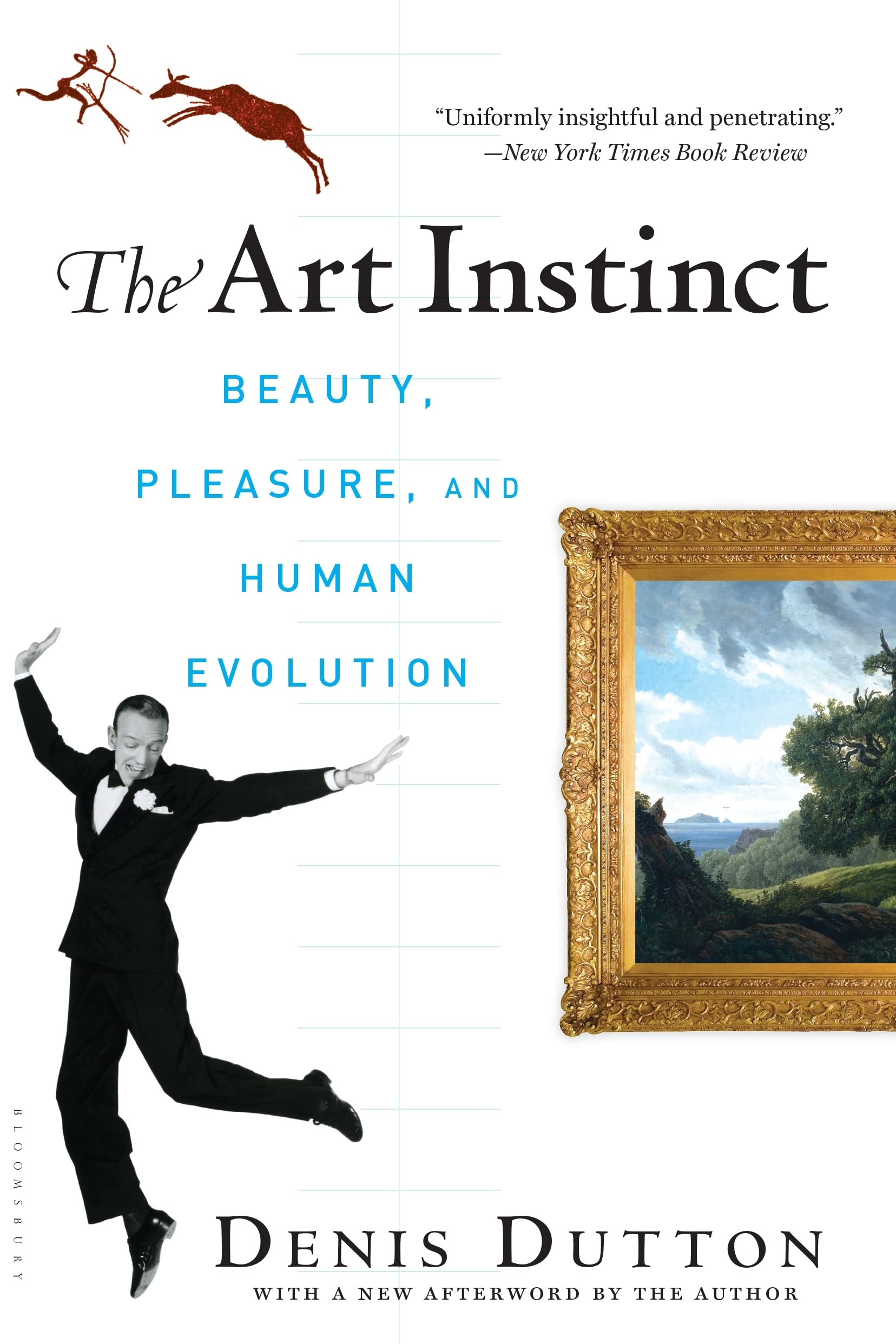
The Art Instinct: Beauty, Pleasure, And Human Evolution,Used
Sold by Ergodebooks, an authorized reseller.
Returns accepted within 30 days | support@ergodebooks.com
Shipping Information
- Free Standard Shipping — United States only
- Processing Time: 3–5 business days
- Estimated Delivery: 6–10 business days after dispatch
- Double-boxed, fully insured & discreetly packaged
- Tracking number sent via email once dispatched
Returns & Refund
Returns accepted within 30 days of delivery.
Damaged or Defective Item
Free return shipping + replacement or full refund
Wrong Item Received
Free return shipping + replacement or full refund
Change of Mind
Return shipping at customer's expense · 25% restocking fee applies
Payment Option

The Art Instinct Combines Two Of The Most Fascinating And Contentious Disciplines, Art And Evolutionary Science, In A Provocative New Work That Will Revolutionize The Way Art Itself Is Perceived. Aesthetic Taste, Argues Denis Dutton, Is An Evolutionary Trait, And Is Shaped By Natural Selection. It'S Not, As Almost All Contemporary Art Criticism And Academic Theory Would Have It, 'Socially Constructed.' The Human Appreciation For Art Is Innate, And Certain Artistic Values Are Universal Across Cultures, Such As A Preference For Landscapes That, Like The Ancient Savannah, Feature Water And Distant Trees. If People From Africa To Alaska Prefer Images That Would Have Appealed To Our Hominid Ancestors, What Does That Mean For The Entire Discipline Of Art History? Dutton Argues, With Forceful Logic And Hard Evidence, That Art Criticism Needs To Be Premised On An Understanding Of Evolution, Not On Abstract 'Theory.' Sure To Provoke Discussion In Scientific Circles And An Uproar In The Art World, The Art Instinct Offers Radical New Insights Into Both The Nature Of Art And The Workings Of The Human Mind.
⚠️ WARNING (California Proposition 65):
This product may contain chemicals known to the State of California to cause cancer, birth defects, or other reproductive harm.
For more information, please visit www.P65Warnings.ca.gov.
- Q: How many pages does this book have? A: This book has two hundred eighty-eight pages. It provides an in-depth exploration of the intersection between art and evolutionary science.
- Q: What is the binding type of this book? A: This book is a paperback. Paperback bindings are durable and flexible, making them a popular choice for readers.
- Q: What are the dimensions of this book? A: The dimensions of this book are five point five six inches in length, zero point seven nine inches in width, and eight point one nine inches in height.
- Q: Who is the author of this book? A: The author of this book is Denis Dutton. He delves into the relationship between art appreciation and human evolution.
- Q: What genre does this book belong to? A: This book belongs to the Criticism genre. It challenges traditional views on art through an evolutionary lens.
- Q: Is this book suitable for all ages? A: Yes, this book is suitable for adult readers. Its themes may not be appropriate for younger audiences due to complex discussions.
- Q: How should I read this book for best understanding? A: To fully appreciate this book, read it in a quiet environment. Take notes on key concepts to enhance comprehension of its arguments.
- Q: Is there a recommended reading level for this book? A: There is no specific reading level, but it is best suited for mature readers interested in art and science. A background in art theory could be beneficial.
- Q: Can I read this book in one sitting? A: Yes, you can read this book in one sitting, but it is recommended to take breaks. The complex ideas may require reflection to fully grasp.
- Q: How should I store this book? A: Store this book in a cool, dry place away from direct sunlight. This helps maintain its condition over time.
- Q: What is the best way to care for this book? A: To care for this book, handle it gently and avoid bending the cover. Keep it on a shelf upright to prevent warping.
- Q: Is this book safe for children to read? A: No, this book is not specifically designed for children. It discusses complex theories that may not be suitable for younger readers.
- Q: What if the book arrives damaged? A: If the book arrives damaged, contact the seller for a replacement or refund. Most sellers have return policies for damaged items.
- Q: Can I purchase this book online? A: Yes, you can purchase this book online from various retailers. It is widely available in both physical and digital formats.
- Q: Does this book have illustrations or images? A: No, this book does not contain illustrations or images. It focuses on textual analysis of art and evolutionary concepts.