
Title
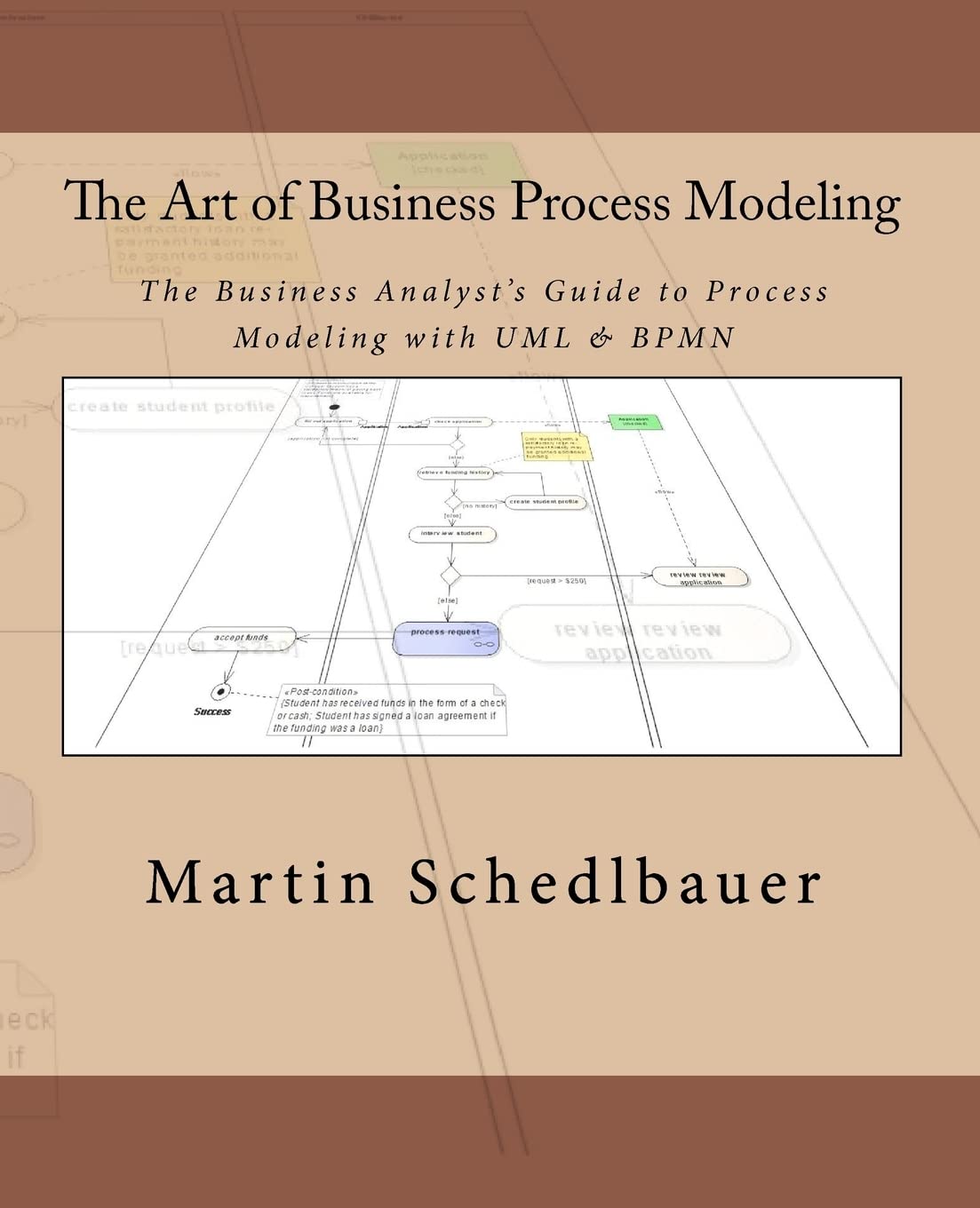
The Art of Business Process Modeling: The Business Analyst's Guide to Process Modeling with UML & BPMN,New
Sold by Ergodebooks, an authorized reseller.
Returns accepted within 30 days | support@ergodebooks.com
Shipping Information
- Free Standard Shipping — United States only
- Processing Time: 3–5 business days
- Estimated Delivery: 6–10 business days after dispatch
- Double-boxed, fully insured & discreetly packaged
- Tracking number sent via email once dispatched
Returns & Refund
Returns accepted within 30 days of delivery.
Damaged or Defective Item
Free return shipping + replacement or full refund
Wrong Item Received
Free return shipping + replacement or full refund
Change of Mind
Return shipping at customer's expense · 25% restocking fee applies
Payment Option

Information systems have become a critical part of the infrastructure of most, if not all, businesses, government organizations, and even individual households. To be useful, an information system must integrate and align with the way the business conducts its operations. By necessity this means that information systems construction requires an understanding of the organization's procedures, operations, and processes. Articulating, modeling, and managing business processes and workflows are preconditions to successful automation. Business processes are part of the fabric of the business and represent a strategic and critical intellectual asset that needs to be understood and proactively managed. Processes are often crossfunctional and involve multiple systems, software applications, and human assets including employees, customers, partners, and vendors. Processes must be formally defined and documented so that they can be practiced uniformly and consistently across the organization. Explicit articulation of processes is essential so that the processes truly become intellectual property of the organization rather than being tied to a specific individual.Business process modeling (or BPM for short) is the activity of eliciting, documenting, modeling, and analyzing work procedures within an organization. To be successful, the business analyst must possess the necessary modeling skills and business knowledge to carry out these responsibilities.The first step in business process management is capturing and articulating the processes. This is done through process modeling. Once processes have been documented, then the organization can think about optimizing and eventually automating the processes. Optimization is done through a combination of manual analysis as well as automated simulation.This book describes the PROMAP methodology for articulating and modeling business processes. PROMAP is practical and based on over 20 years of experience in modeling.
⚠️ WARNING (California Proposition 65):
This product may contain chemicals known to the State of California to cause cancer, birth defects, or other reproductive harm.
For more information, please visit www.P65Warnings.ca.gov.
- Q: What is the main focus of 'The Art of Business Process Modeling'? A: The book primarily focuses on business process modeling, emphasizing the importance of understanding and documenting organizational processes to improve automation and efficiency.
- Q: Who is the author of this book? A: The author of 'The Art of Business Process Modeling' is Martin Schedlbauer.
- Q: What methodologies are discussed in the book? A: The book describes the PROMAP methodology for articulating and modeling business processes, which is based on over 20 years of practical experience.
- Q: How many pages does the book have? A: The book contains 120 pages.
- Q: What is the publication date of this book? A: The book was published on January 22, 2010.
- Q: What is the binding type of this book? A: The book is available in paperback binding.
- Q: Is this book suitable for beginners in business process modeling? A: Yes, the book serves as a guide for business analysts, making it suitable for both beginners and those looking to improve their modeling skills.
- Q: What are the key features of this book? A: Key features include practical insights into business process management, the PROMAP methodology, and guidance on documenting and optimizing business processes.
- Q: Can this book help with automating business processes? A: Yes, the book provides foundational knowledge that can assist organizations in optimizing and eventually automating their business processes.
- Q: What category does this book fall under? A: The book is categorized under Information Management.