
Title
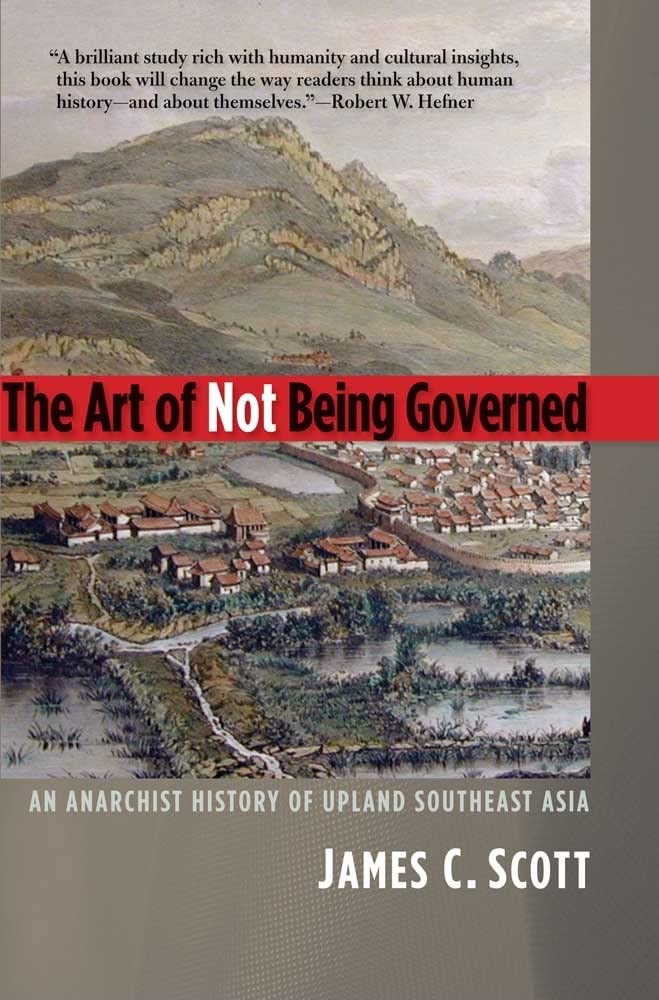
The Art Of Not Being Governed: An Anarchist History Of Upland Southeast Asia (Yale Agrarian Studies Series),Used
Sold by Ergodebooks, an authorized reseller.
Returns accepted within 30 days | support@ergodebooks.com
Shipping Information
- Free Standard Shipping — United States only
- Processing Time: 3–5 business days
- Estimated Delivery: 6–10 business days after dispatch
- Double-boxed, fully insured & discreetly packaged
- Tracking number sent via email once dispatched
Returns & Refund
Returns accepted within 30 days of delivery.
Damaged or Defective Item
Free return shipping + replacement or full refund
Wrong Item Received
Free return shipping + replacement or full refund
Change of Mind
Return shipping at customer's expense · 25% restocking fee applies
Payment Option

From The Acclaimed Author And Scholar James C. Scott, The Compelling Tale Of Asian Peoples Who Until Recently Have Stemmed The Vast Tide Of Statemaking To Live At Arms Length From Any Organized State Societyfor Two Thousand Years, The Disparate Groups That Now Reside In Zomia (A Mountainous Region The Size Of Europe That Consists Of Portions Of Seven Asian Countries) Have Fled The Projects Of The Organized State Societies That Surround Themslavery, Conscription, Taxes, Corve Labor, Epidemics, And Warfare. This Book, Essentially An Anarchist History, Is The Firstever Examination Of The Huge Literature On Statemaking Whose Author Evaluates Why People Would Deliberately And Reactively Remain Stateless. Among The Strategies Employed By The People Of Zomia To Remain Stateless Are Physical Dispersion In Rugged Terrain; Agricultural Practices That Enhance Mobility; Pliable Ethnic Identities; Devotion To Prophetic, Millenarian Leaders; And Maintenance Of A Largely Oral Culture That Allows Them To Reinvent Their Histories And Genealogies As They Move Between And Around States.In Accessible Language, James Scott, Recognized Worldwide As An Eminent Authority In Southeast Asian, Peasant, And Agrarian Studies, Tells The Story Of The Peoples Of Zomia And Their Unlikely Odyssey In Search Of Selfdetermination. He Redefines Our Views On Asian Politics, History, Demographics, And Even Our Fundamental Ideas About What Constitutes Civilization, And Challenges Us With A Radically Different Approach To History That Presents Events From The Perspective Of Stateless Peoples And Redefines Statemaking As A Form Of Internal Colonialism. This New Perspective Requires A Radical Reevaluation Of The Civilizational Narratives Of The Lowland States. Scotts Work On Zomia Represents A New Way To Think Of Area Studies That Will Be Applicable To Other Runaway, Fugitive, And Marooned Communities, Be They Gypsies, Cossacks, Tribes Fleeing Slave Raiders, Marsh Arabs, Or Sanbushmen.
⚠️ WARNING (California Proposition 65):
This product may contain chemicals known to the State of California to cause cancer, birth defects, or other reproductive harm.
For more information, please visit www.P65Warnings.ca.gov.
- Q: How many pages does this book have? A: This book has four hundred sixty-four pages. It offers a comprehensive exploration of Southeast Asian history and politics.
- Q: What is the binding type of this book? A: The binding type is paperback. This makes it lightweight and portable for easy reading.
- Q: What are the dimensions of this book? A: The dimensions are six point zero six inches in length, one point one six inches in width, and nine point two one inches in height. These measurements make it a standard-sized book.
- Q: Who is the author of this book? A: The author is James C. Scott. He is an acclaimed scholar known for his work in agrarian studies and Southeast Asian history.
- Q: What genre does this book belong to? A: This book belongs to the genre of historical and political analysis. It focuses on themes of anarchism and state-making.
- Q: How do I read this book? A: You can read this book by simply opening it and following the text from the beginning to the end. It is written in accessible language for a broad audience.
- Q: Is this book suitable for beginners in history? A: Yes, this book is suitable for beginners. The author uses accessible language and explains complex concepts clearly.
- Q: What age group is this book appropriate for? A: This book is appropriate for adults and older teens. It discusses nuanced political and historical themes that may not be suitable for younger readers.
- Q: How should I store this book to keep it in good condition? A: Store this book in a dry, cool place away from direct sunlight. Keeping it on a shelf will help prevent wear and tear.
- Q: Can I clean the book if it gets dirty? A: Yes, you can clean the book gently. Use a soft, dry cloth to wipe the cover and avoid using any liquids on the pages.
- Q: Is there a warranty or return policy for this book? A: Yes, there is a return policy for this book. Check with the retailer for specific terms regarding returns or exchanges.
- Q: What should I do if the book arrives damaged? A: If the book arrives damaged, you should contact the seller immediately. They will guide you through the return process.
- Q: How does this book compare to other historical texts on Southeast Asia? A: This book offers a unique perspective by focusing on stateless peoples, unlike many traditional texts that emphasize state narratives.
- Q: Is this book a good choice for someone interested in anarchist theories? A: Yes, this book is an excellent choice for those interested in anarchist theories. It presents a detailed historical context for understanding statelessness.
- Q: Does this book include any visual aids? A: No, this book does not include visual aids. It primarily consists of text exploring historical narratives.