
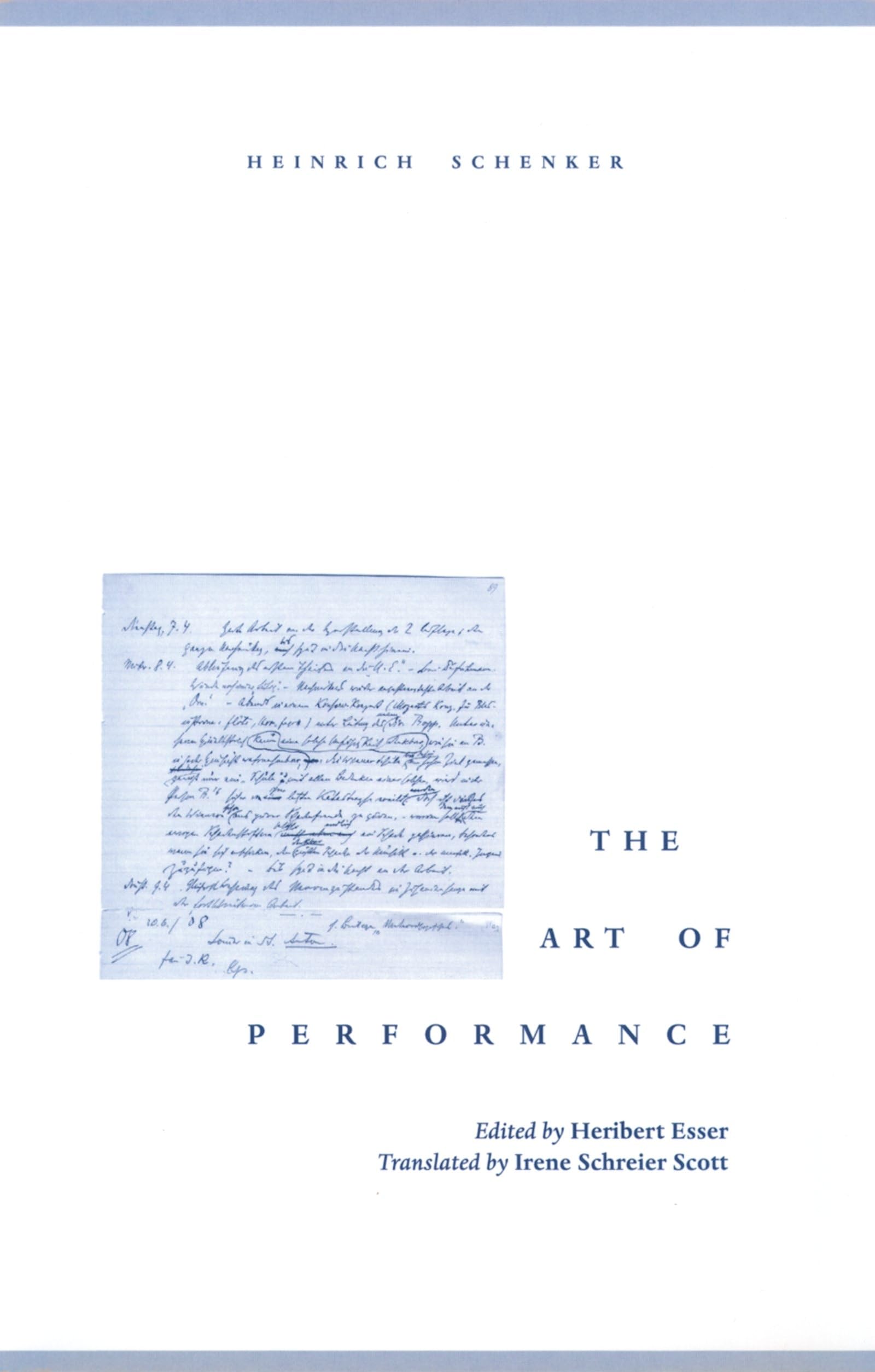
Title
The Art of Performance,New
Sold by Ergodebooks, an authorized reseller.
Returns accepted within 30 days | support@ergodebooks.com
Shipping Information
- Free Standard Shipping — United States only
- Processing Time: 3–5 business days
- Estimated Delivery: 6–10 business days after dispatch
- Double-boxed, fully insured & discreetly packaged
- Tracking number sent via email once dispatched
Returns & Refund
Returns accepted within 30 days of delivery.
Damaged or Defective Item
Free return shipping + replacement or full refund
Wrong Item Received
Free return shipping + replacement or full refund
Change of Mind
Return shipping at customer's expense · 25% restocking fee applies
Payment Option

Heinrich Schenker's The Art of Performance shows this great music theorist in a new light. While his theoretical writings helped transform music theory in the twentieth century, this book draws on his experience as a musician and teacher to propose a sharp reevaluation of how musical compositions are realized in performance. Filled with concrete examples and numerous suggestions, the book will interest both music theorists and practicing performers.Schenker's approach is based on his argument that much of contemporary performance practice is rooted in the nineteenthcentury cult of the virtuoso, which has resulted in an overemphasis on technical display. To counter this, he proposes specific ways to reconnect the composer's intentions and the musician's performance.Schenker begins by showing how performers can benefit from understanding the laws of composition. He demonstrates how a literal interpretation of the composer's indications can be selfdefeating, and he provides a lively discussion of piano technique, including suggestions for pedal, sound color, orchestral effects, and balance. He devotes separate chapters to nonlegato, legato, fingering, dynamics, tempo, and rests. In addition to the examples for pianists, Schenker covers a number of topics, such as bowing technique, that will prove invaluable for other instrumentalists and for conductors. The book concludes with an aphoristic and sometimes lyrical chapter on practicing.After Schenker's death, his student Oswald Jonas prepared the text for publication from Schenker's notes, eventually leaving the manuscript to his stepdaughter, Irene Schreier Scott, who entrusted the work of organizing and editing the disparate material to Jonas's friend and student Heribert Esser. She later translated it into English. This edition is the first publication in any language of this remarkable work.
⚠️ WARNING (California Proposition 65):
This product may contain chemicals known to the State of California to cause cancer, birth defects, or other reproductive harm.
For more information, please visit www.P65Warnings.ca.gov.