
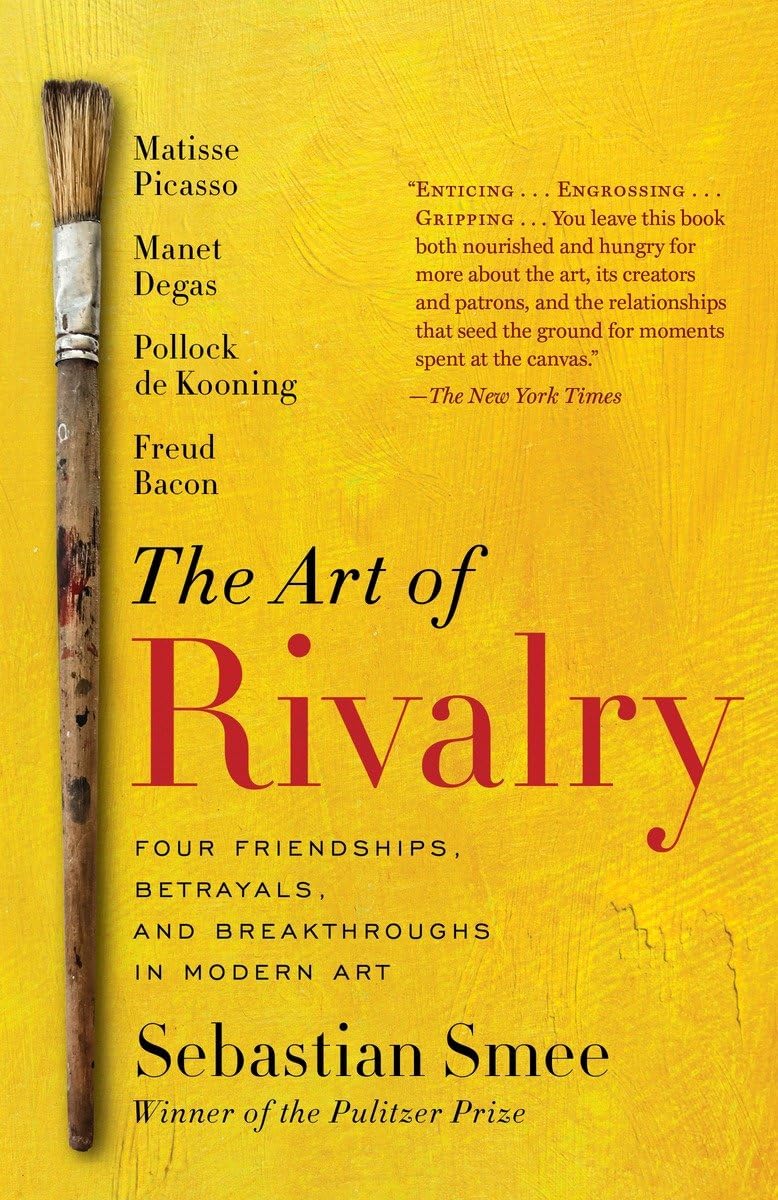
Title
The Art Of Rivalry: Four Friendships, Betrayals, And Breakthroughs In Modern Art
Sold by Ergodebooks, an authorized reseller.
Returns accepted within 30 days | support@ergodebooks.com
Shipping Information
- Free Standard Shipping — United States only
- Processing Time: 3–5 business days
- Estimated Delivery: 6–10 business days after dispatch
- Double-boxed, fully insured & discreetly packaged
- Tracking number sent via email once dispatched
Returns & Refund
Returns accepted within 30 days of delivery.
Damaged or Defective Item
Free return shipping + replacement or full refund
Wrong Item Received
Free return shipping + replacement or full refund
Change of Mind
Return shipping at customer's expense · 25% restocking fee applies
Payment Option

Pulitzer Prizewinning Art Critic Sebastian Smee Tells The Fascinating Story Of Four Pairs Of Artistsmanet And Degas, Picasso And Matisse, Pollock And De Kooning, Freud And Baconwhose Fraught, Competitive Friendships Spurred Them To New Creative Heights.Rivalry Is At The Heart Of Some Of The Most Famous And Fruitful Relationships In History. The Art Of Rivalry Follows Eight Celebrated Artists, Each Linked To A Counterpart By Friendship, Admiration, Envy, And Ambition. All Eight Are Household Names Today. But To Achieve What They Did, Each Needed The Influence Of A Contemporaryone Who Was Equally Ambitious But Possessed Sharply Contrasting Strengths And Weaknesses.Edouard Manet And Edgar Degas Were Close Associates Whose Personal Bond Frayed After Degas Painted A Portrait Of Manet And His Wife. Henri Matisse And Pablo Picasso Swapped Paintings, Ideas, And Influences As They Jostled For The Support Of Collectors Like Leo And Gertrude Stein And Vied For The Leadership Of A New Avantgarde. Jackson Pollocks Uninhibited Style Of Action Painting Triggered A Breakthrough In The Work Of His Older Rival, Willem De Kooning. After Pollocks Sudden Death In A Car Crash, De Kooning Assumed Pollock'S Mantle And Became Romantically Involved With His Late Friends Mistress. Lucian Freud And Francis Bacon Met In The Early 1950S, When Bacon Was Being Hailed As Britains Most Exciting New Painter And Freud Was Working In Relative Obscurity. Their Intense But Asymmetrical Friendship Came To A Head When Freud Painted A Portrait Of Bacon, Which Was Later Stolen.Each Of These Relationships Culminated In An Early Flashpoint, A Rupture In A Budding Intimacy That Was Both A Betrayal And A Trigger For Great Innovation. Writing With The Same Exuberant Wit And Psychological Insight That Earned Him A Pulitzer Prize For Art Criticism, Sebastian Smee Explores Here The Way That Coming Into Ones Own As An Artistfinding Ones Voicealmost Always Involves Willfully Breaking Away From Some Intimates Expectations Of Who You Are Or Ought To Be.Praise For The Art Of Rivalrygripping . . . Mr. Smees Skills As A Critic Are Evident Throughout. He Is Persuasive And Vivid. . . . You Leave This Book Both Nourished And Hungry For More About The Art, Its Creators And Patrons, And The Relationships That Seed The Ground For Moments Spent At The Canvas.The New York Timeswith Novellalike Detail And Incisiveness [Sebastian Smee] Opens Up The Worlds Of Four Pairs Of Renowned Artists. . . . Each Of His Portraits Is A Biographical Gem. . . . The Art Of Rivalry Is A Pure, Informative Delight, Written With Canny Authority.The Boston Globe
⚠️ WARNING (California Proposition 65):
This product may contain chemicals known to the State of California to cause cancer, birth defects, or other reproductive harm.
For more information, please visit www.P65Warnings.ca.gov.
- Q: What is the page count of The Art of Rivalry? A: The book has four hundred thirty-two pages. It offers an in-depth look at the relationships between famous artists.
- Q: What is the binding type of The Art of Rivalry? A: This book is available in paperback binding. This makes it flexible and easy to handle while reading.
- Q: What are the dimensions of The Art of Rivalry? A: The dimensions are five point sixteen inches in length, zero point eighty-eight inches in width, and seven point ninety-three inches in height. These measurements make it a compact read.
- Q: Who is the author of The Art of Rivalry? A: The author is Sebastian Smee. He is a Pulitzer Prize-winning art critic known for his insightful writing on art.
- Q: What genre does The Art of Rivalry belong to? A: This book belongs to the History genre. It explores the intricate relationships between renowned artists.
- Q: How should I approach reading The Art of Rivalry? A: You can read it at your own pace, as it is suitable for art enthusiasts and general readers alike. The engaging narrative makes it accessible.
- Q: Is The Art of Rivalry suitable for young adults? A: Yes, it is appropriate for young adults. The book discusses complex themes but is written in an engaging style.
- Q: What themes does The Art of Rivalry explore? A: It explores themes of friendship, rivalry, and artistic innovation among famous artists. These themes are central to understanding their creative processes.
- Q: How do I keep The Art of Rivalry in good condition? A: Store it in a cool, dry place away from direct sunlight. This helps preserve the quality of the paperback.
- Q: What is the recommended way to clean The Art of Rivalry? A: To clean it, gently wipe the cover with a soft, dry cloth. Avoid using water or chemical cleaners.
- Q: What should I do if The Art of Rivalry arrives damaged? A: If it arrives damaged, you can contact customer support for a return or exchange. Be sure to have your order details ready.
- Q: Are there any special shipping considerations for The Art of Rivalry? A: No, there are no special shipping considerations. It is shipped like standard books.
- Q: Is The Art of Rivalry a good choice for art students? A: Yes, it is an excellent choice for art students. The book provides valuable insights into the dynamics of art history.
- Q: What makes The Art of Rivalry different from other art books? A: Its focus on the personal relationships between artists sets it apart. It highlights how these dynamics led to significant artistic breakthroughs.
- Q: Can I find more books by Sebastian Smee? A: Yes, you can find more books by Sebastian Smee. He has written several works on art criticism and history.
- Q: Is The Art of Rivalry suitable for casual readers? A: Yes, casual readers will enjoy it. The engaging storytelling and vivid descriptions make it accessible and enjoyable.