
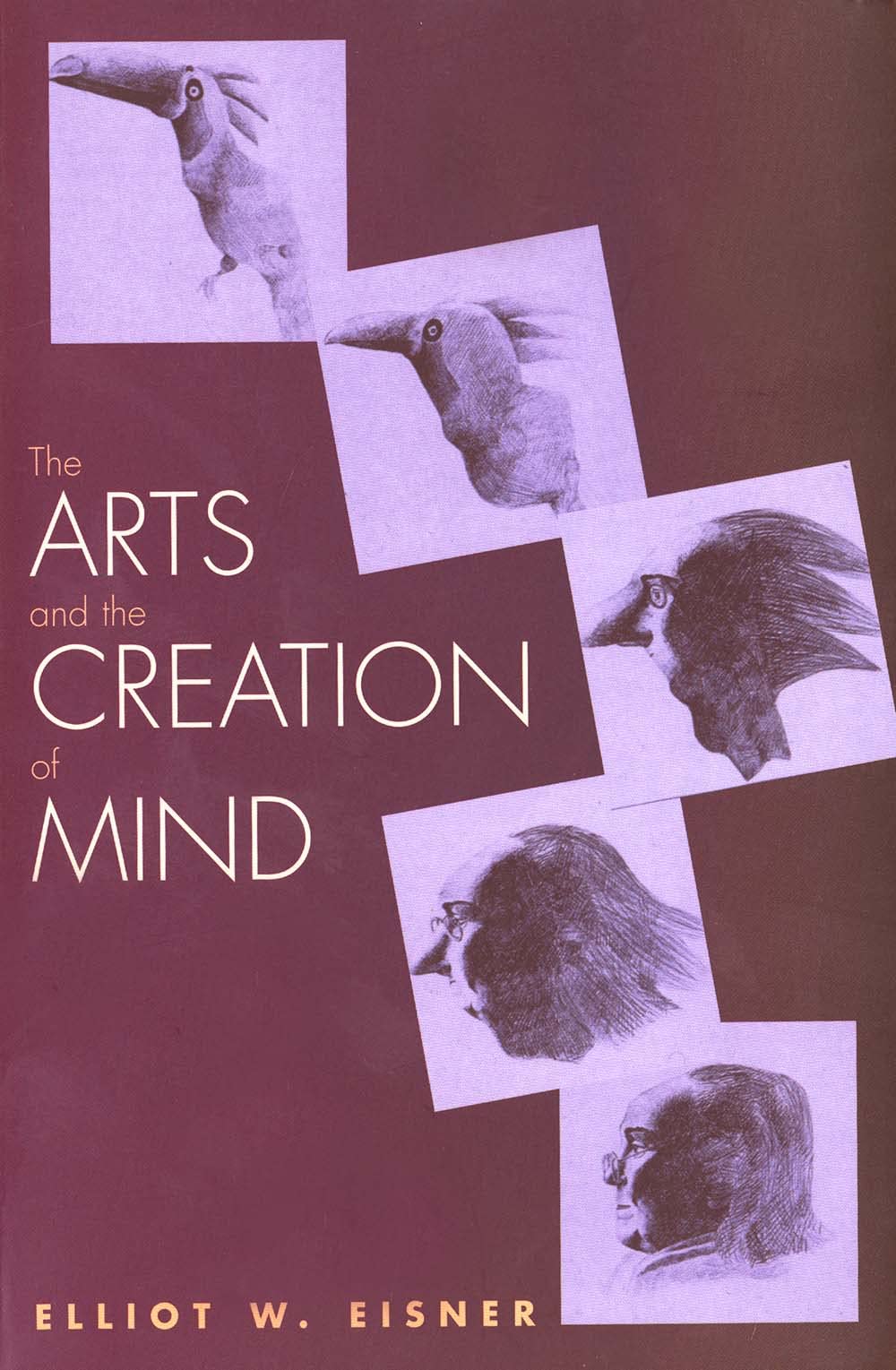
Title
The Arts and the Creation of Mind,Used
Sold by Ergodebooks, an authorized reseller.
Returns accepted within 30 days | support@ergodebooks.com
Shipping Information
- Free Standard Shipping — United States only
- Processing Time: 3–5 business days
- Estimated Delivery: 6–10 business days after dispatch
- Double-boxed, fully insured & discreetly packaged
- Tracking number sent via email once dispatched
Returns & Refund
Returns accepted within 30 days of delivery.
Damaged or Defective Item
Free return shipping + replacement or full refund
Wrong Item Received
Free return shipping + replacement or full refund
Change of Mind
Return shipping at customer's expense · 25% restocking fee applies
Payment Option

Although the arts are often thought to be closer to the rim of education than to its core, they are, surprisingly, critically important means for developing complex and subtle aspects of the mind, argues Elliot Eisner in this engrossing book. In it he describes how various forms of thinking are evoked, developed, and refined through the arts. These forms of thinking, Eisner argues, are more helpful in dealing with the ambiguities and uncertainties of daily life than are the formally structured curricula that are employed today in schools.Offering a rich array of examples, Eisner describes different approaches to the teaching of the arts and the virtues each possesses when well taught. He discusses especially nettlesome issues pertaining to the evaluation of performance in the arts. Perhaps most important, Eisner provides a fresh and admittedly iconoclastic perspective on what the arts can contribute to education, namely a new vision of both its aims and its means. This new perspective, Eisner argues, is especially important today, a time at which mechanistic forms of technical rationality often dominate our thinking about the conduct and assessment of education.
⚠️ WARNING (California Proposition 65):
This product may contain chemicals known to the State of California to cause cancer, birth defects, or other reproductive harm.
For more information, please visit www.P65Warnings.ca.gov.
- Q: What is the main argument of 'The Arts and the Creation of Mind'? A: Elliot Eisner argues that the arts are essential for developing complex and subtle aspects of the mind, providing a unique perspective on education that contrasts with traditional curricula.
- Q: How does the book describe the role of arts in education? A: The book highlights how different forms of thinking fostered by the arts can be more effective in navigating life's ambiguities than conventional educational methods.
- Q: What kind of examples does Eisner provide in the book? A: Eisner offers a rich array of examples from various approaches to teaching arts, showcasing the virtues of each when effectively taught.
- Q: Are there any discussions about evaluating performance in the arts? A: Yes, Eisner addresses challenging issues related to evaluating performance in the arts and offers insights on how to assess it effectively.
- Q: What perspective does the author provide on the contribution of arts to education? A: Eisner presents an iconoclastic viewpoint on how the arts can reshape educational aims and methods, emphasizing their relevance in modern education.
- Q: What is the publication date of 'The Arts and the Creation of Mind'? A: The book was published on September 10, 2004.
- Q: What is the format of this book? A: This book is available in paperback format.
- Q: How many pages does 'The Arts and the Creation of Mind' have? A: The book contains 280 pages.
- Q: Who is the author of this book? A: The author of 'The Arts and the Creation of Mind' is Elliot W. Eisner.
- Q: Is this book suitable for educators? A: Yes, the insights and perspectives provided in the book are particularly valuable for educators looking to integrate the arts into their teaching practices.