
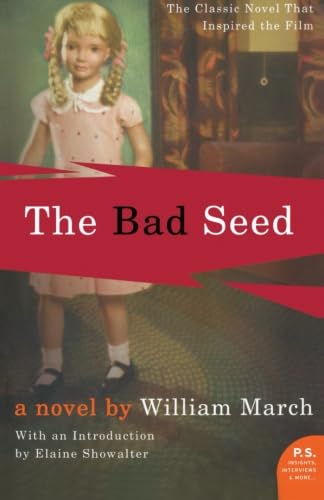
Title
The Bad Seed (P.S.),New
Sold by Ergodebooks, an authorized reseller.
Returns accepted within 30 days | support@ergodebooks.com
Shipping Information
- Free Standard Shipping — United States only
- Processing Time: 3–5 business days
- Estimated Delivery: 6–10 business days after dispatch
- Double-boxed, fully insured & discreetly packaged
- Tracking number sent via email once dispatched
Returns & Refund
Returns accepted within 30 days of delivery.
Damaged or Defective Item
Free return shipping + replacement or full refund
Wrong Item Received
Free return shipping + replacement or full refund
Change of Mind
Return shipping at customer's expense · 25% restocking fee applies
Payment Option

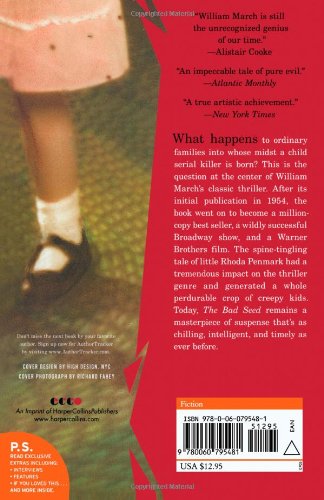
Now Reissued William Marchs 1954 Classic Thriller Thats As Chilling, Intelligent And Timely As Ever Before. This Paperback Reissue Includes A New P.S. Section With Author Interviews, Insights, Features, Suggested Reading And More.What Happens To Ordinary Families Into Whose Midst A Child Serial Killer Is Born? This Is The Question At The Center Of William Marchs Classic Thriller. After Its Initial Publication In 1954, The Book Went On To Become A Millioncopy Bestseller, A Wildly Successful Broadway Show, And A Warner Brothers Film. The Spinetingling Tale Of Little Rhoda Penmark Had A Tremendous Impact On The Thriller Genre And Generated A Whole Perdurable Crop Of Creepy Kids. Today, The Bad Seed Remains A Masterpiece Of Suspense Thats As Chilling, Intelligent, And Timely As Ever Before.
⚠️ WARNING (California Proposition 65):
This product may contain chemicals known to the State of California to cause cancer, birth defects, or other reproductive harm.
For more information, please visit www.P65Warnings.ca.gov.
- Q: What is the page count of The Bad Seed? A: This book has two hundred fifty-four pages. It offers a compact yet engaging read that explores chilling themes.
- Q: What are the dimensions of The Bad Seed? A: The book measures five point four three inches in length, zero point six four inches in width, and eight point three nine inches in height. These dimensions make it a portable paperback.
- Q: What is the binding type of The Bad Seed? A: The Bad Seed is available in paperback binding. This makes it flexible and lightweight for easy reading.
- Q: Who is the author of The Bad Seed? A: The author of The Bad Seed is William March. He is known for his impactful storytelling in the thriller genre.
- Q: What genre does The Bad Seed belong to? A: The Bad Seed is classified as a classic thriller. It delves into suspenseful and psychological themes.
- Q: How do I read The Bad Seed? A: You can read The Bad Seed like any other book, preferably in a quiet setting to fully appreciate its suspense. It’s suitable for adults and mature readers.
- Q: Is The Bad Seed suitable for young readers? A: No, The Bad Seed is not suitable for young readers. Its themes involve serious and disturbing subject matter that is intended for mature audiences.
- Q: What should I know about the content of The Bad Seed? A: The content explores the disturbing premise of a child serial killer in an ordinary family. It raises questions about nature versus nurture.
- Q: How should I store The Bad Seed to keep it in good condition? A: Store The Bad Seed in a cool, dry place away from direct sunlight. This will help preserve the quality of the paperback.
- Q: Can I clean The Bad Seed? A: No, you should not clean The Bad Seed with water or cleaning products. Keep it dry and handle it with clean hands to avoid dirt.
- Q: What if The Bad Seed arrives damaged? A: If The Bad Seed arrives damaged, you should contact customer support for a replacement or refund. Most sellers have a return policy for damaged items.
- Q: Is The Bad Seed a good choice for fans of suspense? A: Yes, The Bad Seed is an excellent choice for fans of suspense. Its gripping narrative has made it a classic in the thriller genre.
- Q: How does The Bad Seed compare to other thriller novels? A: The Bad Seed is unique because it focuses on a child's perspective in a chilling situation, setting it apart from typical adult thrillers.
- Q: What insights can I find in the new P.S. section of The Bad Seed? A: The new P.S. section includes author interviews, insights, and suggested readings. It enhances the reading experience by providing additional context.
- Q: Is The Bad Seed part of a series? A: No, The Bad Seed is not part of a series. It is a standalone novel with a self-contained story.
- Q: What themes are explored in The Bad Seed? A: The themes explored in The Bad Seed include morality, evil, and the nature of childhood. It raises thought-provoking questions about human behavior.