If you have any questions, you are always welcome to contact us. We'll get back to you as soon as possible, withing 24 hours on weekdays.
Customer service
All questions about your order, return and delivery must be sent to our customer service team by e-mail at yourstore@yourdomain.com
Sale & Press
If you are interested in selling our products, need more information about our brand or wish to make a collaboration, please contact us at press@yourdomain.com
Help
If you have any questions, you are always welcome to contact us. We'll get back to you as soon as possible, withing 24 hours on weekdays.
Customer service
All questions about your order, return and delivery must be sent to our customer service team by e-mail at yourstore@yourdomain.com
Sale & Press
If you are interested in selling our products, need more information about our brand or wish to make a collaboration, please contact us at press@yourdomain.com
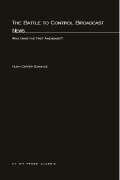
The Battle to Control Broadcast News chronicles the power plays, fights, betrayals, and skirmishes behind the use and misuse of both the Fairness Doctrine, which required broadcasters to air news on controversial issues and to provide a "balance" in their programming, and the Equal Time Law, which governs political programming and claims that federal law cannot require broadcasters to carry all candidates. Hugh Donahue argues that these restrictions were never justified, that the public lost more than it gained by having them, and that fear of the power of mass communications is a constant theme shaping regulation of broadcast journalism. Donahue's sweeping history describes the curious position that broadcast news occupies on the spectrum of American journalism and political activism: it is by far the most widespread force in news and politics, but also the most restricted, as it is the only one whose First Amendment rights have been limited by Congressional action and regulatory fiat. The book analyzes disputes over broadcasters' free speech rights and government regulation. Donahue demonstrates that dramatic growth in emerging cable television and satellite technologies is significantly expanding television news and politics, making existing regulations obsolete. He argues that the remarkable durability of these outdated laws can be attributed to such special interest groups as the automobile and oil industries and the gun lobby, which want direct access to broadcast audiences, and to a public wary of both "big media" domination of political discourse and "big money" advertisers seeking to monopolize the airwaves.
⚠️ WARNING (California Proposition 65):
This product may contain chemicals known to the State of California to cause cancer,
birth defects, or other reproductive harm.
For MAP (Minimum Advertised Price) violations and Intellectual Property (IP) or Trademark concerns, please contact:
support@ergodebooks.com
⚠️ California Proposition 65 Warning: Some products sold on this website may expose you to chemicals known to the State of California to cause cancer, birth defects, or other reproductive harm. For more information, visit www.P65Warnings.ca.gov.