

Title


The Bauhaus: 19191933: Reform and Avantgarde,New
Sold by Ergodebooks, an authorized reseller.
Returns accepted within 30 days | support@ergodebooks.com
Shipping Information
- Free Standard Shipping — United States only
- Processing Time: 3–5 business days
- Estimated Delivery: 6–10 business days after dispatch
- Double-boxed, fully insured & discreetly packaged
- Tracking number sent via email once dispatched
Returns & Refund
Returns accepted within 30 days of delivery.
Damaged or Defective Item
Free return shipping + replacement or full refund
Wrong Item Received
Free return shipping + replacement or full refund
Change of Mind
Return shipping at customer's expense · 25% restocking fee applies
Payment Option

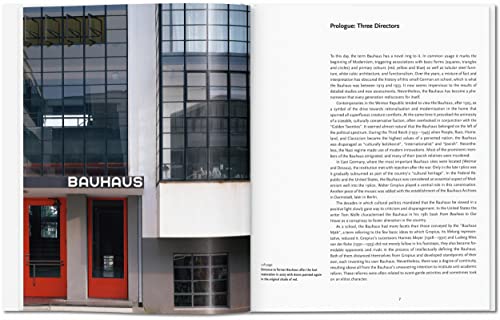
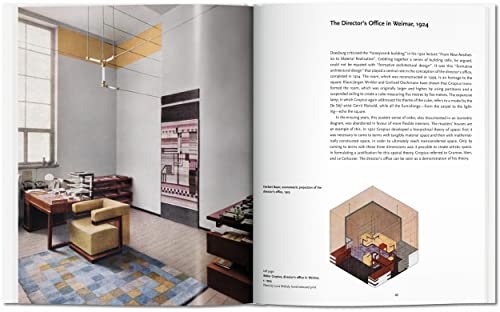
In a fleeting fourteen year period, sandwiched between two world wars, Germany?s Bauhaus school of art and design changed the face of modernity. With utopian ideals for the future, the school developed a pioneering fusion of fine art, craftsmanship, and technology to be applied across painting, sculpture, design, architecture, film, photography, textiles, ceramics, theatre, and installation.As much an intense personal community as a publicly minded collective, the Bauhaus was first founded by Walter Gropius (18831969), and counted Josef and Anni Albers, Wassily Kandinsky, Paul Klee, Oskar Schlemmer, Gunta St?lzl, Marianne Brandt and Ludwig Mies van der Rohe among its members. Between its three successive locations in Weimar, Dessau and Berlin, the school fostered charismatic and creative exchange between teachers and students, all varied in their artistic styles and preferences, but united in their idealism and their interest in a ?total? work of art across different practices and media.This book celebrates the adventurous innovation of the Bauhaus movement, both as a trailblazer in the development of modernism, and as a paradigm of art education, where an allencompassing freedom of creative expression and cuttingedge ideas led to functional and beautiful creations.
⚠️ WARNING (California Proposition 65):
This product may contain chemicals known to the State of California to cause cancer, birth defects, or other reproductive harm.
For more information, please visit www.P65Warnings.ca.gov.
- Q: What is the title of the book? A: The title of the book is 'Bauhaus'. It explores the influential art and design school in Germany.
- Q: Who is the author of this book? A: The author of this book is Magdalena Droste. She provides a comprehensive narrative on the Bauhaus movement.
- Q: How many pages does the book have? A: The book contains ninety-six pages. It offers a concise yet detailed exploration of the Bauhaus legacy.
- Q: What type of binding does the book have? A: The book is bound in hardcover. This provides durability and a premium feel.
- Q: What are the dimensions of the book? A: The book measures eight point two seven inches in length, zero point five five inches in width, and ten point two four inches in height. These dimensions make it a manageable size for reading.
- Q: When was the Bauhaus school founded? A: The Bauhaus school was founded in nineteen nineteen. It was established by Walter Gropius in Germany.
- Q: How does this book explore the Bauhaus movement? A: This book explores the Bauhaus movement by discussing its ideals, influential figures, and innovations in art and design. It highlights the school's impact on modernism.
- Q: Is this book suitable for beginners in art history? A: Yes, this book is suitable for beginners. Its accessible language and informative content make it a great introduction to the Bauhaus.
- Q: What themes are covered in the book? A: The book covers themes such as modernity, art education, and the fusion of various artistic practices. It emphasizes the collaborative spirit of the Bauhaus.
- Q: How should I care for this book? A: To care for this book, keep it in a cool, dry place and avoid direct sunlight. This will help preserve its condition.
- Q: Can I display this book on a shelf? A: Yes, this book can be displayed on a shelf. Its hardcover design and appealing cover make it a great addition to any collection.
- Q: What if the book arrives damaged? A: If the book arrives damaged, you should contact customer service for assistance. They can help you with return or replacement options.
- Q: Is there a warranty for this book? A: No, books typically do not come with a warranty. However, you may be able to return it if it’s defective upon arrival.
- Q: How does this book compare to other art history books? A: This book is unique as it focuses specifically on the Bauhaus movement, unlike other general art history books. It offers depth in a specific area.
- Q: Is this book appropriate for children? A: Yes, this book is appropriate for children, especially those interested in art and design. It provides educational content in an engaging way.
- Q: What makes the Bauhaus school significant? A: The Bauhaus school is significant for its pioneering role in modernism and its innovative approach to art education. It influenced various artistic fields.