
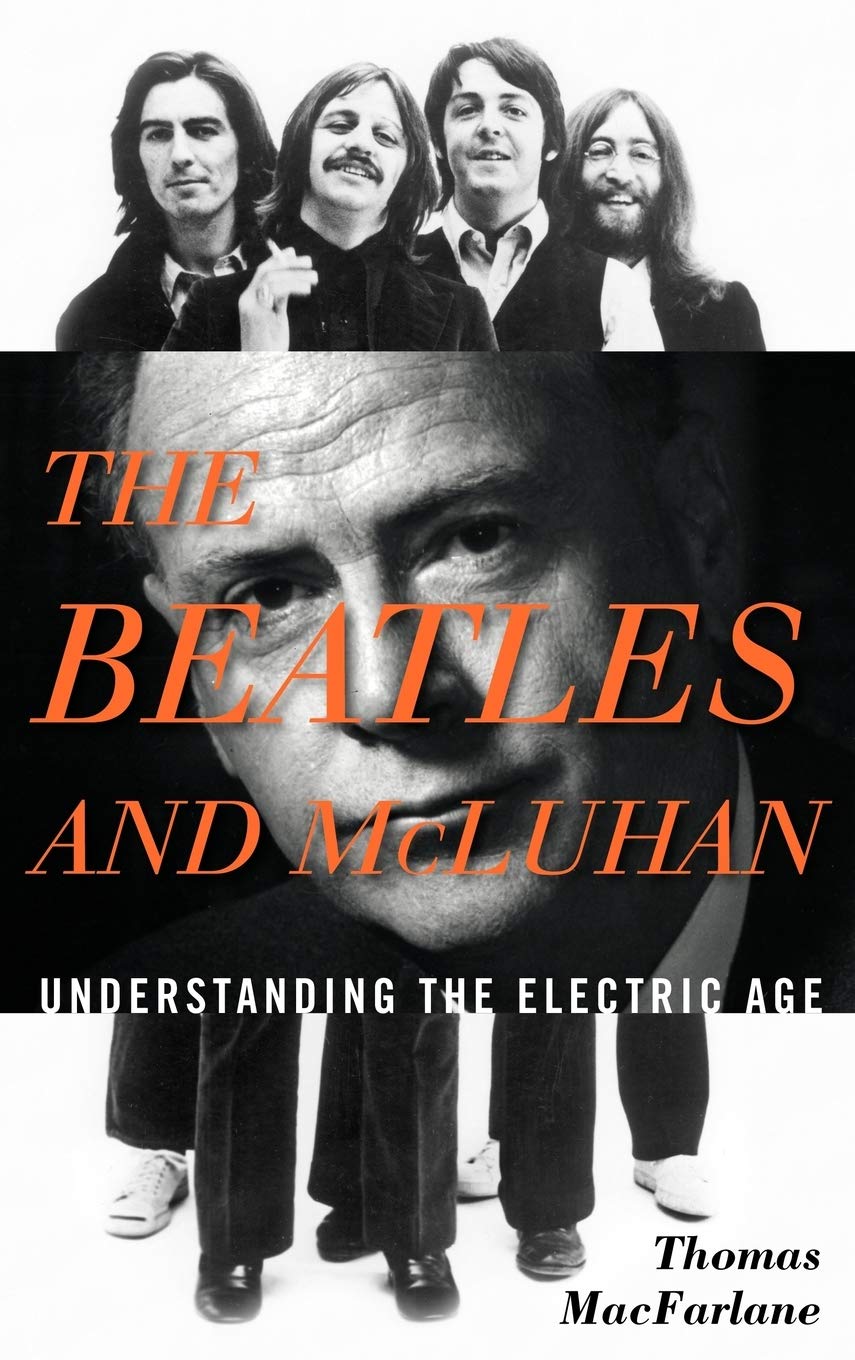
Title
The Beatles And Mcluhan: Understanding The Electric Age,Used
Sold by Ergodebooks, an authorized reseller.
Returns accepted within 30 days | support@ergodebooks.com
Shipping Information
- Free Standard Shipping — United States only
- Processing Time: 3–5 business days
- Estimated Delivery: 6–10 business days after dispatch
- Double-boxed, fully insured & discreetly packaged
- Tracking number sent via email once dispatched
Returns & Refund
Returns accepted within 30 days of delivery.
Damaged or Defective Item
Free return shipping + replacement or full refund
Wrong Item Received
Free return shipping + replacement or full refund
Change of Mind
Return shipping at customer's expense · 25% restocking fee applies
Payment Option

In the 1960s, The Beatles would address like no other musical act a radical shift in the cultural mindset of the late twentieth century. Through tools of electric technology, this shift encompassed the decline of visual modes of perception and the emergence of a wayofknowing based increasingly on sound. In this respect, the musical works of The Beatles would come to resonate with and ultimately reflect Marshall McLuhans ideas on the transition into a culture of allatonceness: a simultaneous world in which immersion in vibrant global community increasingly trumps the fixed viewpoint of the individual.By engaging with recording technologies in a way that no popular act had before, The Beatles opened up for exploration the acoustical space precipitated by this shift. In The Beatles and McLuhan: Understanding the Electric Age, scholar and musician Thomas MacFarlane examines how the incorporation of electric technology in The Beatles art would enhance their musical impact. MacFarlane surveys the relationship between McLuhan's ideas on the nature and effects of electric technology and The Beatles own engagement of that technology; offers analyses of key works from The Beatles' studio years, with particular attention paid to the presence of cultural metaphors embedded in the medium of multitrack recording; and collates these data to offer stunning conclusions about The Beatles creative process in the recording studio and its cultural implications. This work also features the first published transcriptions ever of the complete filmed conversation between John Lennon and Marshall McLuhan on their respective ideas, as well as an interview between MacFarlane and McLuhans son and executor, Michael McLuhan, on his fathers and the Beatles legacy.The Beatles and McLuhan will interest scholars and students of music and music history, recording technology, media studies, communications, and popular culture.
⚠️ WARNING (California Proposition 65):
This product may contain chemicals known to the State of California to cause cancer, birth defects, or other reproductive harm.
For more information, please visit www.P65Warnings.ca.gov.