
Title
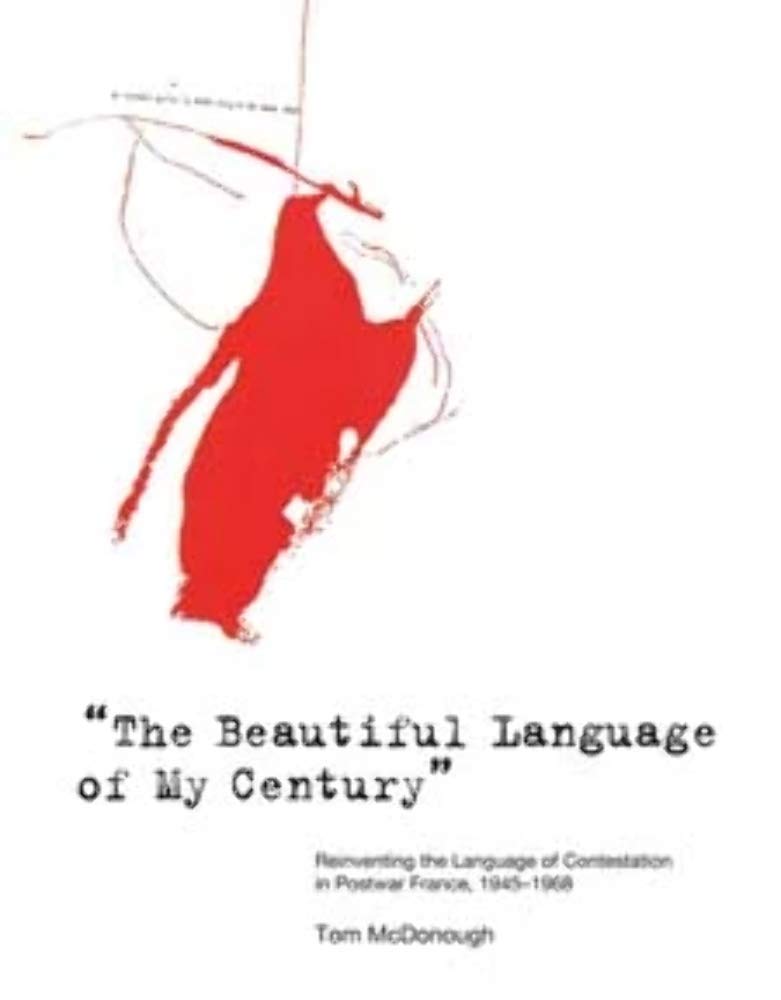
The Beautiful Language Of My Century: Reinventing The Language Of Contestation In Postwar France, 19451968 (October Books (Pap
Sold by Ergodebooks, an authorized reseller.
Returns accepted within 30 days | support@ergodebooks.com
Shipping Information
- Free Standard Shipping — United States only
- Processing Time: 3–5 business days
- Estimated Delivery: 6–10 business days after dispatch
- Double-boxed, fully insured & discreetly packaged
- Tracking number sent via email once dispatched
Returns & Refund
Returns accepted within 30 days of delivery.
Damaged or Defective Item
Free return shipping + replacement or full refund
Wrong Item Received
Free return shipping + replacement or full refund
Change of Mind
Return shipping at customer's expense · 25% restocking fee applies
Payment Option

How Culture Became A Field Of Struggle Over Meaning In France: The Appropriation Of Elements From Advertising, Journalism, And Other Sources To Serve Political Ends In Art, Film, And The Activities Of The French Left, Culminating In The Upheavals Of May 1968.In Postwar France, The Aesthetics Of Appropriation And Collage Gave Cultural Form To A Struggle Over Meaning. A New Wave Of Avantgarde Experimentation Usedor Stole, Plagiarized, And Expropriatedelements From Advertising, Journalism, Literature, Art, And Other Sources Of Common Discourse (The Ironically Named Beautiful Language Of This Book'S Title, Itself An Appropriation From Guy Debord'S Collaged Mmoires). Redeployed, Often In Startling Or Pointed Juxtapositions, These Elements Took On Newly Oppositional Meanings. A Famous Photograph Taken Inside The Occupied Sorbonne In May 1968, For Example, Shows A Massive Academic Painting Altered By A Clever Cartoonish Speech Bubble That Transforms The Painting Into A Parody Of Itself And Memorializes An Event Very Different From The One Captured By The Original Artist. The Beautiful Language Of My Century Describes The Various Forms Of Critical Culture That Culminated In The Events Of May 1968, And Investigates The Ways Those Forms Have Come Down To Us Today.Mcdonough Explores The Montage Practice Developed By Guy Debord And His Situationist Colleagues Under The Name Of Dtournement And Its Expression In The Later Fifties As A Form Of Cultural Theft. He Addresses The Influence Of Colonialism On These Practices, Examining A 1961 Exhibit Of Torn Posters Of The Algerian War (La France Dchire), Godard'S Early Film Le Petit Soldat, And Christo'S Project For A Temporary Wall Of Steel Drums. He Discusses The French Left'S Adoption In The Midsixties Of The End Of Art As A Theoretical Position And Describes The Leftist Idea Of The Fte As A Rabelaisian And Revolutionary Upwelling Of Everything That Is Low. This Influential Conception, Inspired Equally By The American Urban Revolts Of The Sixties And The Writings Of Theorists Marcel Mauss And Georges Bataille, Coalesced Into A New Image Of Revolution, A New Model Of Contestation, In The Events Of May 1968When The Struggle Over Language And Culture Merged With A Broader Resistance To Capitalist Modernization.
⚠️ WARNING (California Proposition 65):
This product may contain chemicals known to the State of California to cause cancer, birth defects, or other reproductive harm.
For more information, please visit www.P65Warnings.ca.gov.
- Q: What is the page count of this book? A: This book has two hundred seventy-three pages. It offers an in-depth analysis of cultural struggles in postwar France.
- Q: What are the dimensions of this book? A: The book measures six point nine inches in length, zero point six inches in width, and eight point six inches in height.
- Q: What is the binding type of this book? A: This book is available in paperback binding. This makes it a lightweight and portable option for readers.
- Q: How do I read this book? A: You can read this book like any other paperback. It is suitable for anyone interested in history, culture, and politics.
- Q: Is this book suitable for academic research? A: Yes, this book is suitable for academic research. It provides critical insights into cultural movements and historical events.
- Q: Can this book be used for teaching purposes? A: Yes, this book can be used for teaching purposes. It is a valuable resource for courses on history and cultural studies.
- Q: How should I store this book? A: Store this book in a cool, dry place to maintain its condition. Avoid direct sunlight to prevent fading of the cover.
- Q: Is this book safe for children? A: No, this book is not specifically aimed at children. It contains complex themes related to history and culture.
- Q: How do I keep this book in good condition? A: Keep this book in a protective cover to prevent wear and tear. Handle it carefully to avoid bending the pages.
- Q: What makes this book different from others in its genre? A: This book uniquely combines history and cultural critique, focusing on the nuances of political contestation in postwar France.
- Q: Is this book a good choice for beginners in history? A: Yes, this book can be a good choice for beginners. It provides accessible insights into historical events in France.
- Q: What if I receive a damaged book? A: If you receive a damaged book, contact customer support for assistance with returns or replacements.
- Q: Are there any warranty options for this book? A: Books typically do not come with warranties. However, you can check return policies for any issues.
- Q: What should I do if I have trouble accessing this book? A: If you have trouble accessing this book, please check online retailers or local bookstores for availability.
- Q: Can I return this book if I change my mind? A: Yes, you can return this book if you change your mind, provided you follow the seller's return policy.
- Q: How does this book compare to other historical analyses? A: This book offers a distinctive perspective, focusing on the aesthetics of appropriation in cultural movements, unlike many traditional historical analyses.