
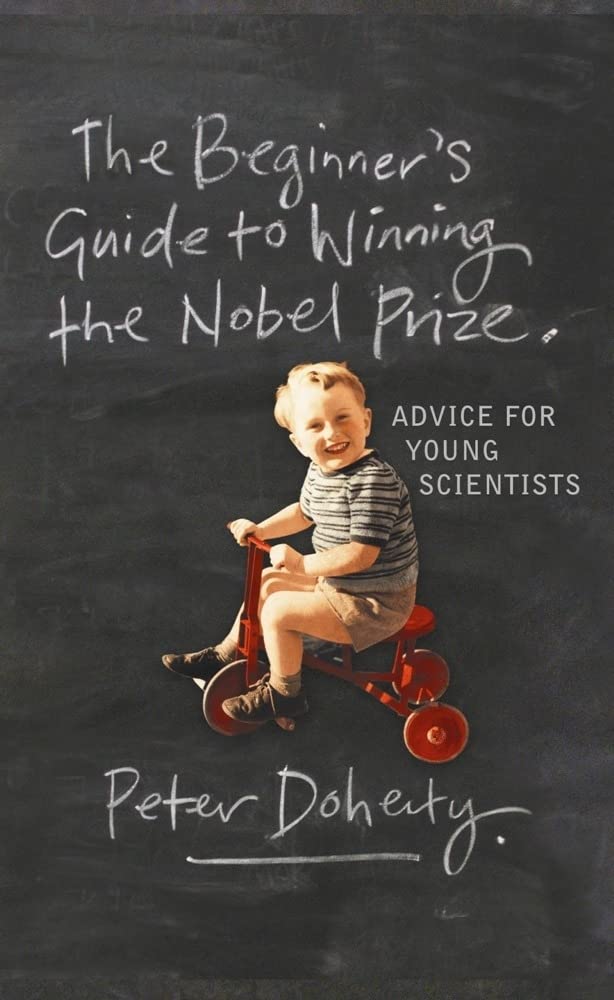
Title

The Beginner's Guide to Winning the Nobel Prize: Advice for Young Scientists,Used
Sold by Ergodebooks, an authorized reseller.
Returns accepted within 30 days | support@ergodebooks.com
Shipping Information
- Free Standard Shipping — United States only
- Processing Time: 3–5 business days
- Estimated Delivery: 6–10 business days after dispatch
- Double-boxed, fully insured & discreetly packaged
- Tracking number sent via email once dispatched
Returns & Refund
Returns accepted within 30 days of delivery.
Damaged or Defective Item
Free return shipping + replacement or full refund
Wrong Item Received
Free return shipping + replacement or full refund
Change of Mind
Return shipping at customer's expense · 25% restocking fee applies
Payment Option

In The Beginner's Guide to Winning the Nobel Prize, Doherty recounts his unlikely path to becoming a Nobel Laureate. Beginning with his humble origins in Australia, he tells how he developed an interest in immunology and describes his awardwinning, influential work with Rolf Zinkernagel on Tcells and the nature of immune defense. In prose that is at turns amusing and astute, Doherty reveals how his nonconformist upbringing, sense of being an outsider, and search for different perspectives have shaped his life and work.Doherty offers a rare, insider's look at the realities of being a research scientist. He lucidly explains his own scientific work and how research projects are selected, funded, and organized; the major problems science is trying to solve; and the rewards and pitfalls of a career in scientific research. For Doherty, science still plays an important role in improving the world, and he argues that scientists need to do a better job of making their work more accessible to the public.Throughout the book, Doherty explores the stories of past Nobel winners and considers some of the crucial scientific debates of our time, including the safety of genetically modified foods and the tensions between science and religion. He concludes with some "tips" on how to win a Nobel Prize, including advice on being persistent, generous, and culturally aware, and he stresses the value of evidence. The Beginner's Guide to Winning the Noble Prize is essential reading for anyone interested in a career in science.
⚠️ WARNING (California Proposition 65):
This product may contain chemicals known to the State of California to cause cancer, birth defects, or other reproductive harm.
For more information, please visit www.P65Warnings.ca.gov.