
Title
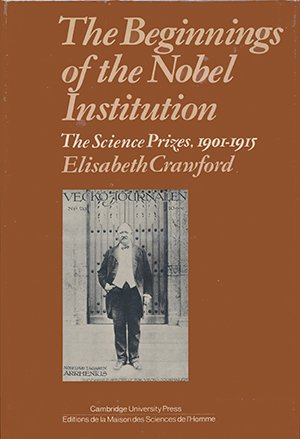
The Beginnings of the Nobel Institution: The Science Prizes, 19011915,Used
Sold by Ergodebooks, an authorized reseller.
Returns accepted within 30 days | support@ergodebooks.com
Shipping Information
- Free Standard Shipping — United States only
- Processing Time: 3–5 business days
- Estimated Delivery: 6–10 business days after dispatch
- Double-boxed, fully insured & discreetly packaged
- Tracking number sent via email once dispatched
Returns & Refund
Returns accepted within 30 days of delivery.
Damaged or Defective Item
Free return shipping + replacement or full refund
Wrong Item Received
Free return shipping + replacement or full refund
Change of Mind
Return shipping at customer's expense · 25% restocking fee applies
Payment Option

The Nobel Prizes have long been the most prestigious awards in the world of science. Established according to the wishes expressed in the will of Alfred Nobel (1895), the annual awards began in 1901. The Nobel Archives preserve the detailed study of the inner workings of the prize committees, and the archival documents, available for historical research since 1974, open the door to important new scholarship in the history and sociology of the prizes. Elisabeth Crawford was one of the first to gain access to the Nobel Archives at the Royal Swedish Academy of Sciences and in this book she analyzes the early history of the prizes in physics and chemistry. Crawford sets out in detail the story of the intricate inner workings of the process whereby the prizewinners were selected. A fascinating picture of the contemporary international scientific establishment emerges, one shedding light on how the developing Nobel institution became enmeshed in speciality and other networks, notably those of Arrhenius and MittagLeffler, the two Swedish scientists who were best known internationally at the time. While the general development of disciplines and the standing of scientists in international and national communities heavily influenced the selection process, the cases presented in this book show that the specific choices of specialities, discoveries, and people to be honored were determined by the Swedish participants in the process. The question of how, after some initial uncertainties, the Nobel Prizes became synonymous with the highest achievements in science and culture is also addressed. This detailed study of the birth of what have become science's highest accolades will interest historians and scientists alike.
⚠️ WARNING (California Proposition 65):
This product may contain chemicals known to the State of California to cause cancer, birth defects, or other reproductive harm.
For more information, please visit www.P65Warnings.ca.gov.