
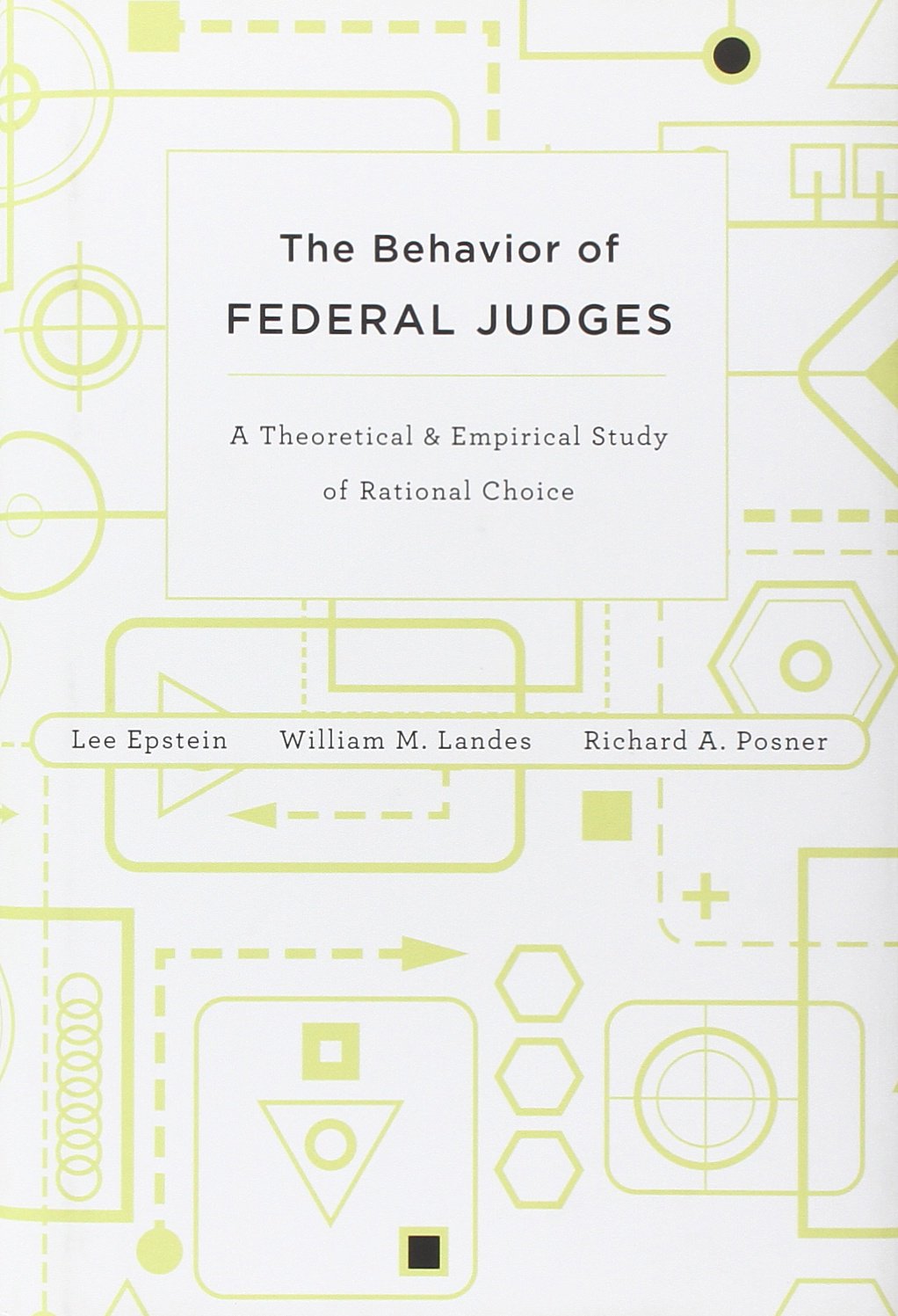
Title
The Behavior Of Federal Judges: A Theoretical And Empirical Study Of Rational Choice,New
Sold by Ergodebooks, an authorized reseller.
Returns accepted within 30 days | support@ergodebooks.com
Shipping Information
- Free Standard Shipping — United States only
- Processing Time: 3–5 business days
- Estimated Delivery: 6–10 business days after dispatch
- Double-boxed, fully insured & discreetly packaged
- Tracking number sent via email once dispatched
Returns & Refund
Returns accepted within 30 days of delivery.
Damaged or Defective Item
Free return shipping + replacement or full refund
Wrong Item Received
Free return shipping + replacement or full refund
Change of Mind
Return shipping at customer's expense · 25% restocking fee applies
Payment Option

Judges Play A Central Role In The American Legal System, But Their Behavior As Decisionmakers Is Not Well Understood, Even Among Themselves. The System Permits Judges To Be Quite Secretive (And Most Of Them Are), So Indirect Methods Are Required To Make Sense Of Their Behavior. Here, A Political Scientist, An Economist, And A Judge Work Together To Construct A Unified Theory Of Judicial Decisionmaking. Using Statistical Methods To Test Hypotheses, They Dispel The Mystery Of How Judicial Decisions In District Courts, Circuit Courts, And The Supreme Court Are Made.The Authors Derive Their Hypotheses From A Labormarket Model, Which Allows Them To Consider Judges As They Would Any Other Economic Actors: As Selfinterested Individuals Motivated By Both The Pecuniary And Nonpecuniary Aspects Of Their Work. In The Authors' View, This Model Describes Judicial Behavior Better Than Either The Traditional Legalist Theory, Which Sees Judges As Automatons Who Mechanically Apply The Law To The Facts, Or The Current Dominant Theory In Political Science, Which Exaggerates The Ideological Component In Judicial Behavior. Ideology Does Figure Into Decisionmaking At All Levels Of The Federal Judiciary, The Authors Find, But Its Influence Is Not Uniform. It Diminishes As One Moves Down The Judicial Hierarchy From The Supreme Court To The Courts Of Appeals To The District Courts. As The Behavior Of Federal Judges Demonstrates, The Good News Is That Ideology Does Not Extinguish The Influence Of Other Components In Judicial Decisionmaking. Federal Judges Are Not Just Robots Or Politicians In Robes.
⚠️ WARNING (California Proposition 65):
This product may contain chemicals known to the State of California to cause cancer, birth defects, or other reproductive harm.
For more information, please visit www.P65Warnings.ca.gov.