
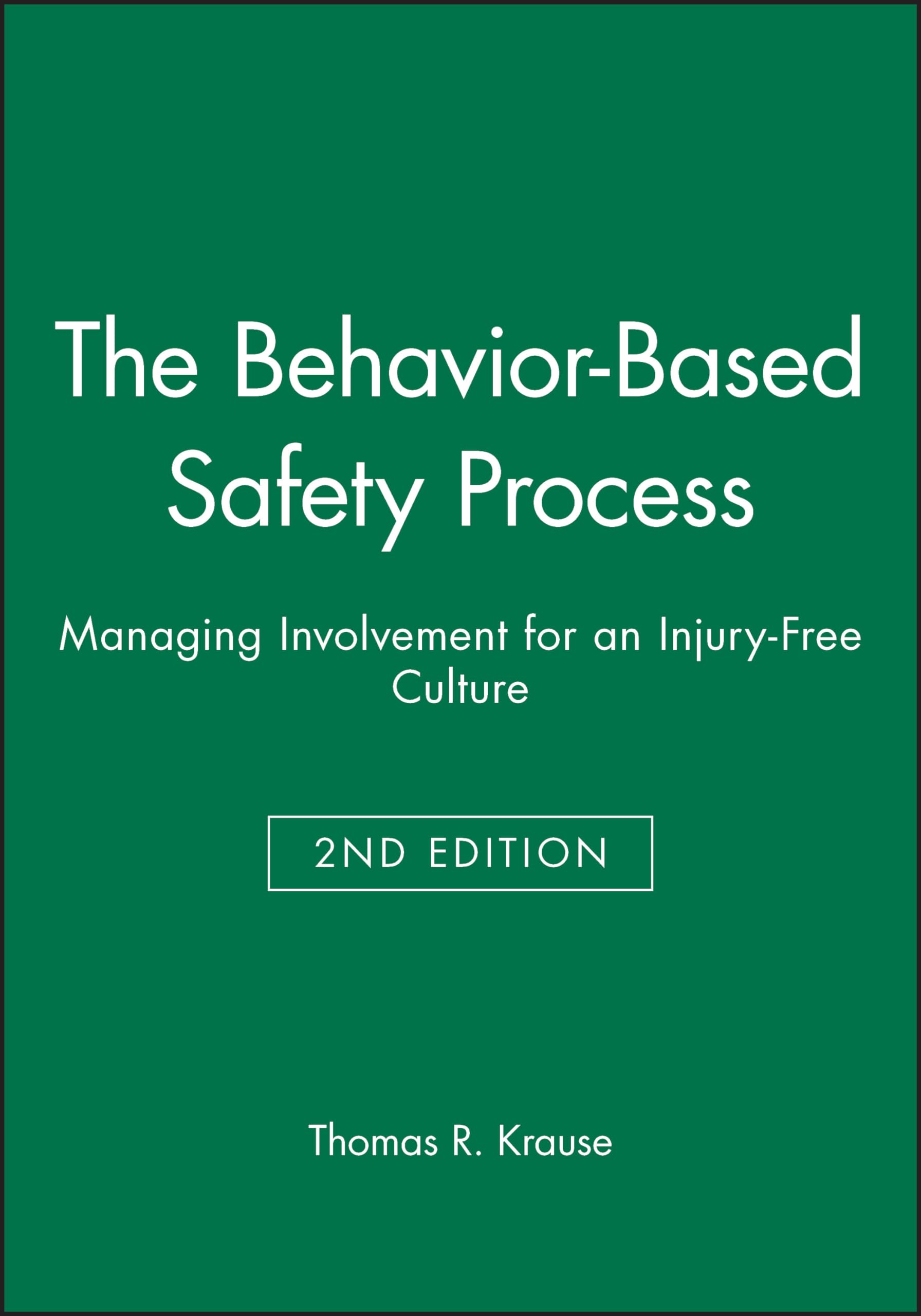
Title
The BehaviorBased Safety Process: Managing Involvement for an InjuryFree Culture, 2nd Edition,Used
Sold by Ergodebooks, an authorized reseller.
Returns accepted within 30 days | support@ergodebooks.com
Shipping Information
- Free Standard Shipping — United States only
- Processing Time: 3–5 business days
- Estimated Delivery: 6–10 business days after dispatch
- Double-boxed, fully insured & discreetly packaged
- Tracking number sent via email once dispatched
Returns & Refund
Returns accepted within 30 days of delivery.
Damaged or Defective Item
Free return shipping + replacement or full refund
Wrong Item Received
Free return shipping + replacement or full refund
Change of Mind
Return shipping at customer's expense · 25% restocking fee applies
Payment Option

The BehaviorBased Safety Process Since the behaviorbased approach to accident prevention was launched in 1980 by the author and his associates, safety performance is increasingly prominent on the agendas of many companies. Several powerful factors contribute to this trend. The widespread reorganization of personnel into workgroups that are leaner and more selfdirected, the increasing importance of international competition, the growing awareness of critical environmental issues these and related factors highlight the value of any mechanism that promotes continuous improvement in safety performance. Detailing a stepbystep approach to just such a mechanism for continuous improvement, The BehaviorBased Safety Process is a pathbreaking guide that represents an important resource for anyone concerned with performance related issues in the workplace. As the title indicates, the focus is on process versus programs. The reason is simple: offtheshelf safety imposed from the top down does not meet the safety needs of most organizations. This fact has been abundantly demonstrated in facility after facility throughout the 1970s and 1980s. In genuinely meeting the need for continuous improvement in safety performance, the behaviorbased approach presents many parallels with the quality improvement process. Both of these approaches use scientific methods to identify, measure, and provide feedback on upstream factors of excellence. In the case of the behaviorbased approach to safety, these upstream factors are critical behaviors that are the leading indicators of safety performance in the organization, targeting areas of concern in advance of even firstaid incidents. For an indepth treatment of how to integrate behavioral and statistical methodologies, see the author s companion volume from Van Nostrand Reinhold: EmployeeDriven Systems for Safe Behavior. In addition to presenting these parallels with quality. The BehaviorBased Safety Process also provides powerful techniques aimed at implementation issues: organizational development, trainertraining, and employee involvement. The author and his associates developed these techniques over a decade of consultation with a variety of industries, working closely in that time with such safety leaders as Monsanto, Shell Chemical Company, ARCO Chemical, ALCOA, Rohm and Haas, Scott Paper Company, Georgia Gulf Corporation, The Pillsbury Company, and Chevron U.S.A.
⚠️ WARNING (California Proposition 65):
This product may contain chemicals known to the State of California to cause cancer, birth defects, or other reproductive harm.
For more information, please visit www.P65Warnings.ca.gov.
- Q: What is the page count of the book? A: The book has three hundred sixty-eight pages. This provides a comprehensive exploration of the behavior-based safety process.
- Q: What are the dimensions of this book? A: The book measures six point thirty-six inches in length, one point eighteen inches in width, and nine point twenty-three inches in height. These dimensions make it a suitable size for most bookshelves.
- Q: What type of binding does this book have? A: This book is bound in hardcover. Hardcover bindings offer durability and protection for frequent use.
- Q: How do I implement the safety processes outlined in the book? A: To implement the processes, read the book thoroughly and follow the step-by-step approach provided. The author includes practical techniques for organizational development and employee involvement.
- Q: Is this book suitable for beginners in safety management? A: Yes, this book is suitable for beginners. It breaks down complex concepts into understandable steps for anyone new to behavior-based safety.
- Q: What industries can benefit from reading this book? A: Various industries can benefit, including manufacturing, chemical, and corporate sectors. The techniques discussed are applicable to diverse workplace environments.
- Q: How should I store this book to keep it in good condition? A: Store the book upright on a shelf or in a bookcase to prevent bending. Avoid exposure to direct sunlight to prevent fading of the cover.
- Q: Is this book safe for workplace training sessions? A: Yes, the book is appropriate for workplace training. It serves as a resource for enhancing safety culture and practices in organizations.
- Q: What is the best way to clean this book? A: To clean the book, gently wipe the cover with a dry cloth. Avoid using liquids that may damage the pages or binding.
- Q: Can I return the book if I am not satisfied? A: Yes, you can return the book if you are not satisfied. Check the seller's return policy for specific terms and conditions.
- Q: How do I contact support if I have an issue with the book? A: You can typically contact customer support through the platform where you purchased the book. Look for a contact section for assistance.
- Q: Is there a warranty for this book? A: Books generally do not come with a warranty. However, you can inquire about return options if the book arrives damaged.
- Q: What if the book arrives damaged? A: If the book arrives damaged, you should report the issue to the seller immediately for a potential exchange or refund.
- Q: How does this book compare with other safety management guides? A: This book focuses specifically on a behavior-based approach, unlike many guides that may emphasize traditional safety programs. It provides unique insights into continuous improvement.
- Q: Is this book a good resource for environmental economics? A: Yes, the book falls under the category of environmental economics, linking safety practices with broader environmental and organizational performance.
- Q: What makes this book a unique resource for safety management? A: This book is unique because it emphasizes a process-oriented approach rather than a programmatic one. It draws on real industry experiences to illustrate effective strategies.