
Title
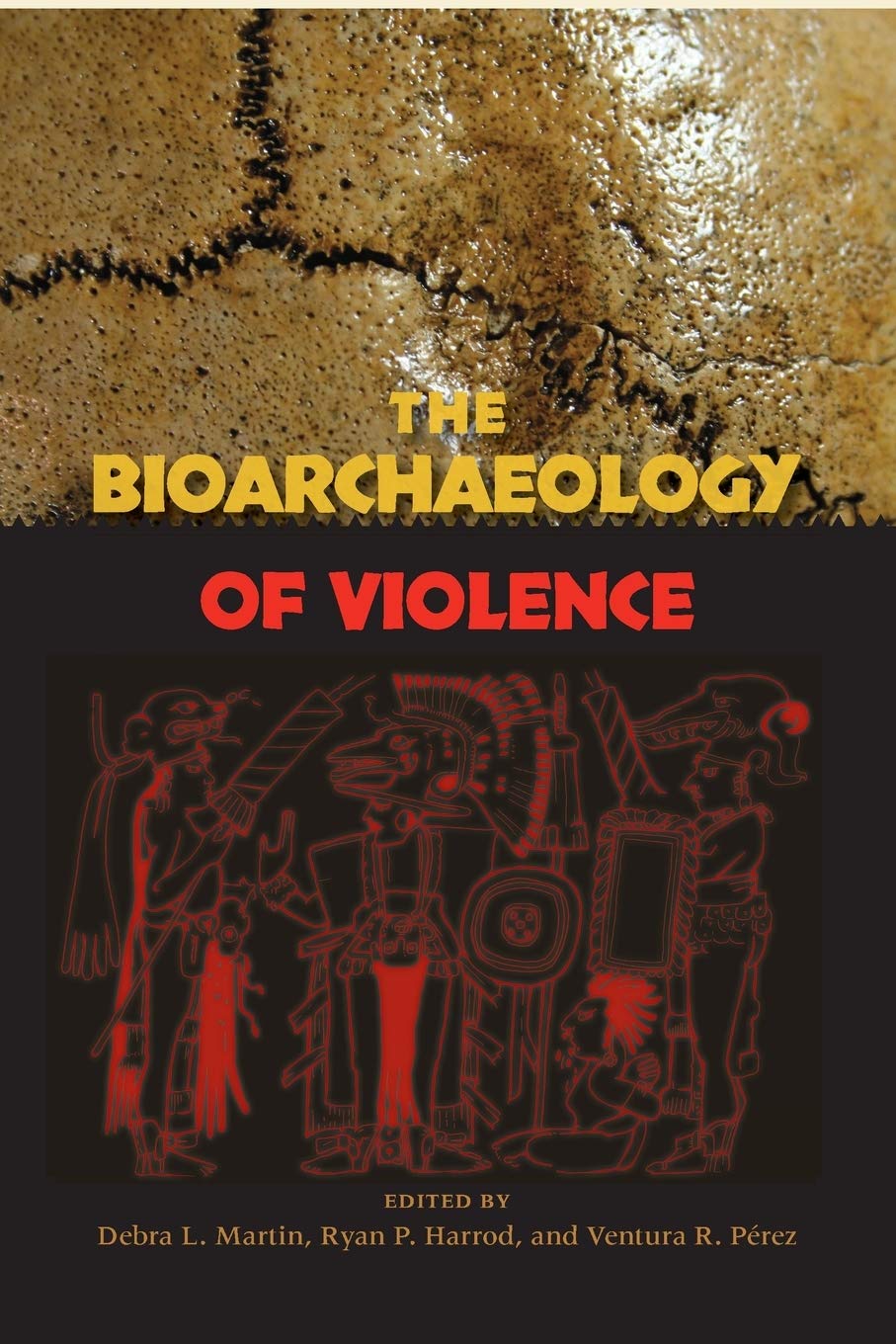
The Bioarchaeology Of Violence (Bioarchaeological Interpretations Of The Human Past: Local, Regional, And Global),Used
Sold by Ergodebooks, an authorized reseller.
Returns accepted within 30 days | support@ergodebooks.com
Shipping Information
- Free Standard Shipping — United States only
- Processing Time: 3–5 business days
- Estimated Delivery: 6–10 business days after dispatch
- Double-boxed, fully insured & discreetly packaged
- Tracking number sent via email once dispatched
Returns & Refund
Returns accepted within 30 days of delivery.
Damaged or Defective Item
Free return shipping + replacement or full refund
Wrong Item Received
Free return shipping + replacement or full refund
Change of Mind
Return shipping at customer's expense · 25% restocking fee applies
Payment Option

The tragedies of violence have seldom been told with such a compelling use of the biocultural perspective. Building on a solid methodological foundation, we are served theoretical perspectives that are unusually rich and nuanced in their application to the case studies. This collection of case studies is a valuable contribution to the bioarchaeological literature.'George Armelagos, Emory UniversityHuman violence is an inescapable aspect of our society and culture. As the archaeological record clearly shows, this has always been true. What is its origin? What role does it play in shaping our behavior? How do ritual acts and cultural sanctions make violence acceptable?These and other questions are addressed by the contributors to The Bioarchaeology of Violence. Organized thematically, the volume opens by laying the groundwork for new theoretical approaches that move beyond interpretation; it then examines case studies from smallscale conflict to warfare to ritualized violence.Experts on a wide range of ancient societies highlight the meaning and motivation of past uses of violence, revealing how violence often plays an important role in maintaining and suppressing the challenges to the status quo, and how it is frequently a performance meant to be witnessed by others.The interesting and nuanced insights offered in this volume explore both the costs and the benefits of violence throughout human prehistory.
⚠️ WARNING (California Proposition 65):
This product may contain chemicals known to the State of California to cause cancer, birth defects, or other reproductive harm.
For more information, please visit www.P65Warnings.ca.gov.
- Q: What is the length and width of 'The Bioarchaeology of Violence'? A: The book measures six point five inches in length and zero point ninety-eight inches in width. Its dimensions make it easy to handle and store.
- Q: How many pages does 'The Bioarchaeology of Violence' have? A: This book has a total of three hundred four pages. It offers comprehensive insights into the subject matter.
- Q: What type of binding does 'The Bioarchaeology of Violence' have? A: The book is available in paperback binding. This makes it lightweight and portable for readers.
- Q: Who is the author of 'The Bioarchaeology of Violence'? A: The author of the book is Debra L. Martin. She provides valuable insights into the themes of violence in society.
- Q: What is the main focus of 'The Bioarchaeology of Violence'? A: The book focuses on the biocultural perspective of human violence. It examines its origins, roles, and societal implications throughout history.
- Q: Is 'The Bioarchaeology of Violence' suitable for academic research? A: Yes, it is suitable for academic research. The book includes theoretical perspectives and case studies relevant to bioarchaeology.
- Q: How does 'The Bioarchaeology of Violence' explore the theme of violence? A: The book explores violence through case studies and theoretical approaches. It discusses small-scale conflicts, warfare, and ritualized violence.
- Q: What type of audience is 'The Bioarchaeology of Violence' intended for? A: The book is intended for scholars, students, and anyone interested in bioarchaeology and the study of violence. It offers in-depth analysis and insights.
- Q: Can I use 'The Bioarchaeology of Violence' for a research paper? A: Yes, you can use it for a research paper. Its comprehensive case studies and theoretical frameworks provide valuable references.
- Q: What are the key themes discussed in 'The Bioarchaeology of Violence'? A: Key themes include the origins of violence, its societal roles, and the cultural sanctions surrounding it. These insights are drawn from various ancient societies.
- Q: How do contributors address violence in 'The Bioarchaeology of Violence'? A: Contributors address violence by examining its motivations and meanings in historical contexts. This approach highlights both its costs and benefits.
- Q: Is there a specific historical context covered in 'The Bioarchaeology of Violence'? A: Yes, the book covers various historical contexts, including small-scale conflicts and larger warfare scenarios. Each case study provides unique insights.
- Q: What is the significance of the case studies in the book? A: The case studies are significant as they illustrate the complex nature of violence across different societies. They enrich the theoretical discussions presented.
- Q: Does 'The Bioarchaeology of Violence' include modern implications of violence? A: Yes, it discusses modern implications by linking historical contexts to contemporary understandings of violence. This connection is crucial for ongoing research.
- Q: How does the book contribute to the bioarchaeological literature? A: The book contributes by providing a rich collection of case studies and theoretical perspectives that advance the field of bioarchaeology.