
Title
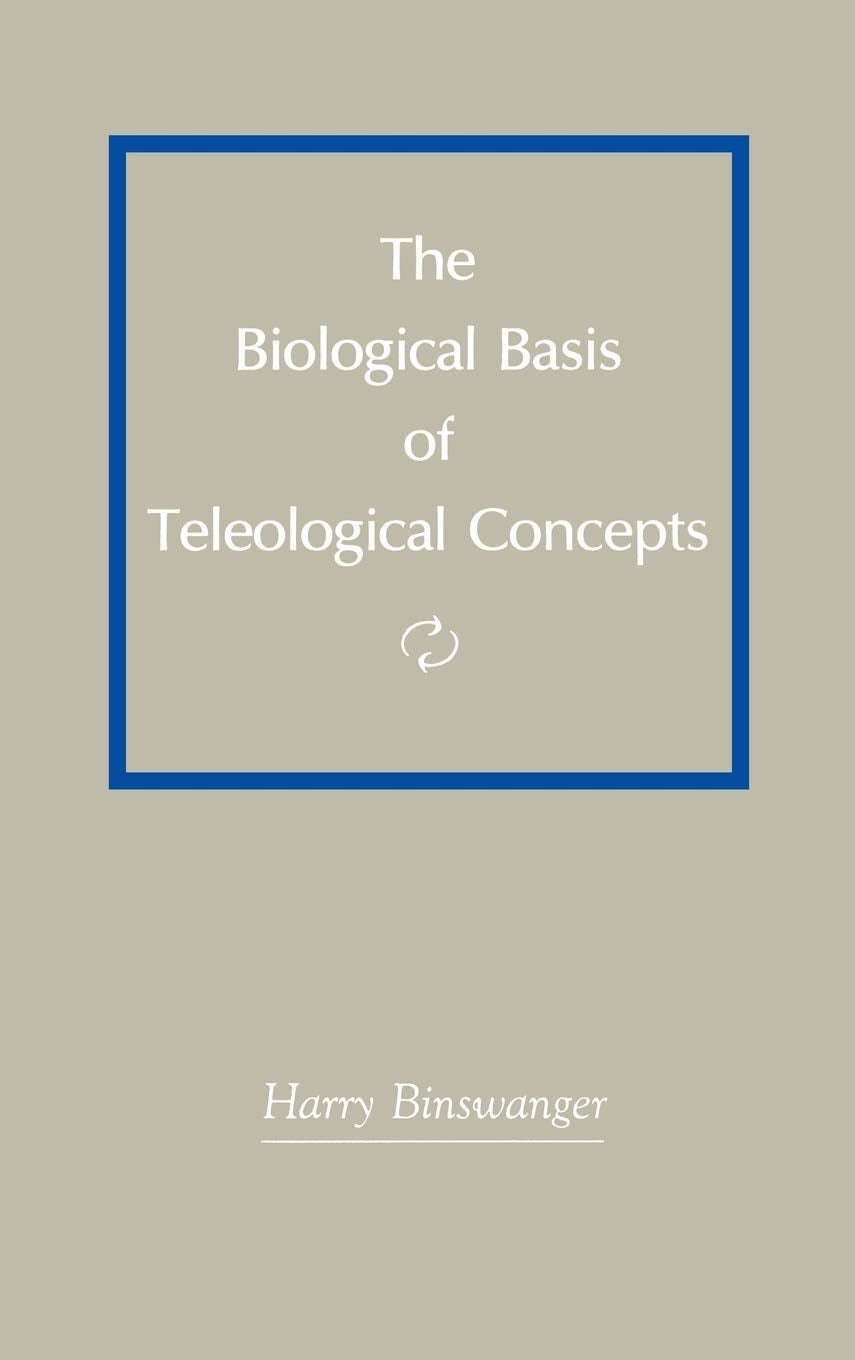
The biological basis of teleological concepts,Used
Sold by Ergodebooks, an authorized reseller.
Returns accepted within 30 days | support@ergodebooks.com
Shipping Information
- Free Standard Shipping — United States only
- Processing Time: 3–5 business days
- Estimated Delivery: 6–10 business days after dispatch
- Double-boxed, fully insured & discreetly packaged
- Tracking number sent via email once dispatched
Returns & Refund
Returns accepted within 30 days of delivery.
Damaged or Defective Item
Free return shipping + replacement or full refund
Wrong Item Received
Free return shipping + replacement or full refund
Change of Mind
Return shipping at customer's expense · 25% restocking fee applies
Payment Option

What is the actual basis of terms such as 'goal,' 'function,' and 'for the sake of'? Can these teleological concepts be validly applied to nonconscious biological processes such as the heartbeat, plant growth, and cellular metabolism? Does the behavior of any inanimate objects, natural or manmade, qualify as goaldirected? To resolve these issues, Harry Binswanger provides a unique approach combining factual and epistemological considerations. If human purposeful action is the paradigm case of goaldirected action, then regarding a nonpurposeful process as goaldirected means taking it to be causally similar to purposeful action. Accordingly, to determine the proper extent of teleological concepts, Binswanger provides an analysis of purposeful action and a pointbypoint comparison of the features of purposeful action to those of vegetative and inanimate processes. He concludes that natural selection, in adapting actions to ends with survival value, does make all living action qualify as goaldirected, and that no inanimate process qualifies. An appendix compares Binswanger's views with those of Larry Wright and Andrew Woodfield.
⚠️ WARNING (California Proposition 65):
This product may contain chemicals known to the State of California to cause cancer, birth defects, or other reproductive harm.
For more information, please visit www.P65Warnings.ca.gov.
- Q: What is the main focus of 'The biological basis of teleological concepts'? A: The book explores the foundations of teleological concepts such as 'goal' and 'function', particularly in relation to non-conscious biological processes.
- Q: Who is the author of this book? A: The author is Harry Binswanger, who offers a unique perspective on teleological concepts in biology.
- Q: What are the key themes discussed in the book? A: Key themes include the application of teleological concepts to biological processes, the analysis of purposeful action, and the comparison of living actions to inanimate processes.
- Q: What is the condition of the book being sold? A: The book is listed as 'Used Book in Good Condition', indicating it may show some signs of wear but is in very good overall condition.
- Q: How many pages does the book contain? A: The book has a total of 264 pages.
- Q: What type of binding does this book have? A: This book is published in a paperback binding.
- Q: When was 'The biological basis of teleological concepts' published? A: The book was published on July 6, 1990.
- Q: Does the book include any comparisons with other theorists? A: Yes, an appendix in the book compares Binswanger's views with those of Larry Wright and Andrew Woodfield.
- Q: Is this book suitable for someone without a background in biology? A: While the book discusses complex concepts, it may be suitable for readers with a keen interest in biology, though some prior knowledge may enhance understanding.
- Q: What is the primary argument presented by Harry Binswanger? A: Binswanger argues that only living actions can be considered goal-directed, as natural selection adapts actions for survival, while no inanimate processes meet this criterion.