
Title
The Biology of Human Survival: Life and Death in Extreme Environments,Used
Sold by Ergodebooks, an authorized reseller.
Returns accepted within 30 days | support@ergodebooks.com
Shipping Information
- Free Standard Shipping — United States only
- Processing Time: 3–5 business days
- Estimated Delivery: 6–10 business days after dispatch
- Double-boxed, fully insured & discreetly packaged
- Tracking number sent via email once dispatched
Returns & Refund
Returns accepted within 30 days of delivery.
Damaged or Defective Item
Free return shipping + replacement or full refund
Wrong Item Received
Free return shipping + replacement or full refund
Change of Mind
Return shipping at customer's expense · 25% restocking fee applies
Payment Option

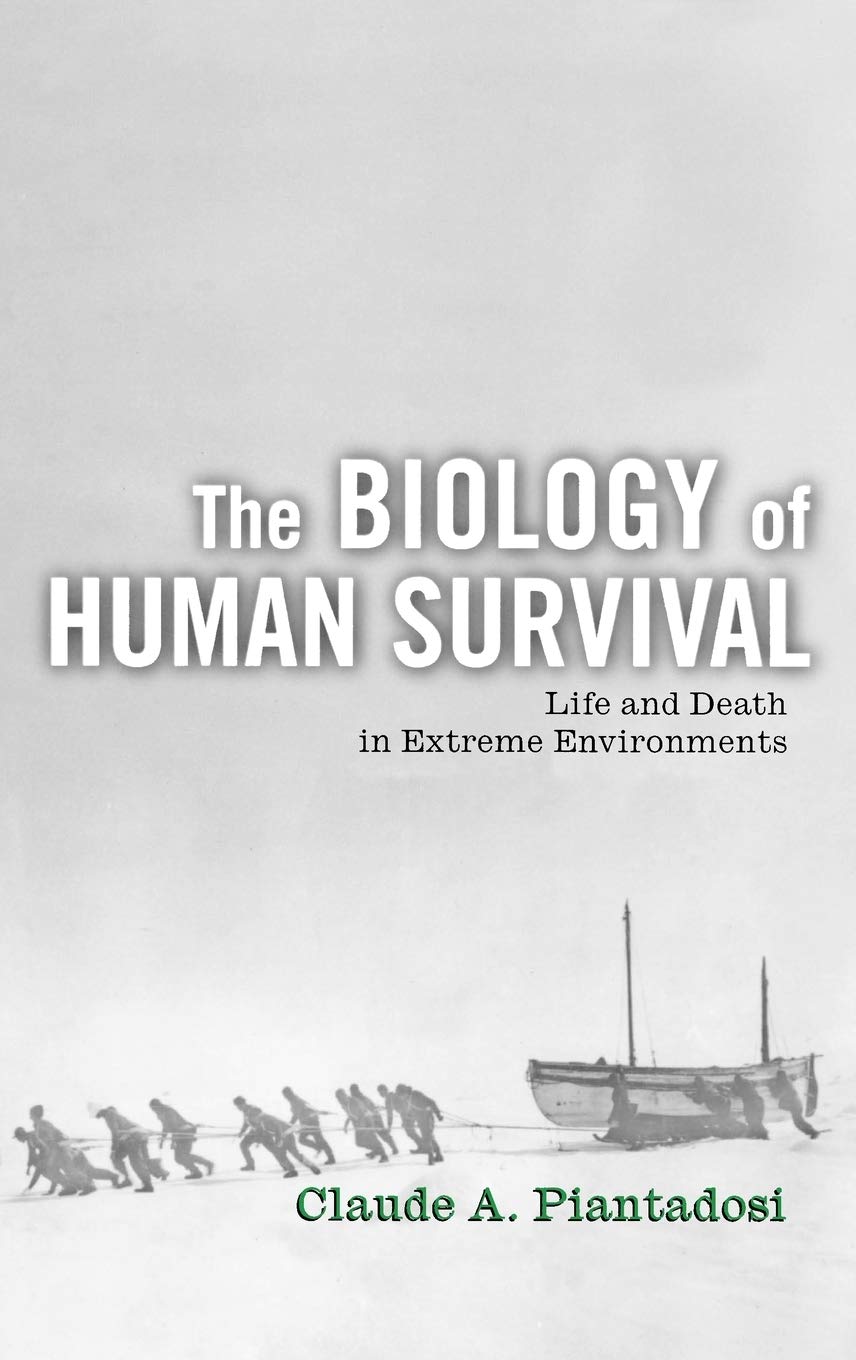
The range of environments in which people can survive is extensive, yet most of the natural world cannot support human life. The Biology of Human Survival identifies the key determinants of life or death in extreme environments from a physiologist's perspective, integrating modern concepts of stress, tolerance, and adaptation into explanations of life under Nature's most austere conditions. The book examines how individuals survive when faced with extremes of immersion, heat, cold or altitude, emphasizing the body's recognition of stress and the brain's role in optimizing physiological function in order to provide time to escape or to adapt. In illustrating how human biology adapts to extremes, the book also explains how we learn to cope by blending behavior and biology, first by trial and error, then by rigorous scientific observation, and finally by technological innovation. The book describes lifesupport technology and how it enables humans to enter once unendurable realm, from the depths of the ocean to the upper reaches of the atmosphere and beyond. Finally, it explores the role that advanced technology might play in special environments of the future, such as long journeys into space.
⚠️ WARNING (California Proposition 65):
This product may contain chemicals known to the State of California to cause cancer, birth defects, or other reproductive harm.
For more information, please visit www.P65Warnings.ca.gov.
- Q: What are the dimensions of the book? A: The book measures nine point four nine inches in length, six point five inches in height, and zero point nine one inches in width.
- Q: How many pages does the book have? A: The book contains two hundred eighty pages, providing a comprehensive exploration of human survival in extreme environments.
- Q: What is the binding type of this book? A: This book is bound in hardcover, offering durability and a quality reading experience.
- Q: Who is the author of this book? A: The author is Claude A. Piantadosi, a respected figure in the study of human physiology.
- Q: What is the primary focus of the book? A: The book focuses on the physiological aspects of human survival in extreme environments, integrating concepts of stress, tolerance, and adaptation.
- Q: Is this book suitable for all ages? A: While not specifically labeled for age suitability, the content is academic and may be more appropriate for adults or advanced students.
- Q: How does the book approach the topic of survival? A: The book examines survival through a physiological lens, exploring how the body and brain respond to extreme stressors.
- Q: What kind of environments does the book discuss? A: The book discusses various extreme environments, including heat, cold, immersion, and altitude, detailing human responses to each.
- Q: Does the book include scientific observations? A: Yes, the book incorporates rigorous scientific observations and technological innovations related to human survival.
- Q: What innovative technologies are covered in the book? A: The book describes life-support technologies that allow humans to explore extreme realms, such as deep oceans and high altitudes.
- Q: Can I find practical applications in the book? A: Yes, the book blends behavioral and biological insights with practical applications for survival in extreme situations.
- Q: What kind of readers would benefit from this book? A: Readers with an interest in biology, human physiology, or extreme environments will find this book particularly insightful.
- Q: Is there a focus on future survival technologies? A: Yes, the book explores potential future technologies for survival in unique environments, including long space journeys.
- Q: Does the book have a specific target audience? A: The target audience includes students, educators, and professionals interested in biology and survival sciences.
- Q: What publication is responsible for this book? A: This book is published by Oxford University Press, USA, a reputable publisher in academic literature.