
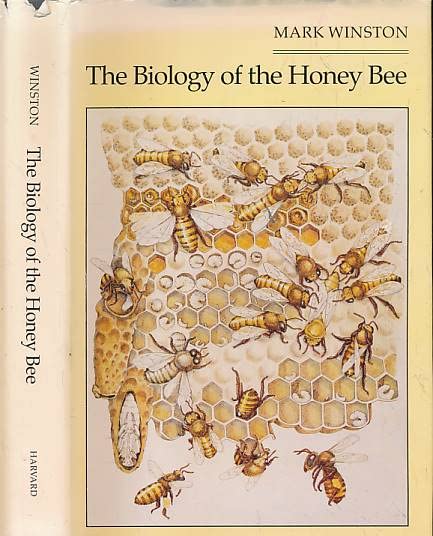
Title
The Biology Of The Honey Bee,Used
Sold by Ergodebooks, an authorized reseller.
Returns accepted within 30 days | support@ergodebooks.com
Shipping Information
- Free Standard Shipping — United States only
- Processing Time: 3–5 business days
- Estimated Delivery: 6–10 business days after dispatch
- Double-boxed, fully insured & discreetly packaged
- Tracking number sent via email once dispatched
Returns & Refund
Returns accepted within 30 days of delivery.
Damaged or Defective Item
Free return shipping + replacement or full refund
Wrong Item Received
Free return shipping + replacement or full refund
Change of Mind
Return shipping at customer's expense · 25% restocking fee applies
Payment Option

From Ancient Cave Paintings Of Honey Bee Nests To Modern Science'S Richly Diversified Investigation Of Honey Bee Biology And Its Applications, The Human Imagination Has Long Been Captivated By The Mysterious And Highly Sophisticated Behavior Of This Paragon Among Insect Societies. In The First Broad Treatment Of Honey Bee Biology To Appear In Decades, Mark Winston Provides Rare Access To The World Of This Extraordinary Insect.In A Bright And Engaging Style Winston Probes The Dynamics Of The Honey Bee'S Social Organization. He Recreates For Us The Complex Infrastructure Of The Nest, Describes The Highly Specialized Behavior Of Workers, Queens, And Drones, And Examines In Detail The Remarkable Ability Of The Honey Bee Colony To Regulate Its Functions According To Events Within And Outside The Nest. Winston Integrates Into His Discussion The Results Of Recent Studies, Bringing Into Sharp Focus Topics Of Current Bee Research. These Include The Exquisite Architecture Of The Nest And Its Relation To Bee Physiology; The Intricate Division Of Labor And The Relevance Of A Temporal Caste Structure To Efficient Functioning Of The Colony; And, Finally, The Lifedeath Struggles Of Swarming, Supersedure, And Mating That Mark The Reproductive Cycle Of The Honey Bee.The Biology Of The Honey Bee Not Only Reviews The Basic Aspects Of Social Behavior, Ecology, Anatomy, Physiology, And Genetics, It Also Summarizes Major Controversies In Contemporary Honey Bee Research, Such As The Importance Of Kin Recognition In The Evolution Of Social Behavior And The Role Of The Wellknown Dance Language In Honey Bee Communication. Thorough, Wellillustrated, And Lucidly Written, This Book Will For Many Years Be A Valuable Resource For Scholars, Students, And Beekeepers Alike.
⚠️ WARNING (California Proposition 65):
This product may contain chemicals known to the State of California to cause cancer, birth defects, or other reproductive harm.
For more information, please visit www.P65Warnings.ca.gov.
- Q: What is the page count of 'The Biology of the Honey Bee'? A: The book contains two hundred ninety-four pages. This extensive length allows for a detailed exploration of honey bee biology and behavior.
- Q: What are the dimensions of 'The Biology of the Honey Bee'? A: The book measures seven point zero one inches in length, one point two six inches in width, and ten inches in height. These dimensions make it a substantial hardcover volume.
- Q: Who is the author of 'The Biology of the Honey Bee'? A: The author is Mark L. Winston. He is recognized for his expertise in honey bee biology and has contributed significantly to contemporary research.
- Q: How is 'The Biology of the Honey Bee' bound? A: The book is bound in hardcover. This durable binding ensures longevity, making it suitable for both personal and academic use.
- Q: What category does 'The Biology of the Honey Bee' fall under? A: The book is categorized under Biology. It provides insights into the biological and ecological aspects of honey bees.
- Q: Is 'The Biology of the Honey Bee' suitable for beginners? A: Yes, the book is suitable for beginners. Its clear writing style and comprehensive coverage make it accessible to readers with varying levels of knowledge.
- Q: Can 'The Biology of the Honey Bee' be used for academic study? A: Yes, it is an excellent resource for academic study. The book covers major controversies and recent research in the field, making it valuable for students and scholars.
- Q: What topics does 'The Biology of the Honey Bee' cover? A: The book covers social behavior, ecology, anatomy, physiology, and genetics of honey bees. It also discusses current research topics relevant to honey bee science.
- Q: Is 'The Biology of the Honey Bee' illustrated? A: Yes, the book is thoroughly illustrated. The illustrations enhance understanding of complex biological concepts and the architecture of honey bee nests.
- Q: How should I store 'The Biology of the Honey Bee'? A: Store the book in a cool, dry place. Keeping it away from direct sunlight will help preserve its condition and prevent damage to the pages.
- Q: What if my copy of 'The Biology of the Honey Bee' arrives damaged? A: If your copy arrives damaged, contact the seller for a return or replacement. Most retailers have policies in place to address such issues.
- Q: Does 'The Biology of the Honey Bee' contain any controversial topics? A: Yes, it summarizes major controversies in honey bee research. Topics include kin recognition and the role of dance language in communication among bees.
- Q: Is this book appropriate for children? A: While the book is suitable for interested older children, it is primarily targeted toward adults and students. Parental guidance may be needed for younger readers.
- Q: What makes 'The Biology of the Honey Bee' a valuable resource? A: Its thorough and engaging approach, combined with recent scientific findings, makes it a valuable resource for beekeepers, scholars, and students alike.
- Q: Can I use 'The Biology of the Honey Bee' for research projects? A: Yes, the book is ideal for research projects. It integrates recent studies and provides a comprehensive overview of honey bee biology.