
Title
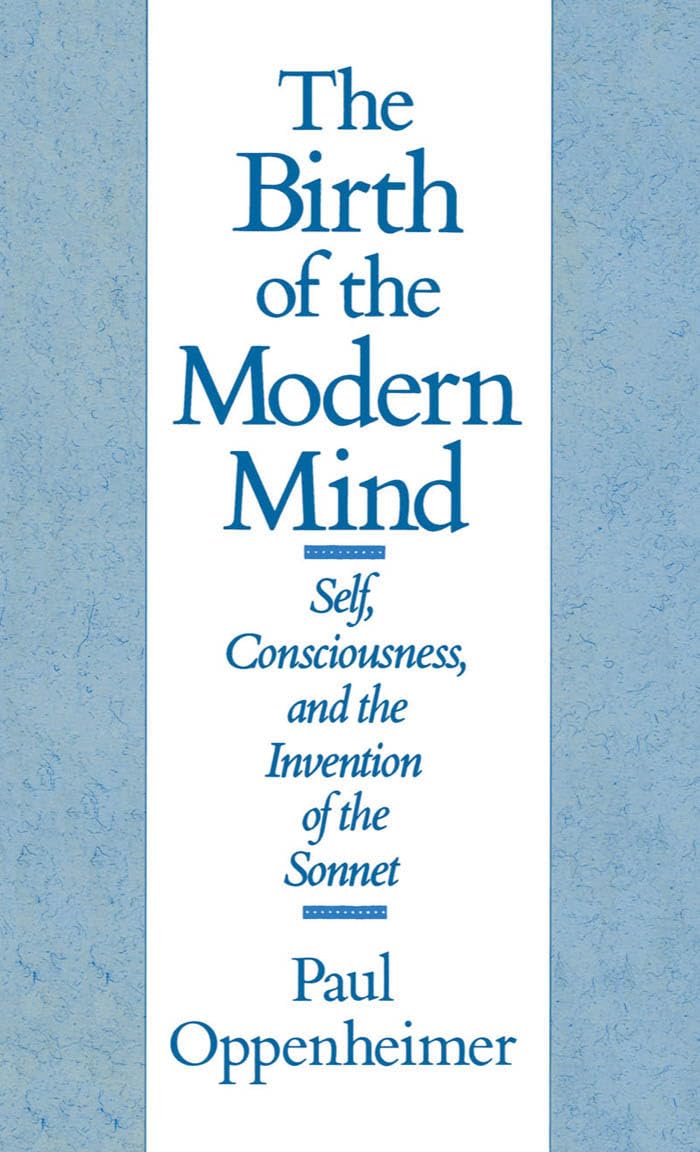
The Birth of the Modern Mind: Self, Consciousness, and the Invention of the Sonnet,New
Sold by Ergodebooks, an authorized reseller.
Returns accepted within 30 days | support@ergodebooks.com
Shipping Information
- Free Standard Shipping — United States only
- Processing Time: 3–5 business days
- Estimated Delivery: 6–10 business days after dispatch
- Double-boxed, fully insured & discreetly packaged
- Tracking number sent via email once dispatched
Returns & Refund
Returns accepted within 30 days of delivery.
Damaged or Defective Item
Free return shipping + replacement or full refund
Wrong Item Received
Free return shipping + replacement or full refund
Change of Mind
Return shipping at customer's expense · 25% restocking fee applies
Payment Option

This revolutionary study presents new facts and an original theory about the origin of the thought and literature that may be considered 'modern.' Using fiftyone new translations of sonnets from four languages spanning seven centuries, Oppenheimer argues that 'modern' thought and literature were born with the invention of the sonnet in 13thcentury Italy. In revealing the sonnet as the first lyric form since the fall of the Roman Empire meant not for music or performance but for silent reading, the book demonstrates that the sonnet was the first modern literary form deliberately intended to portray the self in conflict and to explore selfconsciousness. The wideranging essay of Part I traces the influences of the sonnet, as invented by Giacomo da Lentino, combining historical fact with the history of ideas and literary criticism. Part II illustrates, in bilingual format, the sonnet's growing appeal and variety during the centuries that followed with translations from Italian, German, French, and Spanish. The selection presents sonnets by more than thirtyfive poets, among them Dante, Petrarch, Goethe, Rilke, Ronsard, Valry, Ibarbourou, and Lorca. The concluding section discusses previous scholarship, offers proofs of the sonnet's introspective and silent inventions, and for the first time establishes the source of the form, in PlatonicPythagorean mathematics.
⚠️ WARNING (California Proposition 65):
This product may contain chemicals known to the State of California to cause cancer, birth defects, or other reproductive harm.
For more information, please visit www.P65Warnings.ca.gov.
- Q: What is the main thesis of 'The Birth of the Modern Mind'? A: The main thesis of the book argues that modern thought and literature originated with the invention of the sonnet in 13th-century Italy, presenting the sonnet as the first literary form intended for silent reading and self-reflection.
- Q: Who is the author of this book? A: The author of 'The Birth of the Modern Mind' is Paul Oppenheimer.
- Q: What is the publication date of this book? A: The book was published on July 6, 1989.
- Q: How many pages does the book have? A: The book contains 224 pages.
- Q: What type of binding does this book have? A: The book is available in hardcover binding.
- Q: Does the book include translations of sonnets? A: Yes, the book includes fifty-one new translations of sonnets from Italian, German, French, and Spanish.
- Q: Who are some of the poets featured in the book? A: The book features sonnets by more than thirty-five poets, including Dante, Petrarch, Goethe, Rilke, Ronsard, Valéry, Ibarbourou, and Lorca.
- Q: What are the two main parts of the book about? A: Part I traces the historical influences of the sonnet, while Part II showcases its appeal and variety through bilingual translations.
- Q: Is there any discussion of previous scholarship in the book? A: Yes, the concluding section discusses previous scholarship and offers proofs of the sonnet's introspective nature.
- Q: What is the significance of the sonnet according to Oppenheimer? A: Oppenheimer argues that the sonnet was the first modern literary form designed to portray the self in conflict and explore self-consciousness.