
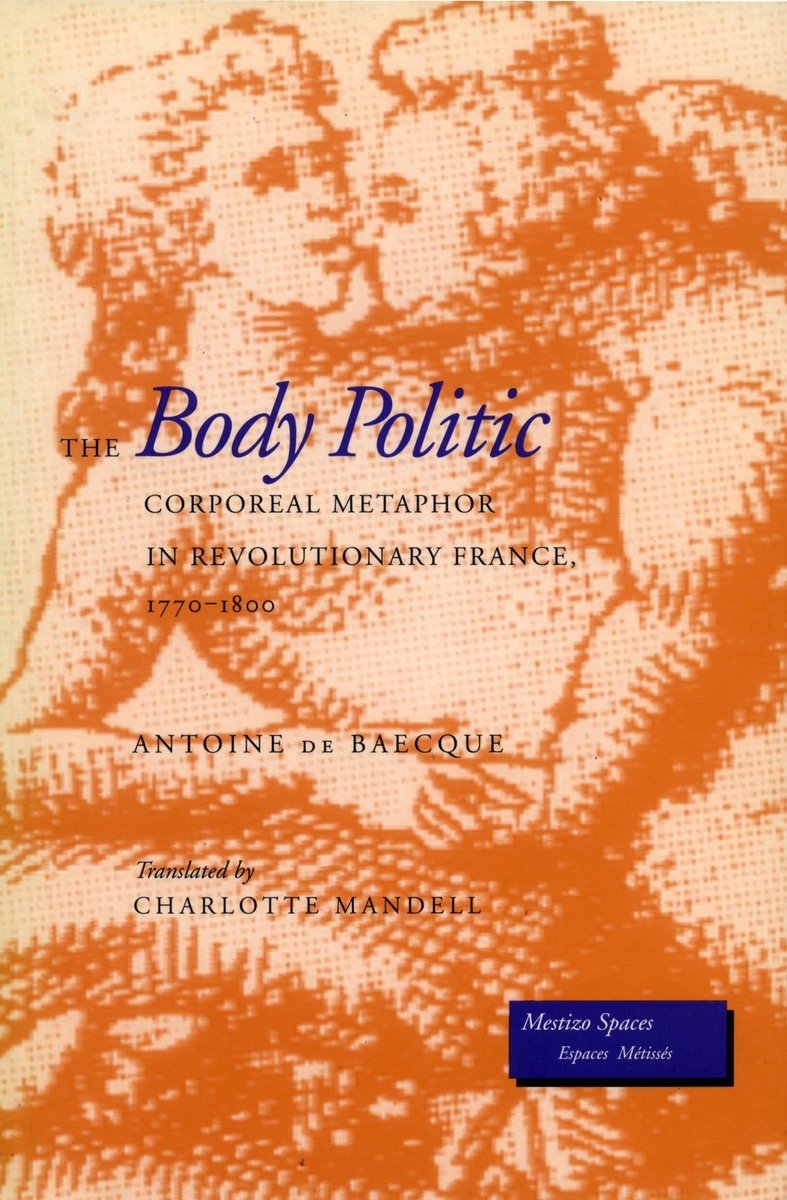
Title
The Body Politic: Corporeal Metaphor In Revolutionary France, 17701800 (Mestizo Spaces / Espaces Metisses)
Sold by Ergodebooks, an authorized reseller.
Returns accepted within 30 days | support@ergodebooks.com
Shipping Information
- Free Standard Shipping — United States only
- Processing Time: 3–5 business days
- Estimated Delivery: 6–10 business days after dispatch
- Double-boxed, fully insured & discreetly packaged
- Tracking number sent via email once dispatched
Returns & Refund
Returns accepted within 30 days of delivery.
Damaged or Defective Item
Free return shipping + replacement or full refund
Wrong Item Received
Free return shipping + replacement or full refund
Change of Mind
Return shipping at customer's expense · 25% restocking fee applies
Payment Option

This Is A Remarkable History Of The French Revolution Told Through The Study Of Images Of The Body As They Appeared In The Popular Literature Of The Time, Showing How These Images Were At The Very Center Of The Metaphoric Language Used To Describe The Revolution In Progress.The Author Draws Upon Some 2,000 Texts, Pamphlets, Announcements, Opinions, Accounts, Treatises, And Journals To Exhume The Textual Reality Of The Revolution, The Body Of Its History. The Deployment Of Bodily Imagesthe Degeneracy Of The Nobility, The Impotence Of The King, The Herculean Strength Of The Citizenry, The Goddess Of Politics Appearing Naked Like Truth, The Bleeding Wounds Of The Republican Martyrsallowed Political Society To Represent Itself At A Pivotal Moment In Its History.Searching For The Body Of History, The Author Finds Three Forms Of Political Representation: First, The Metaphysical Representation Of The Body As An Anthropomorphic Symbol Of The Political Systemthe Transition Of Sovereignty From The Body Of The King To The Great Citizen Body; Second, The Metaphorical Representation Of The Body As A Tool Of Discourse For Persuasionthe Embodied Tale Of The Revolutionary Epic; And Third, The Representation Of The Body In Public Ceremoniesstreet Carnivals And Funerals.The Introductory Chapter Studies The Symbolic Defeat Of The King'S Body And The Transfer Of Virility To The Republican Body. Later Chapters Examine The New Patriotic Body As Described In Medical Terms; Paintings By David That Show The Revolutionary Hero As Political Body; The Revolutionary Subject Conceived In Terms Of Regeneration; Its Opposite, The Aristocratic Body, Conceived As Monstrous; And The Bestial Images Projected Onto Marie Antoinette.
⚠️ WARNING (California Proposition 65):
This product may contain chemicals known to the State of California to cause cancer, birth defects, or other reproductive harm.
For more information, please visit www.P65Warnings.ca.gov.
- Q: What is the page count of 'The Body Politic'? A: The book contains three hundred eighty-four pages. This extensive length allows for a thorough exploration of corporeal metaphor in revolutionary France.
- Q: What is the binding type of 'The Body Politic'? A: The book is available in paperback binding. This format is lightweight and convenient for reading and transportation.
- Q: What are the dimensions of 'The Body Politic'? A: The book measures six point two six inches in length, zero point seven five inches in width, and nine point two five inches in height. These dimensions make it a standard size for easy handling.
- Q: Who is the author of 'The Body Politic'? A: The author is Antoine de Baecque. His expertise in history enriches the narrative of the French Revolution.
- Q: What themes are explored in 'The Body Politic'? A: The book explores themes of political representation and corporeal metaphor during the French Revolution. It examines how bodily images were used to convey political messages.
- Q: Is 'The Body Politic' suitable for all ages? A: Yes, the book is suitable for older teens and adults due to its historical and political themes. Readers should be prepared for complex discussions surrounding the French Revolution.
- Q: How can I use 'The Body Politic' for academic purposes? A: You can use this book as a primary source for understanding political metaphors in revolutionary literature. It provides valuable insights for history papers and discussions.
- Q: Is 'The Body Politic' a good choice for someone new to French history? A: Yes, it can be a good choice for beginners. The narrative is engaging and presents historical events through a unique lens.
- Q: How should I care for 'The Body Politic'? A: To keep the book in good condition, store it in a cool, dry place and avoid direct sunlight. Handle it gently to prevent wear and tear.
- Q: What if 'The Body Politic' arrives damaged? A: If the book arrives damaged, contact the seller for a return or exchange. Most sellers will have a customer service policy for such issues.
- Q: Can I return 'The Body Politic' if I don't like it? A: Yes, most retailers offer a return policy. Check the specific terms for the seller from whom you purchased the book.
- Q: Is it easy to find 'The Body Politic' in bookstores? A: Yes, it is generally available in many bookstores and online retailers. You may also find it in libraries.
- Q: Does 'The Body Politic' include illustrations or images? A: No, the book primarily focuses on text and analysis without illustrations. The emphasis is on the written word and historical context.
- Q: What makes 'The Body Politic' unique? A: The book uniquely analyzes the French Revolution through the lens of corporeal metaphor, offering a distinct perspective on political representation.
- Q: Are there any similar books to 'The Body Politic'? A: Yes, books exploring political history and metaphorical language may be similar. Titles focusing on the French Revolution could also be of interest.