
Title
The Book Of Books: Biblical Interpretation, Literary Culture, And The Political Imagination From Erasmus To Milton (Published In,Used
Sold by Ergodebooks, an authorized reseller.
Returns accepted within 30 days | support@ergodebooks.com
Shipping Information
- Free Standard Shipping — United States only
- Processing Time: 3–5 business days
- Estimated Delivery: 6–10 business days after dispatch
- Double-boxed, fully insured & discreetly packaged
- Tracking number sent via email once dispatched
Returns & Refund
Returns accepted within 30 days of delivery.
Damaged or Defective Item
Free return shipping + replacement or full refund
Wrong Item Received
Free return shipping + replacement or full refund
Change of Mind
Return shipping at customer's expense · 25% restocking fee applies
Payment Option

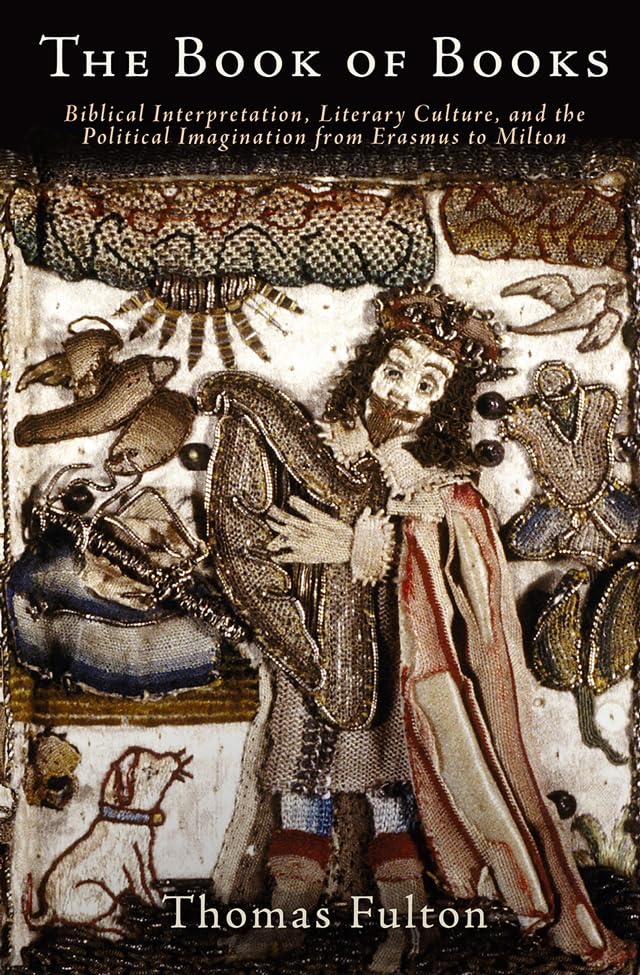
Just as the Reformation was a movement of intertwined theological and political aims, many individual authors of the time shifted back and forth between biblical interpretation and political writing. Two foundational figures in the history of the Renaissance Bible, Desiderius Erasmus and William Tyndale, are cases in point, one writing in Latin, the other in the vernacular. Erasmus undertook the project of retranslating and annotating the New Testament at the same time that he developed rhetorical approaches for addressing princes in his Education of a Christian Prince (1516); Tyndale was occupied with biblically inflected works such as his Obedience of a Christian Man (1528) while translating and annotating the first printed English Bibles.In The Book of Books, Thomas Fulton charts the process of recovery, interpretation, and reuse of scripture in early modern England, exploring the uses of the Bible as a supremely authoritative text that was continually transformed for political purposes. In a series of case studies linked to biblical translation, polemical tracts, and works of imaginative literature produced during the reigns of successive English rulers, he investigates the commerce between biblical interpretation, readership, and literary culture. Whereas scholars have often drawn exclusively on modern editions of the King James Version, Fulton turns our attention toward the specific Bibles that writers used and the specific manner in which they used them. In doing so, he argues that Spenser, Shakespeare, Milton, and others were in conversation not just with the biblical text itself, but with the rich interpretive and paratextual structures that accompanied it, revolving around sites of social controversy as well as the larger, often dynastically oriented conditions under which particular Bibles were created.
⚠️ WARNING (California Proposition 65):
This product may contain chemicals known to the State of California to cause cancer, birth defects, or other reproductive harm.
For more information, please visit www.P65Warnings.ca.gov.