
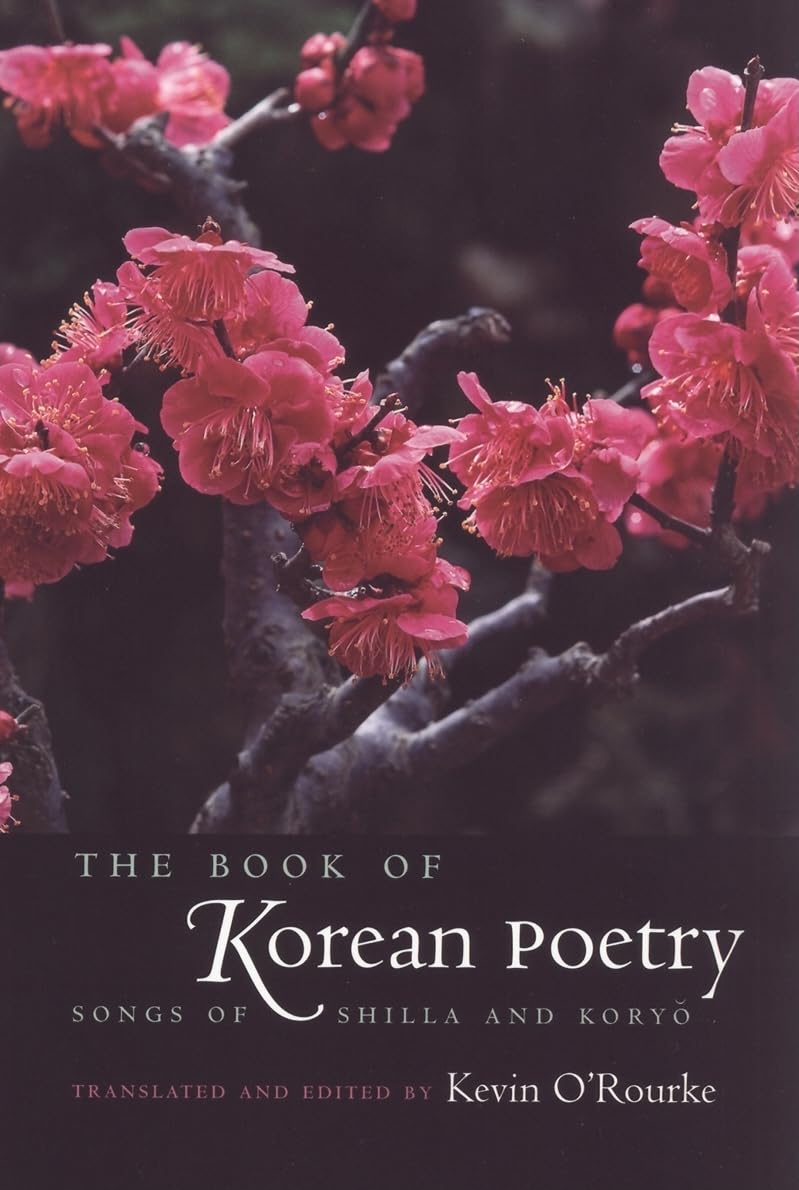
Title
The Book of Korean Poetry: Songs of Shilla and Koryo,New
Sold by Ergodebooks, an authorized reseller.
Returns accepted within 30 days | support@ergodebooks.com
Shipping Information
- Free Standard Shipping — United States only
- Processing Time: 3–5 business days
- Estimated Delivery: 6–10 business days after dispatch
- Double-boxed, fully insured & discreetly packaged
- Tracking number sent via email once dispatched
Returns & Refund
Returns accepted within 30 days of delivery.
Damaged or Defective Item
Free return shipping + replacement or full refund
Wrong Item Received
Free return shipping + replacement or full refund
Change of Mind
Return shipping at customer's expense · 25% restocking fee applies
Payment Option

Koreas history is divided into four periods: the Three Kingdoms of Koguryo (37 bcad 668), Shilla (57 bcad 668), and Paekche (18 bcad 660); Unified Shilla (668935); Koryo (9351392); and Choson (13921910). Kevin ORourkes The Book of Korean Poetry traces Korean poetry from the preShilla era to the end of Koreas golden poetry period in the Koryo dynasty.There are two poetry traditions in Korea: hanshi (poems by Korean poets in Chinese characters) and vernacular poems, which are invariably songs. Hanshi is a poetry to be read and contemplated; the vernacular is a poetry to be sung and heard. Hanshi was aimed at personal cultivation, vernacular poetry primarily at entertainment. Hanshi was a much more private discipline; vernacular poetry was composed for the most part against a convivial background of wine, music, and dance. In this comprehensive treatment of the poetry of Shilla and Koryo, ORourke divides one hundred fifty poems into five sections: Early Songs, Shilla hanshi, Shilla hyangga, Koryo kayo, and Koryo hanshi and shijo. Only a few preShilla poems are extant; ORourke features all five. All fourteen extant Shilla hyangga are included. Seventeen major Koryo kayo are featured; only a few short, incantatory pieces that defied translation were excluded. Fourteen of the fewer than twenty Koryo shijo with claims to authenticity are presented. From the vast number of extant hanshi, ORourke selected poems with the most intrinsic merit and universal appeal. In addition to introductory essays on the genres of hanshi, hyangga, Koryo kayo, and shijo, ORourke interleaves his graceful translations with commentary on the historical backgrounds, poetic forms, and biographical notes on the poets lives as well as guides to the original texts, bibliographical materials, and even anecdotes on how the poems came to be written. Along with the translations themselves, ORourkes annotations of the poems make this volume a particularly interesting and important introduction to the scholarship of East Asian literature.
⚠️ WARNING (California Proposition 65):
This product may contain chemicals known to the State of California to cause cancer, birth defects, or other reproductive harm.
For more information, please visit www.P65Warnings.ca.gov.