
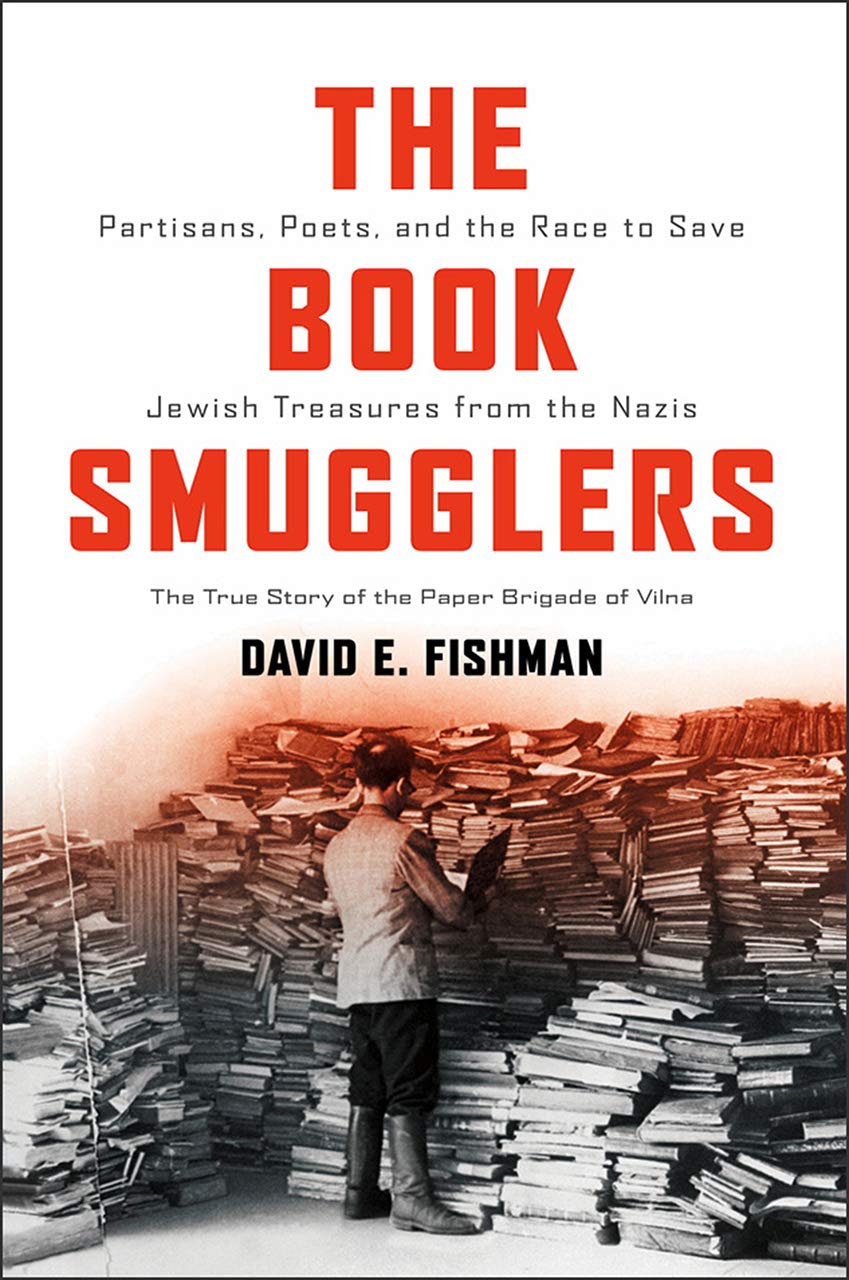
Title
The Book Smugglers: Partisans, Poets, and the Race to Save Jewish Treasures from the Nazis,Used
Sold by Ergodebooks, an authorized reseller.
Returns accepted within 30 days | support@ergodebooks.com
Shipping Information
- Free Standard Shipping — United States only
- Processing Time: 3–5 business days
- Estimated Delivery: 6–10 business days after dispatch
- Double-boxed, fully insured & discreetly packaged
- Tracking number sent via email once dispatched
Returns & Refund
Returns accepted within 30 days of delivery.
Damaged or Defective Item
Free return shipping + replacement or full refund
Wrong Item Received
Free return shipping + replacement or full refund
Change of Mind
Return shipping at customer's expense · 25% restocking fee applies
Payment Option

The Book Smugglers is the nearly unbelievable story of ghetto residents who rescued thousands of rare books and manuscriptsfirst from the Nazis and then from the Sovietsby hiding them on their bodies, burying them in bunkers, and smuggling them across borders. It is a tale of heroism and resistance, of friendship and romance, and of unwavering devotionincluding the readiness to risk ones lifeto literature and art. And it is entirely true. Based on Jewish, German, and Soviet documents, including diaries, letters, memoirs, and the authors interviews with several of the storys participants, The Book Smugglers chronicles the daring activities of a group of poets turned partisans and scholars turned smugglers in Vilna, The Jerusalem of Lithuania. The rescuers were pitted against Johannes Pohl, a Nazi expert on the Jews, who had been dispatched to Vilna by the Nazi looting agency, Einsatzstab Reichsleiter Rosenberg, to organize the seizure of the citys great collections of Jewish books. Pohl and his Einsatzstab staff planned to ship the most valuable materials to Germany and incinerate the rest. The Germans used forty ghetto inmates as slavelaborers to sort, select, pack, and transport the materials, either to Germany or to nearby paper mills. This group, nicknamed the Paper Brigade, and informally led by poet Shmerke Kaczerginski, a garrulous, streetsmart adventurer and master of deception, smuggled thousands of books and manuscripts past German guards. If caught, the men would have faced death by firing squad at Ponar, the massmurder site outside of Vilna. To store the rescued manuscripts, poet Abraham Sutzkever helped build an underground bookbunker sixty feet beneath the Vilna ghetto. Kaczerginski smuggled weapons as well, using the groups worksite, the former building of the Yiddish Scientific Institute, to purchase arms for the ghettos secret partisan organization. All the while, both men wrote poetry that was recited and sung by the fastdwindling population of ghetto inhabitants. With the Soviet liberation of Vilna (now known as Vilnius), the Paper Brigade thought themselves and their precious cultural treasures savedonly to learn that their new masters were no more welcoming toward Jewish culture than the old, and the books must now be smuggled out of the USSR. Thoroughly researched by the foremost scholar of the Vilna Ghettoa writer of exceptional daring, style, and reachThe Book Smugglers is an epic story of human heroism, a littleknown tale from the blackest days of the war.
⚠️ WARNING (California Proposition 65):
This product may contain chemicals known to the State of California to cause cancer, birth defects, or other reproductive harm.
For more information, please visit www.P65Warnings.ca.gov.
- Q: What is the main theme of 'The Book Smugglers'? A: 'The Book Smugglers' explores the heroic actions of ghetto residents who rescued rare books and manuscripts during World War II, highlighting themes of resistance, friendship, and devotion to literature.
- Q: Who is the author of 'The Book Smugglers'? A: The author of 'The Book Smugglers' is David E. Fishman, a renowned scholar of the Vilna Ghetto.
- Q: What historical events does the book cover? A: The book covers the efforts of Jewish residents to save their cultural heritage from both Nazi and Soviet forces during World War II.
- Q: How many pages are in 'The Book Smugglers'? A: 'The Book Smugglers' has a total of 312 pages.
- Q: What type of binding does this book have? A: 'The Book Smugglers' is available in a hardcover binding, enhancing its durability and appeal.
- Q: When was 'The Book Smugglers' published? A: 'The Book Smugglers' was published on October 3, 2017.
- Q: Is 'The Book Smugglers' suitable for educational purposes? A: Yes, 'The Book Smugglers' is suitable for educational purposes, especially for those studying Holocaust history and Jewish culture.
- Q: What can readers expect to learn from this book? A: Readers can expect to learn about the courageous efforts of individuals who risked their lives to save Jewish literary treasures during a dark period in history.
- Q: Does 'The Book Smugglers' include primary sources? A: Yes, the book is based on Jewish, German, and Soviet documents, including diaries and interviews with participants in the events.
- Q: What is the target audience for 'The Book Smugglers'? A: 'The Book Smugglers' targets readers interested in Holocaust history, literature, and stories of human resilience.