
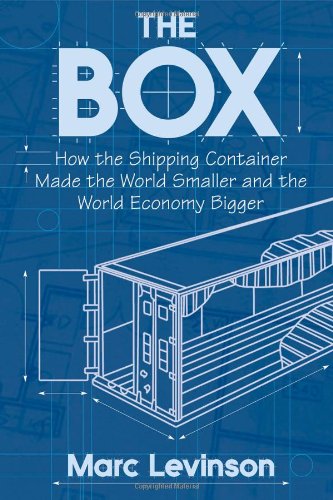
Title
The Box: How The Shipping Container Made The World Smaller And The World Economy Bigger
Sold by Ergodebooks, an authorized reseller.
Returns accepted within 30 days | support@ergodebooks.com
Shipping Information
- Free Standard Shipping — United States only
- Processing Time: 3–5 business days
- Estimated Delivery: 6–10 business days after dispatch
- Double-boxed, fully insured & discreetly packaged
- Tracking number sent via email once dispatched
Returns & Refund
Returns accepted within 30 days of delivery.
Damaged or Defective Item
Free return shipping + replacement or full refund
Wrong Item Received
Free return shipping + replacement or full refund
Change of Mind
Return shipping at customer's expense · 25% restocking fee applies
Payment Option

In April 1956, A Refitted Oil Tanker Carried Fiftyeight Shipping Containers From Newark To Houston. From That Modest Beginning, Container Shipping Developed Into A Huge Industry That Made The Boom In Global Trade Possible. The Box Tells The Dramatic Story Of The Container'S Creation, The Decade Of Struggle Before It Was Widely Adopted, And The Sweeping Economic Consequences Of The Sharp Fall In Transportation Costs That Containerization Brought About.Published On The Fiftieth Anniversary Of The First Container Voyage, This Is The First Comprehensive History Of The Shipping Container. It Recounts How The Drive And Imagination Of An Iconoclastic Entrepreneur, Malcom Mclean, Turned Containerization From An Impractical Idea Into A Massive Industry That Slashed The Cost Of Transporting Goods Around The World And Made The Boom In Global Trade Possible.But The Container Didn'T Just Happen. Its Adoption Required Huge Sums Of Money, Both From Private Investors And From Ports That Aspired To Be On The Leading Edge Of A New Technology. It Required Years Of Highstakes Bargaining With Two Of The Titans Of Organized Labor, Harry Bridges And Teddy Gleason, As Well As Delicate Negotiations On Standards That Made It Possible For Almost Any Container To Travel On Any Truck Or Train Or Ship. Ultimately, It Took Mclean'S Success In Supplying U.S. Forces In Vietnam To Persuade The World Of The Container'S Potential.Drawing On Previously Neglected Sources, Economist Marc Levinson Shows How The Container Transformed Economic Geography, Devastating Traditional Ports Such As New York And London And Fueling The Growth Of Previously Obscure Ones, Such As Oakland. By Making Shipping So Cheap That Industry Could Locate Factories Far From Its Customers, The Container Paved The Way For Asia To Become The World'S Workshop And Brought Consumers A Previously Unimaginable Variety Of Lowcost Products From Around The Globe.
⚠️ WARNING (California Proposition 65):
This product may contain chemicals known to the State of California to cause cancer, birth defects, or other reproductive harm.
For more information, please visit www.P65Warnings.ca.gov.
- Q: How many pages does the book have? A: This book has three hundred ninety-two pages. It provides an in-depth analysis of the shipping container's historical significance.
- Q: What is the binding type of the book? A: The binding type is hardcover. This ensures durability and longevity for readers who appreciate physical books.
- Q: What are the dimensions of the book? A: The book measures six point five inches in length, one point twenty-six inches in width, and nine point five inches in height. These dimensions make it suitable for standard bookshelves.
- Q: Who is the author of this book? A: The author is Marc Levinson. He is an economist known for his insights into economic history and global trade.
- Q: What category does this book belong to? A: It belongs to the Economic History category. This genre focuses on the economic developments that have shaped societies.
- Q: Is this book suitable for beginners in economic history? A: Yes, it is suitable for beginners. The narrative style and comprehensive coverage make it accessible to those new to the subject.
- Q: How should I handle the book to keep it in good condition? A: Handle the book with clean hands and store it upright on a shelf. Avoid exposure to direct sunlight to prevent fading.
- Q: Can I clean the book if it gets dirty? A: Yes, you can clean it gently with a soft, dry cloth. Avoid using water or cleaning solutions to preserve the cover and pages.
- Q: What if the book arrives damaged? A: If the book arrives damaged, you can return it for a replacement or refund. Ensure you contact customer service for assistance.
- Q: Is there a warranty for this book? A: No, there is no warranty for books. However, most retailers have return policies for damaged items.
- Q: Does this book cover modern shipping practices? A: Yes, it covers the evolution of shipping practices up to the present day. The book discusses the ongoing impact of containerization on global trade.
- Q: Is this book recommended for academic study? A: Yes, it is highly recommended for academic study. It includes detailed research and references suitable for scholarly work.
- Q: What are the key themes explored in the book? A: The key themes include the history of container shipping, economic transformation, and the impact on global trade dynamics.
- Q: Does the book include any illustrations or diagrams? A: Yes, it includes illustrations and diagrams to enhance understanding of containerization's impact on shipping.
- Q: Is this book part of a series? A: No, this book is not part of a series. It stands alone as a comprehensive history of container shipping.