
Title
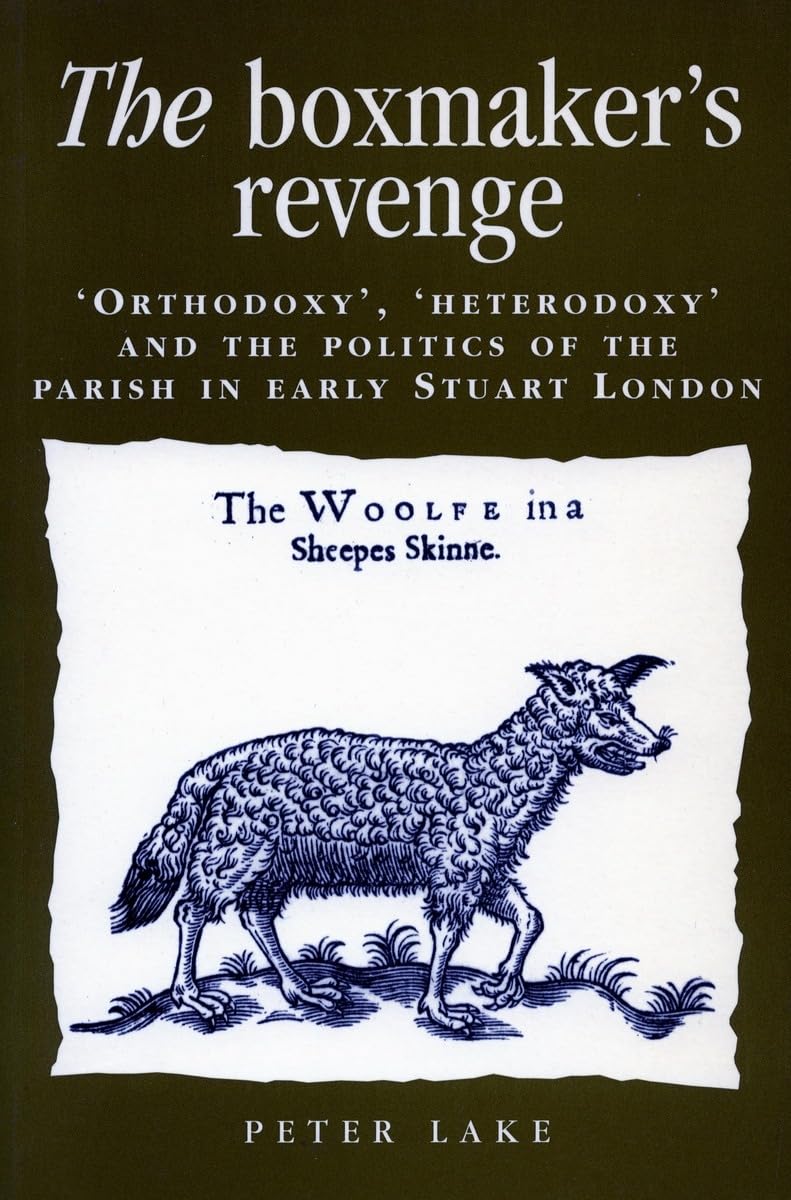
The Boxmakers Revenge: Orthodoxy, Heterodoxy, and the Politics of the Parish in Early Stuart London,Used
Sold by Ergodebooks, an authorized reseller.
Returns accepted within 30 days | support@ergodebooks.com
Shipping Information
- Free Standard Shipping — United States only
- Processing Time: 3–5 business days
- Estimated Delivery: 6–10 business days after dispatch
- Double-boxed, fully insured & discreetly packaged
- Tracking number sent via email once dispatched
Returns & Refund
Returns accepted within 30 days of delivery.
Damaged or Defective Item
Free return shipping + replacement or full refund
Wrong Item Received
Free return shipping + replacement or full refund
Change of Mind
Return shipping at customer's expense · 25% restocking fee applies
Payment Option

By narrating a protracted and frequently bizarre altercation between a London minister and a member of his flock, this book provides a vivid picture of puritanism at the parish level in early Stuart England.On February 11, 1627, Stephen Denison preached a sermon that violently denounced an erstwhile boxmaker, John Etherington, as a heretic, a sect master, and an Anabaptist. The accused stood before Denison and then was returned to prison, where he languished for another three years. Denison published his denunciation later that year under the title The White Wolf. By the 1630s, however, Denison himself was in trouble with the same Court of High Commission that had sentenced Etherington. Denison was deprived of his living after being denounced by parishioners who resented his irascible temper, his harsh pulpit style, and his belittling of their church activities. Then, in 1641, Etherington came back to haunt Denison when, taking advantage of the collapse of censorship, the boxmaker heatedly replied in print to the accusations made against him fourteen years before.The book places this dispute in the multiple social, cultural, and political contexts necessary to understand it. What forces and what ideological and personal trajectories brought these two men into conflict? What issues did the dispute raise and what do they tell us about the religious history of early Stuart England? The story of Denison and Etherington provides an example, almost unique before 1640, of the interaction between a minister and a parishioner. We also gain a portrait of an arena of lay activities and at least potentially heterodox doctrinal debate in puritan circles.The author challenges the bad name that polemic has acquired of late among scholars by using overtly polemical sources, arguing that polemical intensity allows us a privileged glimpse into a world we do not usually get to see. He reads his sources against the grain, collating and comparing them to overcome the biases, silences, and exaggerations that the polemical mode also produces. In the end, the polemical constructions through which the story of Denison and Etherington has come down to us become necessarily a part of the story itself.
⚠️ WARNING (California Proposition 65):
This product may contain chemicals known to the State of California to cause cancer, birth defects, or other reproductive harm.
For more information, please visit www.P65Warnings.ca.gov.
- Q: What is the page count of the book? A: The book has four hundred thirty-two pages. This length provides a comprehensive exploration of its themes and historical context.
- Q: What is the binding type of this book? A: The book is available in hardcover. This sturdy binding ensures durability and a high-quality feel for readers.
- Q: Who is the author of 'The Boxmaker’s Revenge'? A: The author is Peter Lake. He is known for his scholarly work in Church History and early Stuart England.
- Q: What is the size of the book? A: The book measures six point twenty-six inches in length, one point twenty-six inches in width, and nine point twenty-five inches in height. Its dimensions make it easy to handle and store.
- Q: What genre does 'The Boxmaker’s Revenge' belong to? A: The book falls under the Church History genre. It provides insights into the religious dynamics of early Stuart London.
- Q: How do I read this book? A: You can read this book by simply starting from the first page and following the narrative. It is suitable for anyone interested in historical debates and religious conflict.
- Q: Is this book suitable for casual readers? A: Yes, casual readers can enjoy this book. While it is scholarly, the narrative style makes complex historical themes accessible.
- Q: What themes are explored in 'The Boxmaker’s Revenge'? A: The book explores themes of puritanism, religious conflict, and personal ideological struggles. It vividly recounts a unique historical dispute.
- Q: How should I store this hardcover book? A: Store the book upright on a shelf away from direct sunlight. This will help maintain its condition and prevent damage.
- Q: Can this book be cleaned if it gets dirty? A: Yes, you can gently wipe the cover with a dry cloth. Avoid using water or cleaning solutions to protect the binding and pages.
- Q: Is there a warranty for this book? A: No, there is typically no warranty for books. However, you can check with the retailer for their return policy if needed.
- Q: What if I receive a damaged book? A: If you receive a damaged book, contact the retailer immediately. They usually offer returns or exchanges for damaged items.
- Q: How does this book compare to other historical works? A: This book offers a unique perspective on early Stuart England, focusing on personal conflicts rather than larger political events, making it distinct.
- Q: Is the book appropriate for academic use? A: Yes, the book is suitable for academic use. It provides thorough research and references, making it a valuable resource for students.
- Q: Does the book cover any specific historical events? A: Yes, the book details a specific altercation in 1627 between a minister and a parishioner in London, providing rich historical context.