
Title
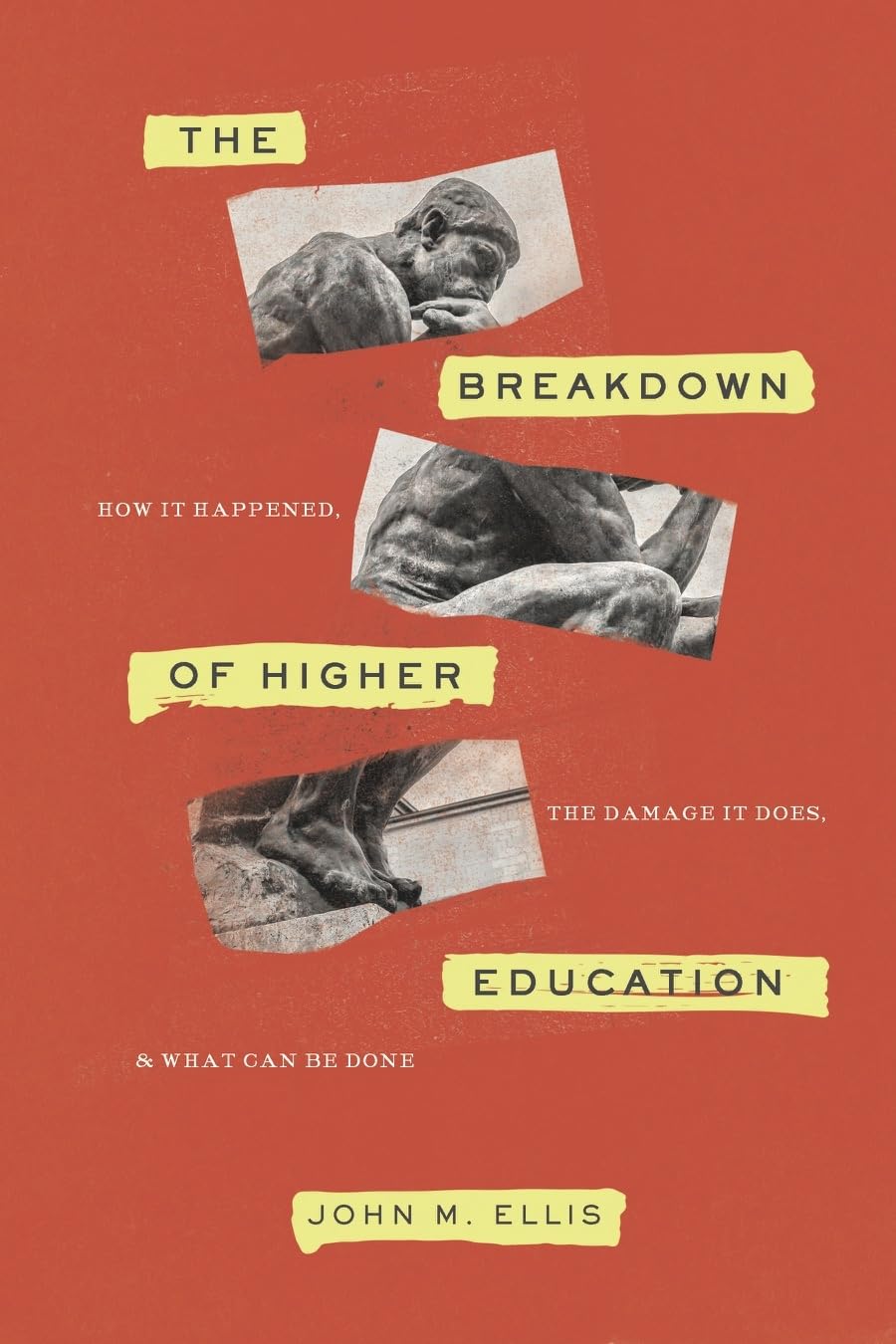
The Breakdown of Higher Education: How It Happened, the Damage It Does, and What Can Be Done,Used
Sold by Ergodebooks, an authorized reseller.
Returns accepted within 30 days | support@ergodebooks.com
Shipping Information
- Free Standard Shipping — United States only
- Processing Time: 3–5 business days
- Estimated Delivery: 6–10 business days after dispatch
- Double-boxed, fully insured & discreetly packaged
- Tracking number sent via email once dispatched
Returns & Refund
Returns accepted within 30 days of delivery.
Damaged or Defective Item
Free return shipping + replacement or full refund
Wrong Item Received
Free return shipping + replacement or full refund
Change of Mind
Return shipping at customer's expense · 25% restocking fee applies
Payment Option

A series of nearriots on campuses aimed at silencing guest speakers has exposed the fact that our universities are no longer devoted to the free exchange of ideas in pursuit of truth. But this hostility to free speech is only a symptom of a deeper problem, writes John Ellis.Having watched the deterioration of academia up close for the past fifty years, Ellis locates the core of the problem in a change in the composition of the faculty during this time, from mildly leftleaning to almost exclusively leftist. He explains how astonishing historical luck led to the success of a plan first devised by a small group of activists to use college campuses to promote radical politics, and why laws and regulations designed to prevent the politicizing of higher education proved insufficient.Ellis shows that political motivation is always destructive of higher learning. Even science and technology departments are not immune. The corruption of universities by radical politics also does wider damage: to primary and secondary education, to race relations, to preparation for the workplace, and to the political and social fabric of the nation. Commonly suggested remediesnew freespeech rules, or enforced rightofcenter appointmentswill fail because they dont touch the core problem, a controlling faculty majority of political activists with no real interest in scholarship. This book proposes more drastic and effective reform measures. The first step is for Americans to recognize that vast sums of public money intended for education are being diverted to a political agenda, and to demand that this fraud be stopped.
⚠️ WARNING (California Proposition 65):
This product may contain chemicals known to the State of California to cause cancer, birth defects, or other reproductive harm.
For more information, please visit www.P65Warnings.ca.gov.
- Q: What is the page count of this book? A: This book has two hundred twenty-four pages. It's a hardcover edition, making it durable for long-term reading.
- Q: What are the dimensions of this book? A: The dimensions of the book are six inches in length, zero point seventy-five inches in width, and nine point zero two inches in height.
- Q: Who is the author of this book? A: The author of this book is John M. Ellis. He provides insights based on fifty years of observing changes in academia.
- Q: What is the main theme of this book? A: The main theme addresses the decline of free speech in higher education. It explores the impact of political ideologies on academia.
- Q: Is this book suitable for academic professionals? A: Yes, this book is suitable for academic professionals. It offers critical perspectives on the current state of higher education.
- Q: What audience is this book intended for? A: This book is intended for readers interested in higher education, political theory, and social issues. It's particularly insightful for educators and policymakers.
- Q: Does this book provide solutions to its critiques? A: Yes, the book proposes effective reform measures for higher education. It encourages readers to recognize and address the diversion of public funds.
- Q: How should I store this hardcover book? A: Store this hardcover book in a cool, dry place. Keeping it away from direct sunlight will help maintain its condition.
- Q: What is the binding type of this book? A: This book is bound in hardcover. This type of binding enhances durability and resistance to wear.
- Q: Can this book be a resource for political discussions? A: Yes, this book can serve as a resource for political discussions. It critiques the influence of political motivations on education.
- Q: What if I receive a damaged copy of the book? A: If you receive a damaged copy, contact the seller for a return or exchange. Most sellers offer a satisfaction guarantee.
- Q: Is there a warranty for this book? A: No, there is typically no warranty for books. However, check with the seller for their specific return policy.
- Q: How do I keep the book in good condition? A: Keep the book in a stable environment, avoiding extreme temperatures or moisture. Regularly dusting it will also help maintain its condition.
- Q: Is this book appropriate for younger readers? A: No, this book is not specifically appropriate for younger readers. It addresses complex themes that may be better suited for adults.
- Q: What makes this book unique compared to others in its category? A: This book uniquely combines historical analysis with current political critiques, providing a comprehensive view of higher education's challenges.
- Q: What should I do if I have questions about the book's content? A: If you have questions about the book's content, consider reaching out to academic forums or discussion groups. Engaging with others can deepen your understanding.