
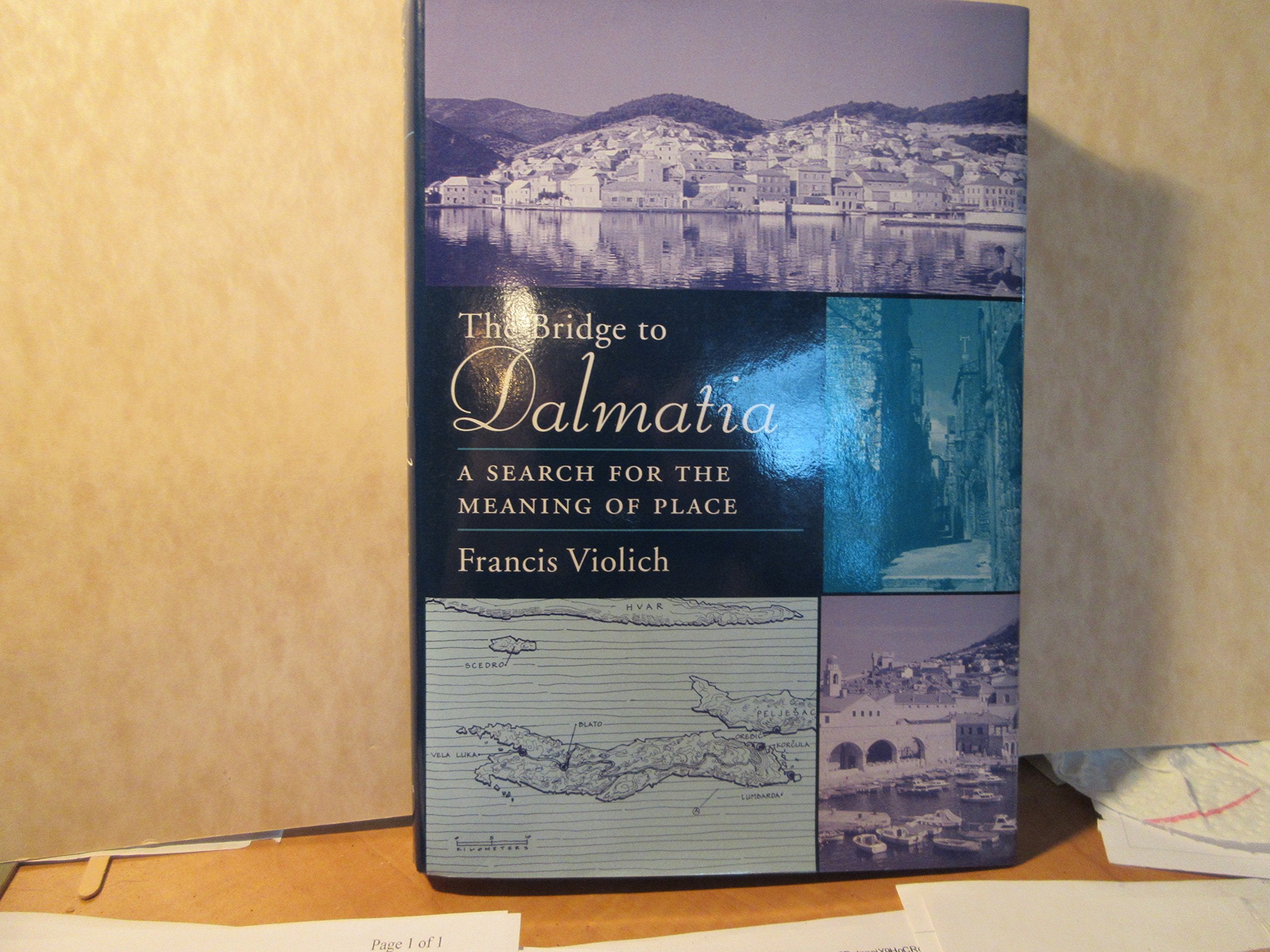
Title
The Bridge to Dalmatia: A Search for the Meaning of Place,Used
Sold by Ergodebooks, an authorized reseller.
Returns accepted within 30 days | support@ergodebooks.com
Shipping Information
- Free Standard Shipping — United States only
- Processing Time: 3–5 business days
- Estimated Delivery: 6–10 business days after dispatch
- Double-boxed, fully insured & discreetly packaged
- Tracking number sent via email once dispatched
Returns & Refund
Returns accepted within 30 days of delivery.
Damaged or Defective Item
Free return shipping + replacement or full refund
Wrong Item Received
Free return shipping + replacement or full refund
Change of Mind
Return shipping at customer's expense · 25% restocking fee applies
Payment Option

Accompanying Francis Violich on walks through the mainland cities of Zadar, Split, and Dubrovnik and the offshore towns and villages of Bra, Hvar, Kor ula, and Peljeac, readers of The Bridge to Dalmatia have the opportunity to discover the cultural and historical meanings hidden in the Dalmatian coastal centers and to explore the importance of humanistic concerns in environmental design in general. The book engages readers in a process of interacting with the place and its residents, creating mental images and maps, and reading the environment intuitively. Using original plans, maps, and drawings, as well as Croatian historical writings and archival materials rarely known in English, Violich weaves together text and images in field studies of a dozen Croatian cities, towns, and villages as he examines how personal heritage is tied to geography and place. Step by step, moving through these locales, general readers and design professionals alike may explore the evolving nature of identity with place and discover how urban connectedness is achieved through awareness of environmental identity and spatial form. The book's approach is much like that of Kevin Lynch's pioneering work, Image of the City.Violich's 'search for the meaning of place' begins with the strong environmental identity that his forebears felt with their places of origin on the islands and peninsulas of the Adriatic coast of Croatia. Although these forebears immigrated to San Francisco, they maintained a strong connection to places left behind. His family's strong roots which became his bridge from California to Dalmatia are the basis for Violich's theory of identity with place, which he based on direct experience of the form and content of this region.'In my experience at both ends of The Bridge, Dalmatians readily express feelings of attachment and affection for their own particular home place and its superiority over other places. The vigorous sense of commitment to a physical place has reinforced a cohesion among members of families and larger social groups, an important human resource in the many periods of stress in Dalmatia's rugged history. This affection for native villages has expressed itself dramatically in response to their inimical attacks, damage, and destruction in the War of 19911995.'from The Bridge to Dalmatia
⚠️ WARNING (California Proposition 65):
This product may contain chemicals known to the State of California to cause cancer, birth defects, or other reproductive harm.
For more information, please visit www.P65Warnings.ca.gov.
- Q: What is the main theme of 'The Bridge to Dalmatia'? A: 'The Bridge to Dalmatia' explores the cultural and historical meanings of various Dalmatian coastal cities and towns while emphasizing the importance of humanistic concerns in environmental design.
- Q: Who is the author of this book? A: The book is authored by Professor Francis Violich, who draws on personal heritage and experience to discuss the connection between identity and place.
- Q: What types of locations are covered in the book? A: The book covers a range of locations including mainland cities like Zadar, Split, and Dubrovnik, as well as offshore towns such as Bra, Hvar, Korcula, and Pelješac.
- Q: What unique materials does the author use in the book? A: The author uses original plans, maps, drawings, and Croatian historical writings, along with archival materials that are rarely available in English.
- Q: Is this book suitable for both general readers and professionals? A: Yes, 'The Bridge to Dalmatia' is designed to engage both general readers and design professionals in understanding the evolving nature of identity with place.
- Q: How many pages does the book contain? A: 'The Bridge to Dalmatia' contains a total of 376 pages.
- Q: What is the condition of the book if purchased? A: The book is listed as a used book in good condition and is categorized as 'Very Good'.
- Q: When was 'The Bridge to Dalmatia' published? A: 'The Bridge to Dalmatia' was published on January 21, 1998.
- Q: What type of binding does the book have? A: The book is bound in hardcover.
- Q: What is the significance of the title 'The Bridge to Dalmatia'? A: The title reflects the author's personal connection to Dalmatia and the metaphorical 'bridge' between his heritage and the places his ancestors came from.