
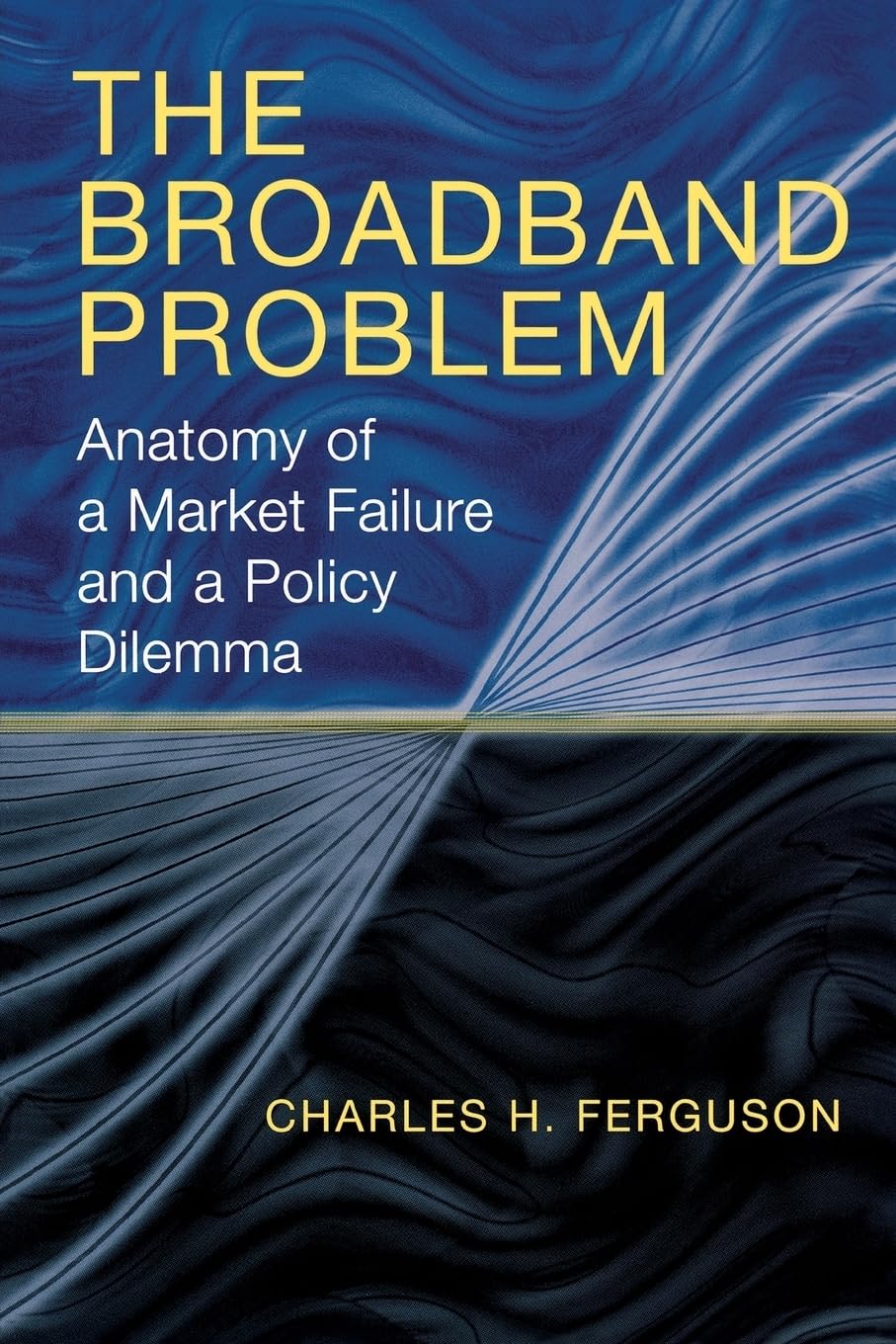
Title
The Broadband Problem: Anatomy Of A Market Failure And A Policy Dilemma,New
Sold by Ergodebooks, an authorized reseller.
Returns accepted within 30 days | support@ergodebooks.com
Shipping Information
- Free Standard Shipping — United States only
- Processing Time: 3–5 business days
- Estimated Delivery: 6–10 business days after dispatch
- Double-boxed, fully insured & discreetly packaged
- Tracking number sent via email once dispatched
Returns & Refund
Returns accepted within 30 days of delivery.
Damaged or Defective Item
Free return shipping + replacement or full refund
Wrong Item Received
Free return shipping + replacement or full refund
Change of Mind
Return shipping at customer's expense · 25% restocking fee applies
Payment Option

As the Internet revolution continues to unfold and transform telecommunications, pressure is building for faster, less expensive, and more widely accessible broadband service. Such a development would facilitate improved and less expensive traditional applications such as voice telephony and web browsing. It would also enable new and useful applications such as Internetbased television, videoconferencing, and software distribution. Broadband has great potential to improve efficiency and productivity, even to improve national security in some cases. Broadband service and affordability, however, have consistently lagged well behind demand and progress in information technology, with damaging results. The Internet revolution remains incomplete and threatens to stagnate if the situation continues. In The Broadband Problem, economist and technology entrepreneur Charles H. Ferguson explains the causes and ramifications of this damaging bottleneck, and he offers suggestions on improving the current state of affairs. He asserts that current telecommunications law and policy have not provided sufficient levels of new entry, competition, and innovation in the local telecom market. The continuing dominance of ILECs (incumbent local exchange carriers) in that market impedes the healthy, and muchneeded, development of an efficient broadband market. The result of these policy and market failures is inadequate technological progress, innovation, and productivity in advanced Internet services and telecommunication services generally. The broadband problem is holding us back, and thus must be addressed and solved. With this important volume, Charles Ferguson has contributed mightily to that mission.'
⚠️ WARNING (California Proposition 65):
This product may contain chemicals known to the State of California to cause cancer, birth defects, or other reproductive harm.
For more information, please visit www.P65Warnings.ca.gov.