
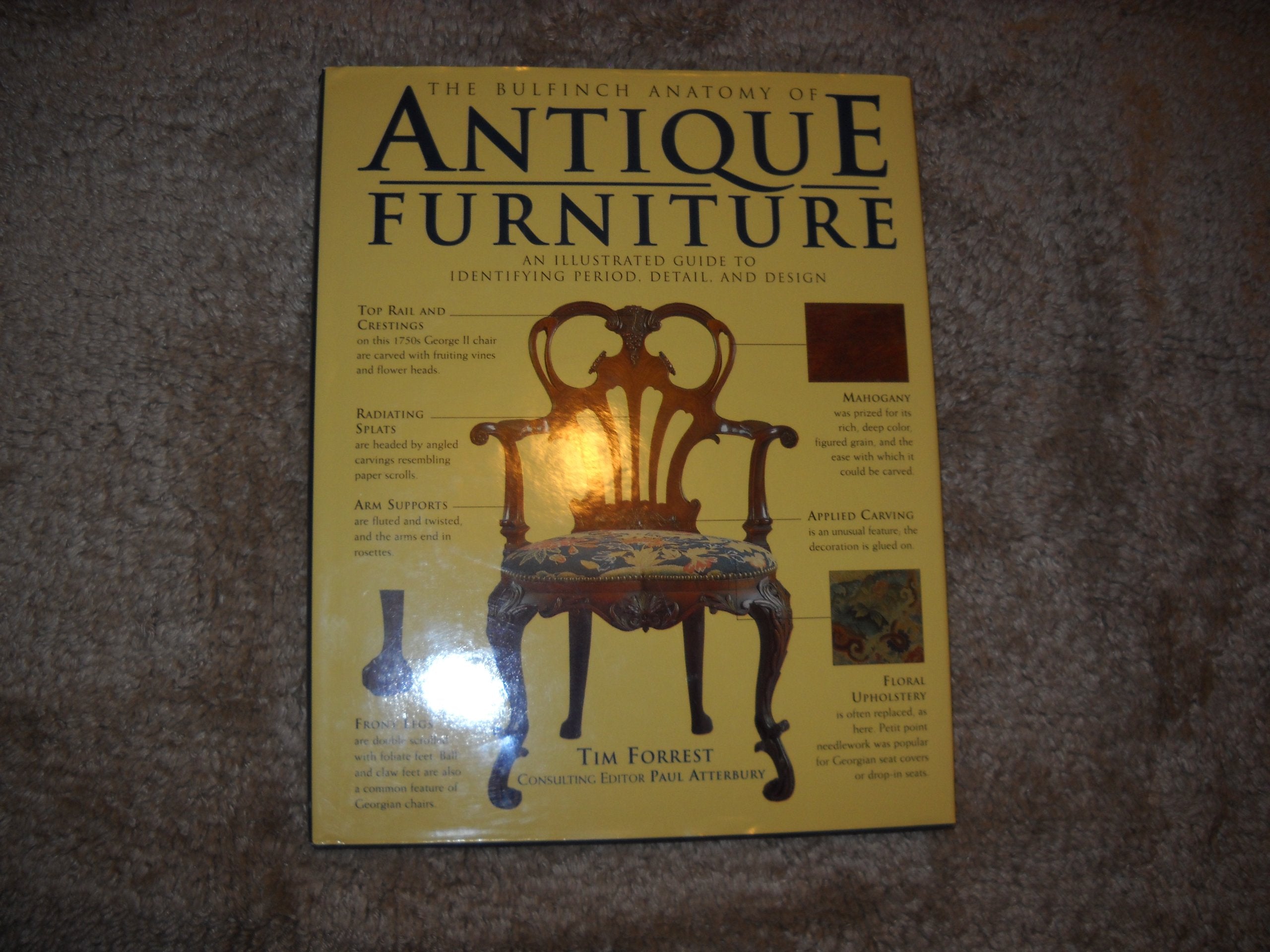
Title
The Bulfinch Anatomy Of Antique Furniture: An Illustrated Guide To Identifying Period, Detail, And Design
Sold by Ergodebooks, an authorized reseller.
Returns accepted within 30 days | support@ergodebooks.com
Shipping Information
- Free Standard Shipping — United States only
- Processing Time: 3–5 business days
- Estimated Delivery: 6–10 business days after dispatch
- Double-boxed, fully insured & discreetly packaged
- Tracking number sent via email once dispatched
Returns & Refund
Returns accepted within 30 days of delivery.
Damaged or Defective Item
Free return shipping + replacement or full refund
Wrong Item Received
Free return shipping + replacement or full refund
Change of Mind
Return shipping at customer's expense · 25% restocking fee applies
Payment Option

Whether You Are A Seasoned Antique Hunter Or A Novice, It Is Easy To Feel Overwhelmed By The Terminology Of The Salesroom Or The Dealer When Considering A Purchase Or Assessing A Piece You Already Own. What Is A Splat? A Stretcher? How Can You Distinguish Solid Walnut From Good Veneer? And How Easy Is It To Date Pieces Accurately? The Bulfinch Anatomy Of Antique Furniture Is The Ultimate Guide, Acting As A Comprehensive Visual Glossary For The Reader. More Than 200 Pieces Are Reproduced In Lavish Photographs With Copious Annotation And A Wealth Of Illustrative Detail, Covering All Categories Of Furniture In Every Manifestation.Eight Chapters Look At A Full Spectrum Of Pieces, From Chairs, Tables, And Beds To Painted Furniture, Mirrors, And Kitchen Collectibles. Special Pages In Each Chapter Offer Dozens Of Variations On Particular Features Feet, Castors, Chair Backs, Finishes, And Much More While Others Concentrate On A Specific Piece, Highlighting The Crucial Points To Look For. Side Panels Illustrate Notable Variations, Which May Differ According To Country And Local Materials Available At The Time. Historical Context And Stylistic Developments, Together With Named Designers And Cabinetmakers, Are Depicted In Specially Devised Timelines, Taking The Reader From The Late 1600S To The 1920S.Equally Valuable As An Introduction For The Keen Beginner Or A Refresher Course For The Experienced Buyer, The Bulfinch Anatomy Of Antique Furniture Provides A Unique Approach To An Endlessly Fascinating Subject.
⚠️ WARNING (California Proposition 65):
This product may contain chemicals known to the State of California to cause cancer, birth defects, or other reproductive harm.
For more information, please visit www.P65Warnings.ca.gov.
- Q: What is the size of The Bulfinch Anatomy of Antique Furniture? A: The book measures eleven point seven inches by nine point four inches by zero point eight inches. It is a hardcover edition with a total of one hundred sixty pages.
- Q: What type of binding does this book have? A: This book is bound in hardcover. Hardcover bindings are known for their durability and sturdy construction, making them ideal for reference works.
- Q: Who is the author of The Bulfinch Anatomy of Antique Furniture? A: The author is Paul Atterbury. He is known for his expertise in antiques and has written extensively on the subject.
- Q: What can I expect to learn from this book? A: This book serves as a comprehensive visual guide to identifying antique furniture. It covers terminology, dating, and distinguishing features of various furniture pieces.
- Q: Is this book suitable for beginners? A: Yes, this book is suitable for beginners. It provides clear definitions and detailed illustrations, making it accessible for those new to the world of antiques.
- Q: How detailed are the illustrations in this book? A: The book includes more than two hundred lavish photographs. Each image is accompanied by annotations that highlight important features and details.
- Q: How should I care for this book? A: To care for the book, keep it in a cool, dry place away from direct sunlight. Avoid bending the spine and use a bookmark to prevent page damage.
- Q: Can this book be used as a reference guide? A: Yes, this book is an excellent reference guide. It provides a visual glossary that can help readers identify and assess antique furniture.
- Q: What is the average customer review rating for this book? A: The average customer review rating is three point seven out of five stars. It is based on six customer reviews, indicating a generally positive reception.
- Q: Is there a shipping weight for this book? A: Yes, the shipping weight is two point two pounds. This weight is typical for a hardcover book of this size.
- Q: What historical periods does this book cover? A: The book covers historical context from the late sixteen hundreds to the nineteen twenties. It includes stylistic developments and notable designers from these periods.
- Q: Are there any special features in the chapters? A: Yes, each chapter includes special pages that focus on variations of specific features. These features include feet, castors, and finishes, among others.
- Q: What kind of furniture does this book focus on? A: The book covers a full spectrum of furniture types, including chairs, tables, beds, painted furniture, mirrors, and kitchen collectibles.
- Q: What makes this book unique compared to other antique references? A: Its unique approach lies in its comprehensive visual glossary and detailed annotations. This makes complex terminology more accessible to readers.
- Q: Is this book recommended for antique appraisers? A: Yes, it is recommended for antique appraisers. The detailed visual glossary aids in accurate identification and assessment of furniture pieces.