
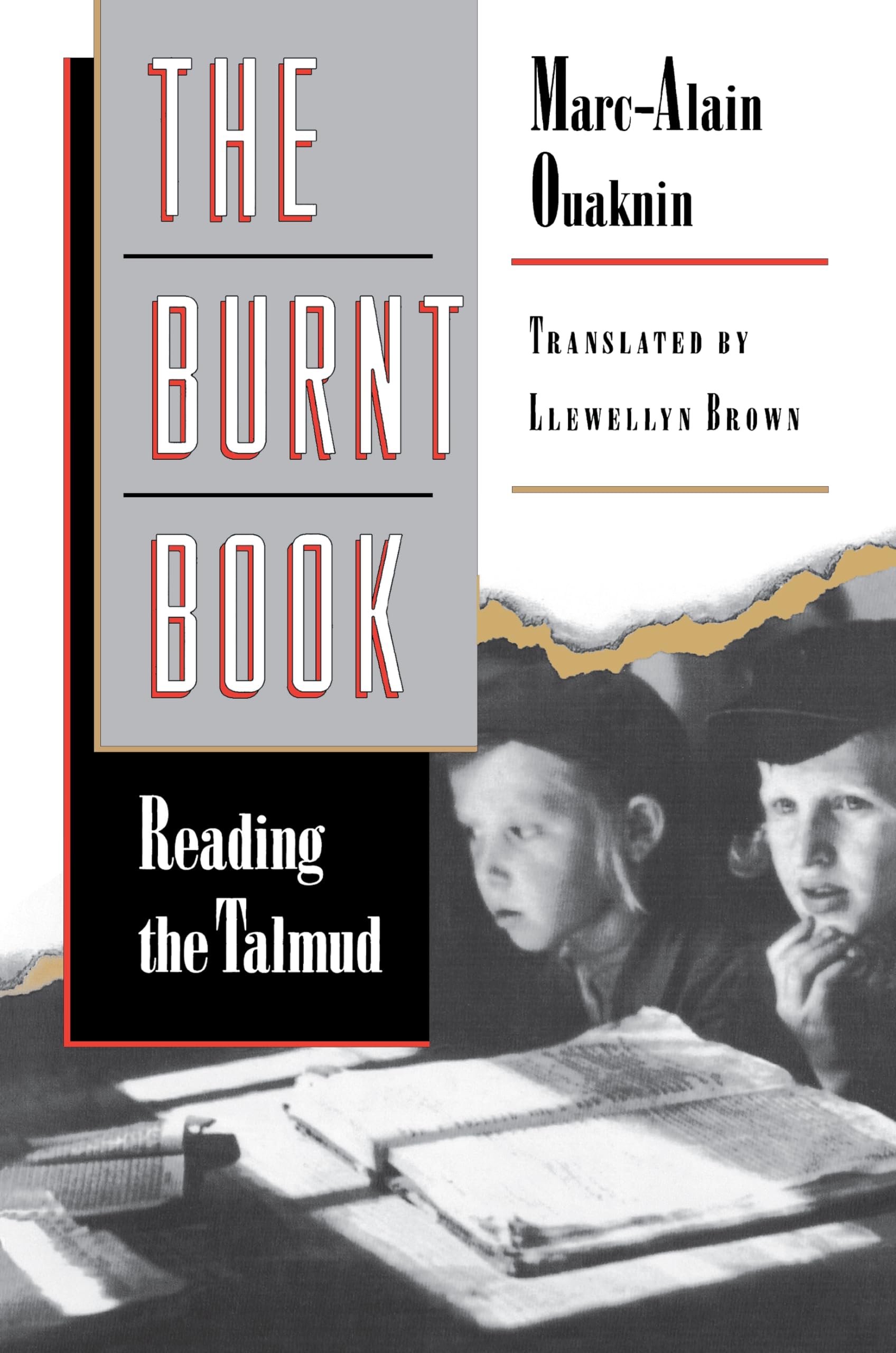
Title
The Burnt Book,New
Sold by Ergodebooks, an authorized reseller.
Returns accepted within 30 days | support@ergodebooks.com
Shipping Information
- Free Standard Shipping — United States only
- Processing Time: 3–5 business days
- Estimated Delivery: 6–10 business days after dispatch
- Double-boxed, fully insured & discreetly packaged
- Tracking number sent via email once dispatched
Returns & Refund
Returns accepted within 30 days of delivery.
Damaged or Defective Item
Free return shipping + replacement or full refund
Wrong Item Received
Free return shipping + replacement or full refund
Change of Mind
Return shipping at customer's expense · 25% restocking fee applies
Payment Option

A Profound Look At What It Means For New Generations To Read And Interpret Ancient Religious Textsin This Book, Rabbi And Philosopher Marcalain Ouaknin Offers A Postmodern Reading Of The Talmud. Combining Traditional Learning And Contemporary Thought, Ouaknin Dovetails Discussions Of Spirituality And Religious Practice With Such Concepts As Deconstruction, Intertextuality, Undecidability, Multiple Voicing, And Eroticism In The Talmud. On A Broader Level, He Establishes A Dialogue Between Hebrew Tradition And The Social Sciences, Which Draws, For Example, On The Works Of Lvinas, Blanchot, And Jabs As Well As Derrida. The Burnt Book Represents The Innovative Thinking That Has Come To Be Associated With A School Of French Jewish Studies, Headed By Lvinas And Dedicated To New Readings Of Traditional Texts.The Talmud, Transcribed In 500 C.E., Is Shown To Be A Text That Refrains From Dogma And Instead Encourages The Exploration Of Its Meanings. A Vast Compilation Of Jewish Oral Law, The Talmud Also Contains Rabbinical Commentaries That Touch On Everything From Astronomy To Household Life. Examining Its Literary Methods And Internal Logic, Ouaknin Explains How This Text Allows Readers To Transcend Its Authority In That It Invites Them To Interpret, Discuss, And Recreate Their Religious Tradition. An Indepth Treatment Of Selected Texts From The Oral Law And Commentary Goes On To Provide A Model For Secular Study Of The Talmud In Light Of Contemporary Philosophical Issues.Throughout, The Author Emphasizes The Selfeffacing Quality Of A Text Whose Worth Can Be Measured By The Insights That Live On In The Minds Of Its Interpreters Long After They Have Closed The Book. He Points Out That The Burning Of The Talmud In Antijudaic Campaigns Throughout History Has, In Fact, Been An Unwitting Act Of Complicity With Talmudic Philosophy And The Practice Of Selfeffacement. Ouaknin Concludes His Discussion With The Story Of The Hasidic Master Rabbi Nahman Of Bratslav, Who Himself Burned His Life Achievementa Work Known By His Students As 'The Burnt Book.' This Story Leaves Us With The Question, Should All Books Be Destroyed In Order To Give Birth To Thought And Renew Meaning?
⚠️ WARNING (California Proposition 65):
This product may contain chemicals known to the State of California to cause cancer, birth defects, or other reproductive harm.
For more information, please visit www.P65Warnings.ca.gov.
- Q: How many pages does The Burnt Book have? A: The Burnt Book has two hundred seventy-two pages. This length allows for a comprehensive exploration of its themes and discussions.
- Q: What is the binding type of The Burnt Book? A: The binding type is paperback. This makes it lightweight and portable for easy reading.
- Q: What are the dimensions of The Burnt Book? A: The dimensions are six point fourteen inches in length, zero point eighty-three inches in width, and nine point twenty-one inches in height. These measurements contribute to its ergonomic design.
- Q: Is The Burnt Book suitable for beginners in religious studies? A: Yes, The Burnt Book is suitable for beginners. It provides accessible insights into ancient religious texts and philosophical discussions.
- Q: How should I approach reading The Burnt Book? A: You should read The Burnt Book with an open mind. Engage with the themes and consider the author's interpretations of traditional texts.
- Q: What age group is The Burnt Book appropriate for? A: The Burnt Book is generally suitable for adults and older teens. Its complex themes may not be suitable for younger readers.
- Q: How do I keep The Burnt Book in good condition? A: To keep The Burnt Book in good condition, store it in a dry place and avoid exposing it to direct sunlight. Handle it gently to prevent wear.
- Q: Can The Burnt Book be cleaned if it gets dirty? A: Yes, you can clean The Burnt Book gently. Use a soft, dry cloth to wipe off any dust or smudges on the cover.
- Q: Is The Burnt Book safe to read for all audiences? A: Yes, The Burnt Book is safe to read for most audiences. However, it contains complex themes that may not be suitable for younger readers.
- Q: What if The Burnt Book arrives damaged? A: If The Burnt Book arrives damaged, you should contact the seller immediately for a return or exchange. Most sellers have policies in place for such issues.
- Q: Are there similar books to The Burnt Book? A: Yes, if you enjoy The Burnt Book, you might also like other works on Jewish philosophy and religious texts. Look for titles by authors such as Emmanuel Lévinas or Jacques Derrida.
- Q: How does The Burnt Book compare to other religious texts? A: The Burnt Book offers a unique, postmodern interpretation of the Talmud. Unlike traditional readings, it encourages critical thinking and personal interpretation.
- Q: Can I recommend The Burnt Book to my book club? A: Yes, The Burnt Book is an excellent choice for book clubs. Its themes provoke deep discussions about spirituality and interpretation of texts.
- Q: Is there a warranty on The Burnt Book? A: Typically, there is no warranty on books. However, return policies may vary by seller.
- Q: What if I have questions while reading The Burnt Book? A: If you have questions while reading, consider discussing them with others or seeking supplementary materials on its themes and concepts.