
Title
The Business of Alchemy: Science and Culture in the Holy Roman Empire,Used
Sold by Ergodebooks, an authorized reseller.
Returns accepted within 30 days | support@ergodebooks.com
Shipping Information
- Free Standard Shipping — United States only
- Processing Time: 3–5 business days
- Estimated Delivery: 6–10 business days after dispatch
- Double-boxed, fully insured & discreetly packaged
- Tracking number sent via email once dispatched
Returns & Refund
Returns accepted within 30 days of delivery.
Damaged or Defective Item
Free return shipping + replacement or full refund
Wrong Item Received
Free return shipping + replacement or full refund
Change of Mind
Return shipping at customer's expense · 25% restocking fee applies
Payment Option

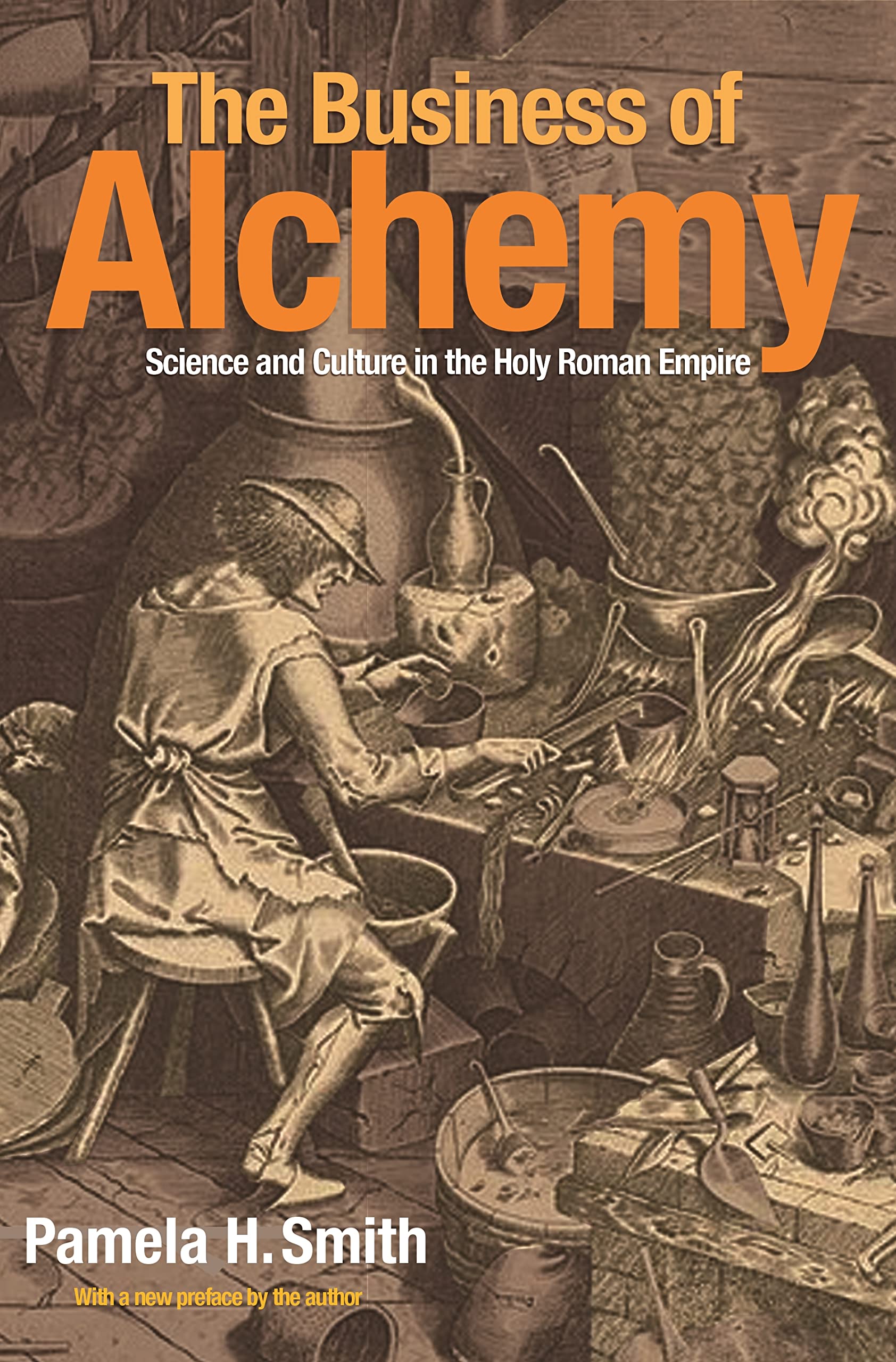
In The Business of Alchemy, Pamela Smith explores the relationships among alchemy, the court, and commerce in order to illuminate the cultural history of the Holy Roman Empire in the sixteenth and seventeenth centuries. In showing how an overriding concern with religious salvation was transformed into a concentration on material increase and economic policies, Smith depicts the rise of modern science and early capitalism. In pursuing this narrative, she focuses on that ideal prey of the cultural historian, an intellectual of the second rank whose career and ideas typify those of a generation. Smith follows the career of Johann Joachim Becher (16351682) from university to court, his projects from New World colonies to an oldworld Pansophic Panopticon, and his ideas from alchemy to economics. Teasing out the many meanings of alchemy for Becher and his contemporaries, she argues that it provided Becher with not only a direct key to power over nature but also a language by which he could convince his princely patrons that their power too must rest on liquid wealth.Agrarian society regarded merchants with suspicion as the nonproductive exploiters of others' labor; however, territorial princes turned to commerce for revenue as the cost of maintaining the state increased. Placing Bechers career in its social and intellectual context, Smith shows how he attempted to help his patrons assimilate commercial values into noble court culture and to understand the production of surplus capital as natural and legitimate. With emphasis on the practices of natural philosophy and extensive use of archival materials, Smith brings alive the moment of cultural transformation in which science and the modern state emerged.
⚠️ WARNING (California Proposition 65):
This product may contain chemicals known to the State of California to cause cancer, birth defects, or other reproductive harm.
For more information, please visit www.P65Warnings.ca.gov.