
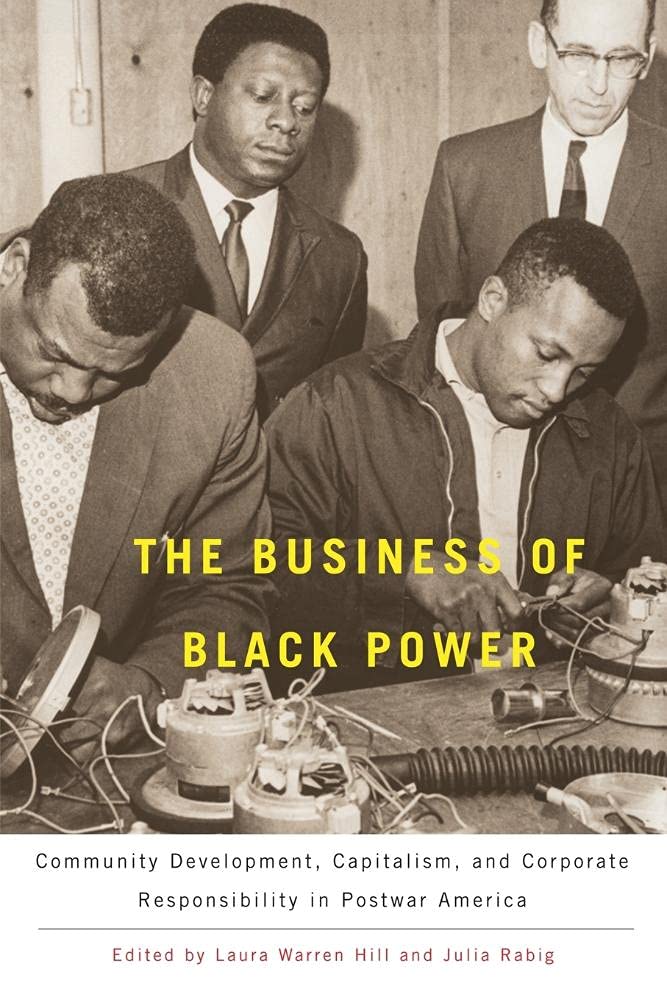
Title
The Business of Black Power: Community Development, Capitalism, and Corporate Responsibility in Postwar America,New
Sold by Ergodebooks, an authorized reseller.
Returns accepted within 30 days | support@ergodebooks.com
Shipping Information
- Free Standard Shipping — United States only
- Processing Time: 3–5 business days
- Estimated Delivery: 6–10 business days after dispatch
- Double-boxed, fully insured & discreetly packaged
- Tracking number sent via email once dispatched
Returns & Refund
Returns accepted within 30 days of delivery.
Damaged or Defective Item
Free return shipping + replacement or full refund
Wrong Item Received
Free return shipping + replacement or full refund
Change of Mind
Return shipping at customer's expense · 25% restocking fee applies
Payment Option

Explores business development in the Black Power era and the centrality of economic goals to the larger black freedom movement.The Business of Black Power emphasizes the centrality of economic goals to the larger black freedom movement and explores the myriad forms of business development in the Black power era. This volume charts a new course forBlack power studies and business history, exploring both the business ventures that Black power fostered and the impact of Black power on the nation's business world. Black activists pressed business leaders, corporations, and various levels of government into supporting a range of economic development ventures, from Black entrepreneurship, to grassroots experiments in economic selfdetermination, to indigenous attempts to rebuild innercity markets in thewake of disinvestment. They pioneered new economic and development strategies, often in concert with corporate executives and public officials. Yet these same actors also engaged in fierce debates over the role of business in strengthening the movement, and some African Americans outright rejected capitalism or collaboration with business.The seven scholars in this collection bring fresh analysis to this complex intersection of African Americanand business history to reveal how Black power advocates, or those purporting a Black power agenda, engaged business to advance their economic, political, and social goals. They show the business of Black power taking place in the streets, boardrooms, journals and periodicals, corporations, courts, and housing projects of America. In short, few were left untouched by the influence of this movement.Laura Warren Hill is assistant professor of history at Bloomfield College. Julia Rabig is a lecturer at Dartmouth College.
⚠️ WARNING (California Proposition 65):
This product may contain chemicals known to the State of California to cause cancer, birth defects, or other reproductive harm.
For more information, please visit www.P65Warnings.ca.gov.