If you have any questions, you are always welcome to contact us. We'll get back to you as soon as possible, withing 24 hours on weekdays.
Customer service
All questions about your order, return and delivery must be sent to our customer service team by e-mail at yourstore@yourdomain.com
Sale & Press
If you are interested in selling our products, need more information about our brand or wish to make a collaboration, please contact us at press@yourdomain.com
Help
If you have any questions, you are always welcome to contact us. We'll get back to you as soon as possible, withing 24 hours on weekdays.
Customer service
All questions about your order, return and delivery must be sent to our customer service team by e-mail at yourstore@yourdomain.com
Sale & Press
If you are interested in selling our products, need more information about our brand or wish to make a collaboration, please contact us at press@yourdomain.com
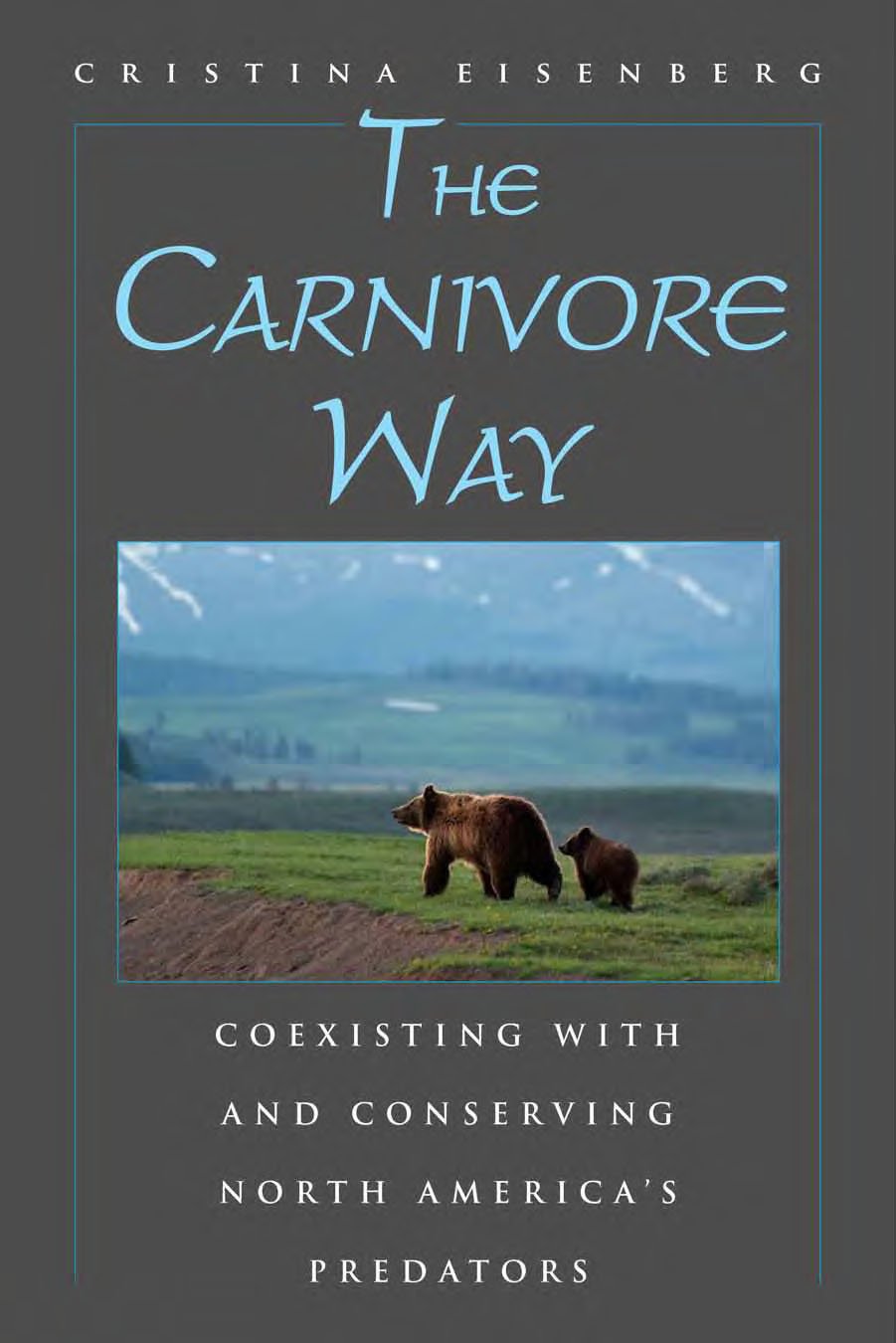
What would it be like to live in a world with no predators roaming our landscapes? Would their elimination, which humans have sought with ever greater urgency in recent times, bring about a pastoral, peaceful human civilization? Or in fact is their existence critical to our own, and do we need to be doing more to assure their health and the health of the landscapes they need to thrive?In The Carnivore Way, Cristina Eisenberg argues compellingly for the necessity of top predators in large, undisturbed landscapes, and how a continentallong corridora carnivore wayprovides the room they need to roam and connected landscapes that allow them to disperse. Eisenberg follows the footsteps of six large carnivoreswolves, grizzly bears, lynx, jaguars, wolverines, and cougarson a 7,500mile wildlife corridor from Alaska to Mexico along the Rocky Mountains. Backed by robust science, she shows how their wellbeing is a critical factor in sustaining healthy landscapes and how it is possible for humans and large carnivores to coexist peacefully and even to thrive.University students in natural resource science programs, resource managers, conservation organizations, and anyone curious about carnivore ecology and management in a changing world will find a thoughtful guide to large carnivore conservation that dispels longheld myths about their ecology and contributions to healthy, resilient landscapes.
⚠️ WARNING (California Proposition 65):
This product may contain chemicals known to the State of California to cause cancer,
birth defects, or other reproductive harm.
For MAP (Minimum Advertised Price) violations and Intellectual Property (IP) or Trademark concerns, please contact:
support@ergodebooks.com
⚠️ California Proposition 65 Warning: Some products sold on this website may expose you to chemicals known to the State of California to cause cancer, birth defects, or other reproductive harm. For more information, visit www.P65Warnings.ca.gov.