
Title
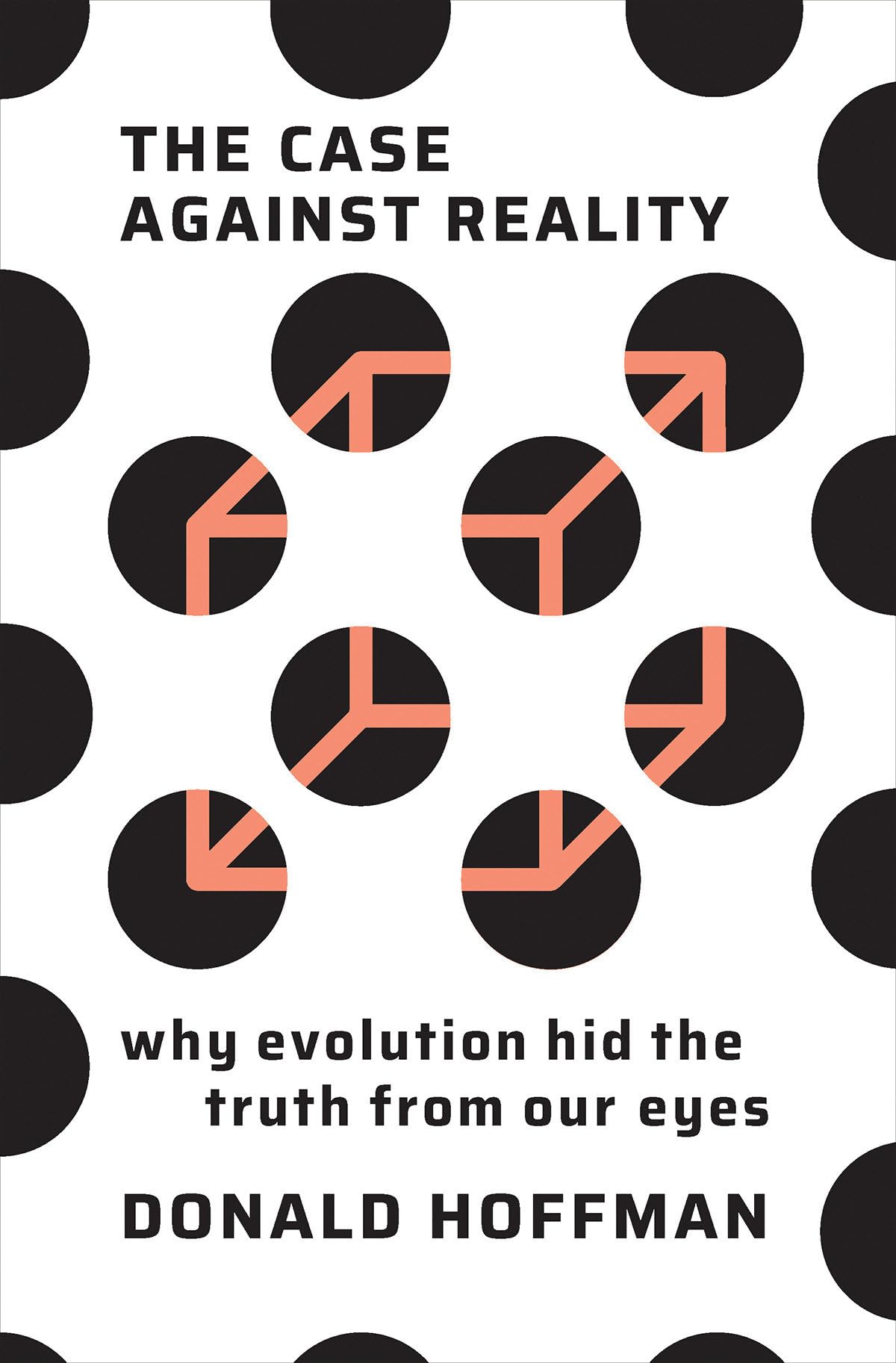
The Case Against Reality: Why Evolution Hid The Truth From Our Eyes
Sold by Ergodebooks, an authorized reseller.
Returns accepted within 30 days | support@ergodebooks.com
Shipping Information
- Free Standard Shipping — United States only
- Processing Time: 3–5 business days
- Estimated Delivery: 6–10 business days after dispatch
- Double-boxed, fully insured & discreetly packaged
- Tracking number sent via email once dispatched
Returns & Refund
Returns accepted within 30 days of delivery.
Damaged or Defective Item
Free return shipping + replacement or full refund
Wrong Item Received
Free return shipping + replacement or full refund
Change of Mind
Return shipping at customer's expense · 25% restocking fee applies
Payment Option

Can We Trust Our Senses To Tell Us The Truth?Challenging Leading Scientific Theories That Claim That Our Senses Report Back Objective Reality, Cognitive Scientist Donald Hoffman Argues That While We Should Take Our Perceptions Seriously, We Should Not Take Them Literally. How Can It Be Possible That The World We See Is Not Objective Reality? And How Can Our Senses Be Useful If They Are Not Communicating The Truth? Hoffman Grapples With These Questions And More Over The Course Of This Eyeopening Work.Ever Since Homo Sapiens Has Walked The Earth, Natural Selection Has Favored Perception That Hides The Truth And Guides Us Toward Useful Action, Shaping Our Senses To Keep Us Alive And Reproducing. We Observe A Speeding Car And Do Not Walk In Front Of It; We See Mold Growing On Bread And Do Not Eat It. These Impressions, Though, Are Not Objective Reality. Just Like A File Icon On A Desktop Screen Is A Useful Symbol Rather Than A Genuine Representation Of What A Computer File Looks Like, The Objects We See Every Day Are Merely Icons, Allowing Us To Navigate The World Safely And With Ease.The Realworld Implications For This Discovery Are Huge. From Examining Why Fashion Designers Create Clothes That Give The Illusion Of A More Attractive Body Shape To Studying How Companies Use Color To Elicit Specific Emotions In Consumers, And Even Dismantling The Very Notion That Spacetime Is Objective Reality, The Case Against Reality Dares Us To Question Everything We Thought We Knew About The World We See. 40 Illustrations; 8 Pages Of Color Illustrations
⚠️ WARNING (California Proposition 65):
This product may contain chemicals known to the State of California to cause cancer, birth defects, or other reproductive harm.
For more information, please visit www.P65Warnings.ca.gov.
- Q: What is the main argument of 'The Case Against Reality'? A: The main argument of 'The Case Against Reality' is that our senses do not report objective reality. Cognitive scientist Donald Hoffman explores how evolution has shaped our perceptions to prioritize survival and utility rather than accuracy.
- Q: Who is the author of 'The Case Against Reality'? A: The author of 'The Case Against Reality' is Donald Hoffman, a cognitive scientist known for his work on perception and consciousness.
- Q: What is the publication date of this book? A: The publication date of 'The Case Against Reality' is August 13, 2019.
- Q: What is the format of 'The Case Against Reality'? A: The book is available in hardcover format, providing durability and a quality reading experience.
- Q: How many pages does 'The Case Against Reality' have? A: The book contains a total of 272 pages.
- Q: Does 'The Case Against Reality' include illustrations? A: 'The Case Against Reality' includes 40 illustrations, with 8 pages dedicated to color illustrations, enhancing the reader's understanding of the concepts discussed.
- Q: What category does 'The Case Against Reality' belong to? A: 'The Case Against Reality' is categorized under Computer Science, reflecting its exploration of perception and reality through a scientific lens.
- Q: Is 'The Case Against Reality' suitable for a general audience? A: Yes, 'The Case Against Reality' is suitable for a general audience interested in science, perception, and philosophical questions about reality.
- Q: What themes are explored in 'The Case Against Reality'? A: The book explores themes such as the nature of reality, perception, evolution, and the implications of viewing our senses as tools for survival rather than truth.
- Q: What can readers expect to learn from 'The Case Against Reality'? A: Readers can expect to learn about the limitations of human perception, the evolutionary basis for our senses, and a critical examination of commonly held beliefs about reality.