
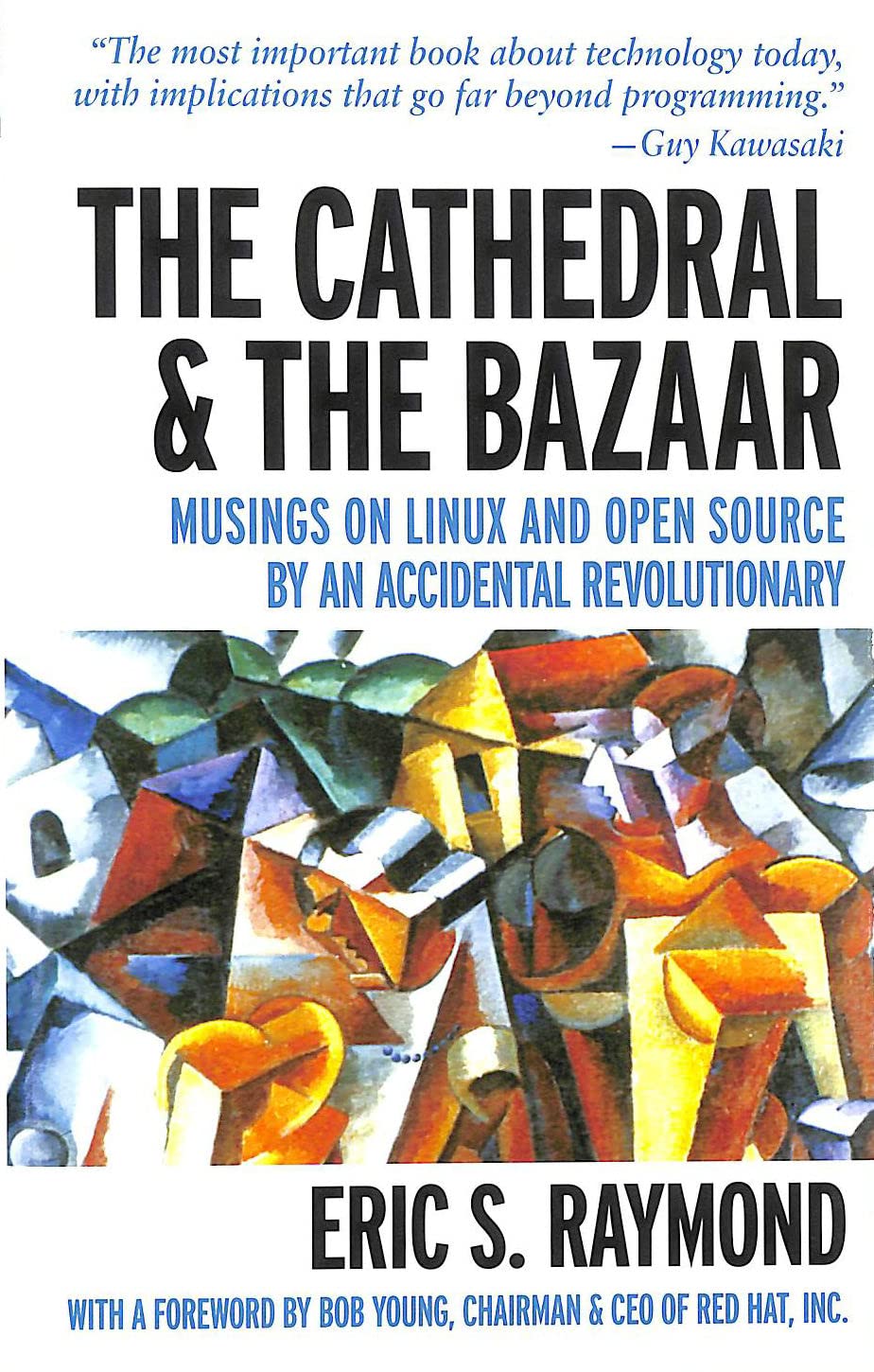
Title
The Cathedral And The Bazaar: Musings On Linux And Open Source By An Accidental Revolutionary
Sold by Ergodebooks, an authorized reseller.
Returns accepted within 30 days | support@ergodebooks.com
Shipping Information
- Free Standard Shipping — United States only
- Processing Time: 3–5 business days
- Estimated Delivery: 6–10 business days after dispatch
- Double-boxed, fully insured & discreetly packaged
- Tracking number sent via email once dispatched
Returns & Refund
Returns accepted within 30 days of delivery.
Damaged or Defective Item
Free return shipping + replacement or full refund
Wrong Item Received
Free return shipping + replacement or full refund
Change of Mind
Return shipping at customer's expense · 25% restocking fee applies
Payment Option

This Is How We Did It. Linus Torvalds, Creator Of The Linux Kernelit All Started With A Series Of Odd Statistics. The Leading Challenger To Microsoft'S Stranglehold On The Computer Industry Is An Operating System Called Linux, The Product Of Thousands Of Volunteer Programmers Who Collaborate Over The Internet. The Software Behind A Majority Of All The World'S Web Sites Doesn'T Come From A Big Company Either, But From A Loosely Coordinated Group Of Volunteer Programmers Called The Apache Group. The Internet Itself, And Much Of Its Core Software, Was Developed Through A Process Of Networked Collaboration.The Key To These Stunning Successes Is A Movement That Has Come To Be Called Open Source, Because It Depends On The Ability Of Programmers To Freely Share Their Program Source Code So That Others Can Improve It. In 1997, Eric S. Raymond Outlined The Core Principles Of This Movement In A Manifesto Called The Cathedral And The Bazaar, Which Was Published And Freely Redistributed Over The Internet.Mr. Raymond'S Thinking Electrified The Computer Industry. He Argues That The Development Of The Linux Operating System By A Loose Confederation Of Thousands Of Programmerswithout Central Project Management Or Controlturns On Its Head Everything We Thought We Knew About Software Project Management. Internetenabled Collaboration And Free Information Sharing, Not Monopolistic Control, Is The Key To Innovation And Product Quality.This Idea Was Interesting To More Than Programmers And Software Project Leaders. It Suggested A Whole New Way Of Doing Business, And The Possibility Of Unprecedented Shifts In The Power Structures Of The Computer Industry.The Rush To Capitalize On The Idea Of Open Source Started With Netscape'S Decision To Release Its Flagship Netscape Navigator Product Under Open Source Licensing Terms In Early 1998. Before Long, Fortune 500 Companies Like Intel, Ibm, And Oracle Were Joining The Party. By August 1999, When The Leading Linux Distributor, Red Hat Software, Made Its Hugely Successful Public Stock Offering, It Had Become Clear That Open Source Was The Next Big Thing In The Computer Industry.This Revolutionary Book Starts Out With A Brief History Of HackerdomThe Historical Roots Of The Opensource Movementand Details The Events That Led To The Recognition Of The Power Of Open Source. It Contains The Full Text Of The Cathedral & The Bazaar, Updated And Expanded For This Book, Plus Mr. Raymond'S Other Key Essays On The Social And Economic Dynamics Of Open Source Software Development.Open Source Is The Competitive Advantage In The Internet Age. The Cathedral & The Bazaar Is A Must For Anyone Who Cares About The Computer Industry Or The Dynamics Of The Information Economy. Already, Billions Of Dollars Have Been Made And Lost Based On The Ideas In This Book. Its Conclusions Will Be Studied, Debated, And Implemented For Years To Come.
⚠️ WARNING (California Proposition 65):
This product may contain chemicals known to the State of California to cause cancer, birth defects, or other reproductive harm.
For more information, please visit www.P65Warnings.ca.gov.
- Q: How many pages does this book have? A: This book has two hundred seventy-nine pages. It's a comprehensive read discussing the principles of open source software.
- Q: What is the binding type of this book? A: The binding type is hardcover. This makes it durable and suitable for long-term use.
- Q: What are the dimensions of this book? A: The dimensions are five point five one inches in length, one point one four inches in width, and eight point five inches in height.
- Q: Is this book suitable for beginners in programming? A: Yes, this book is suitable for beginners. It provides foundational insights into the open source movement and its impact on software development.
- Q: What age group is this book appropriate for? A: This book is appropriate for readers aged twelve and up. Its themes are best understood by those with a basic knowledge of technology.
- Q: How should I care for this book? A: To care for this book, keep it in a dry place and avoid exposure to direct sunlight. This will help maintain its condition.
- Q: Is this book safe for young readers? A: Yes, this book is safe for young readers. However, it may be more beneficial for those with an interest in technology.
- Q: Can I store this book on a shelf? A: Yes, you can store this book on a shelf. Its hardcover design allows it to stand upright alongside other books.
- Q: Are there any notable authors featured in this book? A: Yes, Eric S. Raymond is the main author. He is well-known for his contributions to the open source community.
- Q: What topics does this book cover? A: This book covers topics like open source software development, collaboration, and the historical context of the Linux operating system.
- Q: How do I return this book if I need to? A: To return this book, follow the return policy provided by the seller. Generally, you will need to package it securely and include any receipts.
- Q: What if the book arrives damaged? A: If the book arrives damaged, contact the seller immediately for a replacement or refund. They should provide instructions for returns.
- Q: Is this book a good choice for someone in tech? A: Yes, this book is an excellent choice for anyone in tech. It offers insights into the principles that drive the open source movement.
- Q: What should I do if I have trouble understanding the content? A: If you have trouble understanding the content, consider seeking additional resources or discussion groups focused on open source topics.
- Q: Does this book include any essays by the author? A: Yes, the book includes essays by Eric S. Raymond that discuss the social and economic dynamics of open source software.
- Q: Is this book part of a series? A: No, this book is not part of a series. It stands alone as a significant work on the open source movement.