If you have any questions, you are always welcome to contact us. We'll get back to you as soon as possible, withing 24 hours on weekdays.
Customer service
All questions about your order, return and delivery must be sent to our customer service team by e-mail at yourstore@yourdomain.com
Sale & Press
If you are interested in selling our products, need more information about our brand or wish to make a collaboration, please contact us at press@yourdomain.com
Help
If you have any questions, you are always welcome to contact us. We'll get back to you as soon as possible, withing 24 hours on weekdays.
Customer service
All questions about your order, return and delivery must be sent to our customer service team by e-mail at yourstore@yourdomain.com
Sale & Press
If you are interested in selling our products, need more information about our brand or wish to make a collaboration, please contact us at press@yourdomain.com
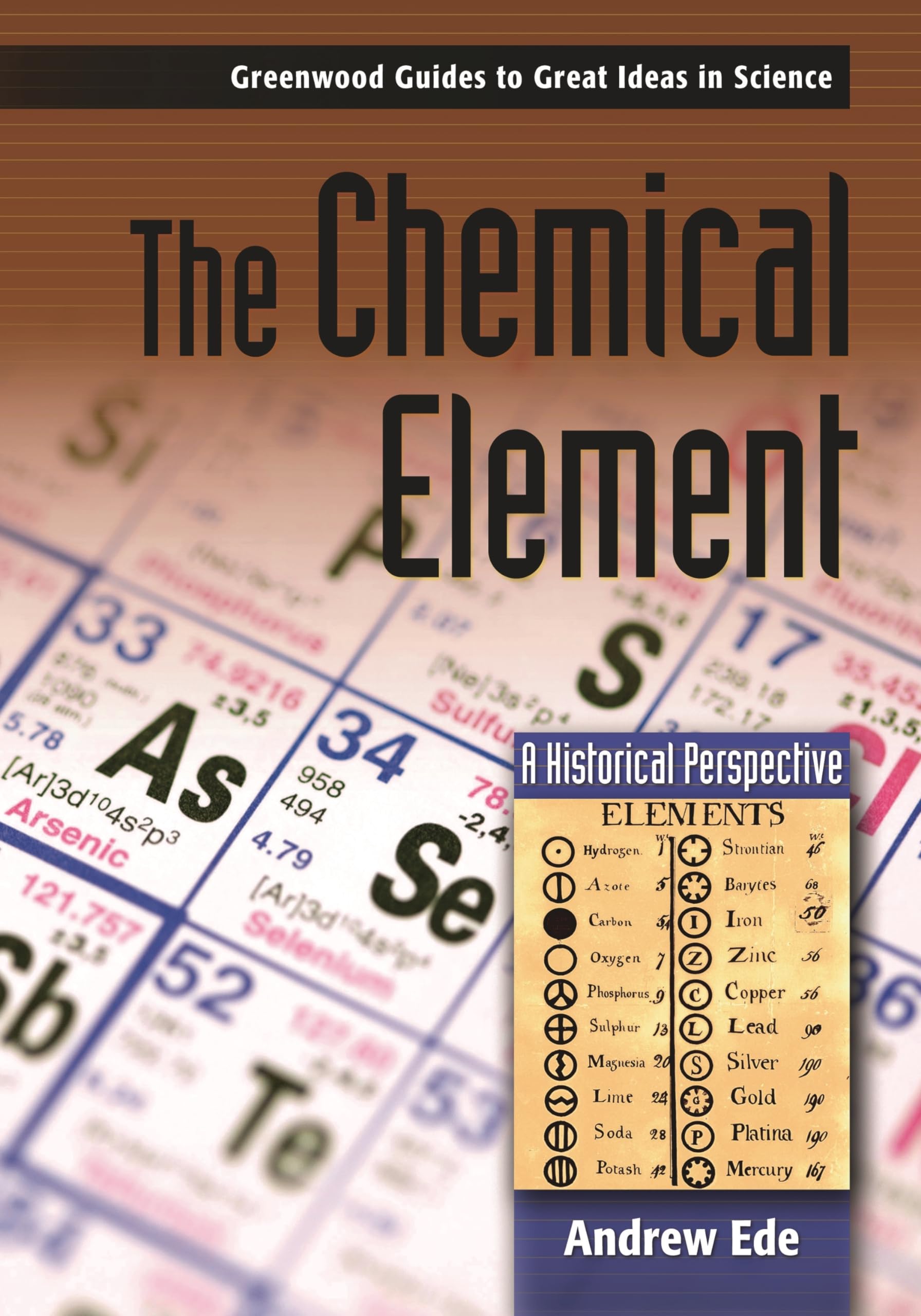
One of the most familiar features of any highschool chemistry lab is the Periodic Table of Elements. Elegant, informative, useful to any student in the lab the Periodic Table neatly summarizes our scientific knowledge of the chemical elements from hydrogen to uranium and beyond atomic number, atomic weight, isotopes, and more. But how did scientists discover all of these features of the elements? How did the Periodic Table come to be? And, even more basically, how did the concept of the chemical element come to dominate how scientists understand chemistry? This book shows readers the answers to these and other questions regarding the scientific understanding of matter.The Chemical Element, a volume in the Greenwood Guides to Great Ideas in Science, traces the history of this tremendously powerful concept from the ancient philosophers to the present day. The volume covers: the idea of the elements held by Aristotle and the other ancient Greek philosophers; how Chinese, Arabic and other ancient civilizations thought about the elements; Mendeleyev and the creation of the Periodic Table of Elements, the predictive power of which helped in the discovery of dozens of new elements; and the discovery of the artificial elements that are heavier than uraniumJargon and mathematics is kept to a minimum, and the volumes includes a timeline, a glossary, and a bibliography, making The Chemical Element an ideal resource for students researching chemistry and the history and nature of the scientific understanding of the world around us.
⚠️ WARNING (California Proposition 65):
This product may contain chemicals known to the State of California to cause cancer,
birth defects, or other reproductive harm.
For MAP (Minimum Advertised Price) violations and Intellectual Property (IP) or Trademark concerns, please contact:
support@ergodebooks.com
⚠️ California Proposition 65 Warning: Some products sold on this website may expose you to chemicals known to the State of California to cause cancer, birth defects, or other reproductive harm. For more information, visit www.P65Warnings.ca.gov.