
Title
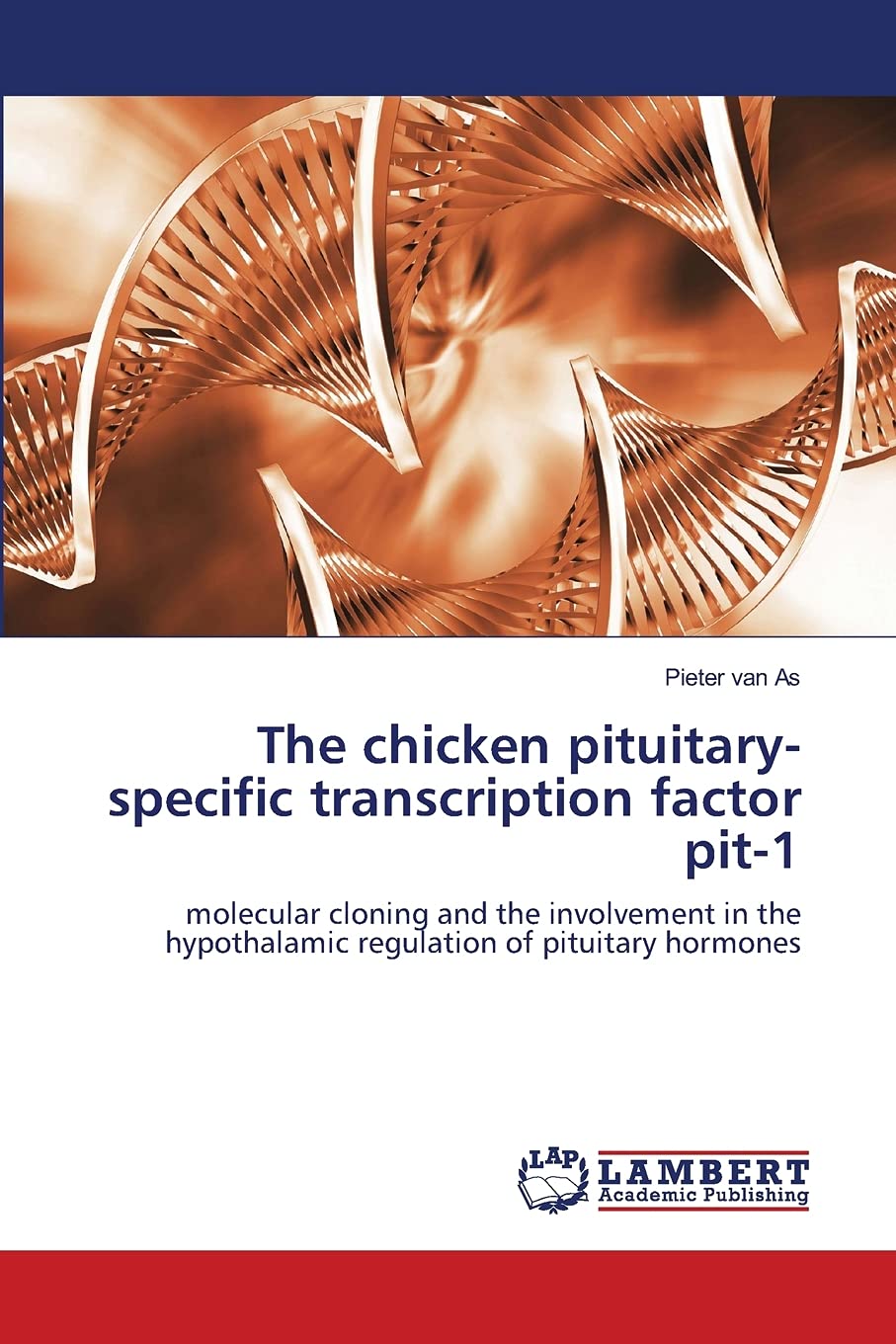
The chicken pituitaryspecific transcription factor pit1: molecular cloning and the involvement in the hypothalamic regulation ,Used
Sold by Ergodebooks, an authorized reseller.
Returns accepted within 30 days | support@ergodebooks.com
Shipping Information
- Free Standard Shipping — United States only
- Processing Time: 3–5 business days
- Estimated Delivery: 6–10 business days after dispatch
- Double-boxed, fully insured & discreetly packaged
- Tracking number sent via email once dispatched
Returns & Refund
Returns accepted within 30 days of delivery.
Damaged or Defective Item
Free return shipping + replacement or full refund
Wrong Item Received
Free return shipping + replacement or full refund
Change of Mind
Return shipping at customer's expense · 25% restocking fee applies
Payment Option

During mammalian anterior pituitary development, the pituitaryspecific transcription factor Pit1 has an important role in the regulation of the initial expression of GH, PRL, and TSHbeta encoding genes and in the development of the lactotropes, somatotropes and thyrotropes which produce PRL, GH, and TSH respectively. It is also known that Pit1 is involved in the hypothalamic regulation of these pituitary hormones, both at pre and postnatal stages. However, little is known about the structure, the initial expression and the regulatory functions of Pit1 in avian species. In this work, the structure and the initial appearance of the chicken Pit1 gene, and its involvement in the hypothalamic regulation of pituitary hormones are described. A newly developed quantitative assay is described which allows the study of the regulatory role of Pit1 within the hypothalamuspituitary axis in chicken. The results and hypotheses presented in this book should be useful to unravel even more of the complex interactions between the hypothalamus, the pituitary and several endocrine organs.
⚠️ WARNING (California Proposition 65):
This product may contain chemicals known to the State of California to cause cancer, birth defects, or other reproductive harm.
For more information, please visit www.P65Warnings.ca.gov.