
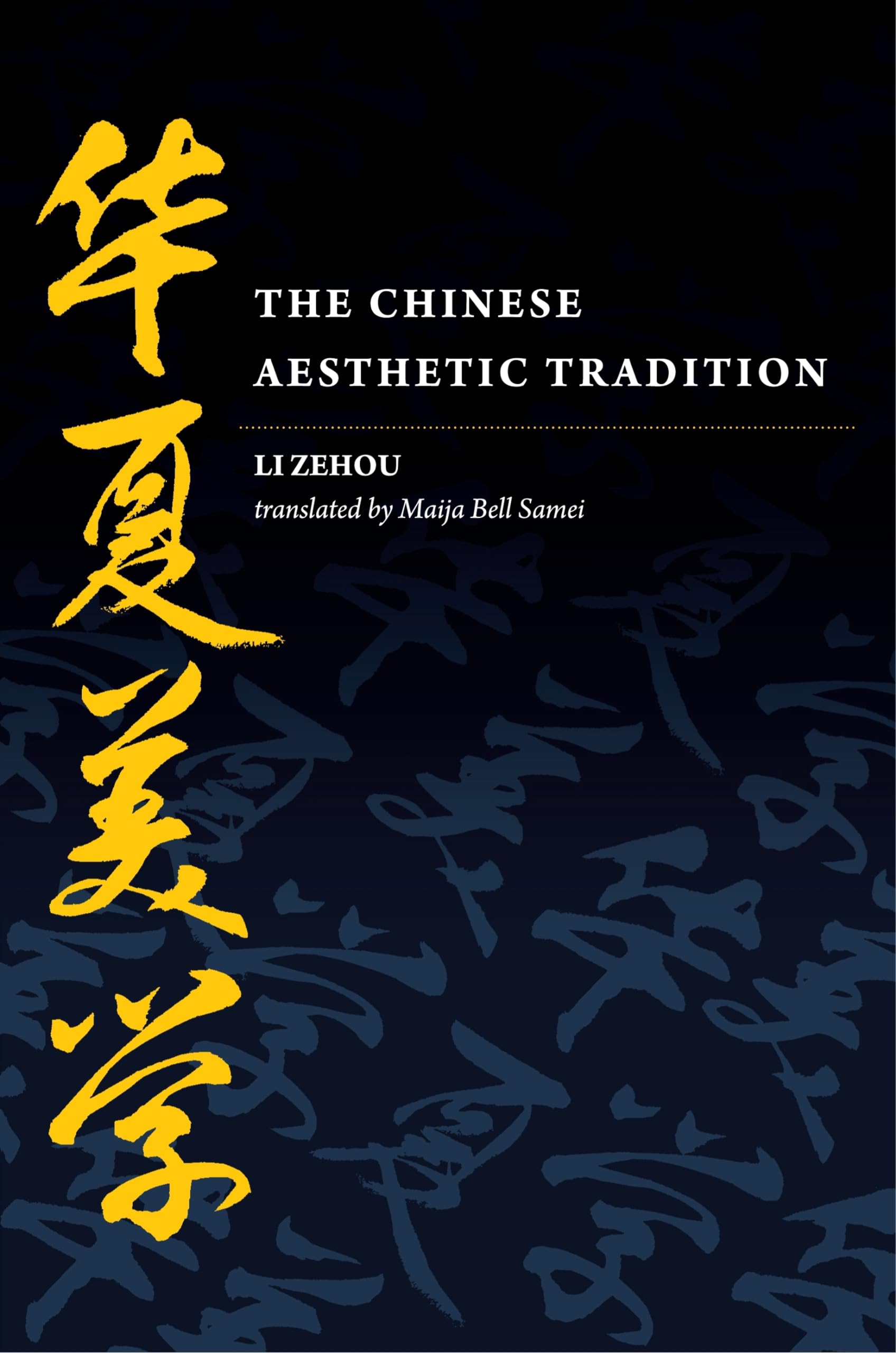
Title
The Chinese Aesthetic Tradition,Used
Sold by Ergodebooks, an authorized reseller.
Returns accepted within 30 days | support@ergodebooks.com
Shipping Information
- Free Standard Shipping — United States only
- Processing Time: 3–5 business days
- Estimated Delivery: 6–10 business days after dispatch
- Double-boxed, fully insured & discreetly packaged
- Tracking number sent via email once dispatched
Returns & Refund
Returns accepted within 30 days of delivery.
Damaged or Defective Item
Free return shipping + replacement or full refund
Wrong Item Received
Free return shipping + replacement or full refund
Change of Mind
Return shipping at customer's expense · 25% restocking fee applies
Payment Option

Li Zehou (b. 1930) has been an influential thinker in China since the 1950s. Before moving to the U.S. in the wake of the Tiananmen Square protests of 1989, Li published works on Kant and traditional and contemporary Chinese philosophy. The present volume, a translation of his Huaxia meixue (1989), is considered among Lis most significant works. Apart from its value as an introduction to the philosophy of one of contemporary Chinas foremost intellectuals, The Chinese Aesthetic Tradition fills an important gap in the literature of Chinese aesthetics in English. It presents Lis synthesis of the entire trajectory of Chinese aesthetic thought, from ancient times to the early modern period, incorporating preConfucian and Confucian ideas, Daoism, Chan Buddhism, and the influence of Western philosophy during the lateimperial period. As one of Chinas As one of China's major contemporary philosophers and preeminent authority on Kant, Li is uniquely positioned to observe this trajectory and make it intelligible to todays readers.The Chinese Aesthetic Tradition touches on all areas of artistic activity, including poetry, painting, calligraphy, architecture, and the "art of living." Right government, the ideal human being, and the path to spiritual transcendence all come under the provenance of aesthetic thought. According to Li this was the case from early Confucian explanations of poetry as that which gives expression to intent, through Zhuangzis artistic depictions of the ideal personality who discerns the natural way of things and lives according to it, to Chan Buddhistinspired notions that nature and words can come together to yield insight and enlightenment. In this enduring and stimulating work, Li demonstrates conclusively the fundamental role of aesthetics in the development of the cultural and psychological structures in Chinese culture that define "humanity."
⚠️ WARNING (California Proposition 65):
This product may contain chemicals known to the State of California to cause cancer, birth defects, or other reproductive harm.
For more information, please visit www.P65Warnings.ca.gov.