
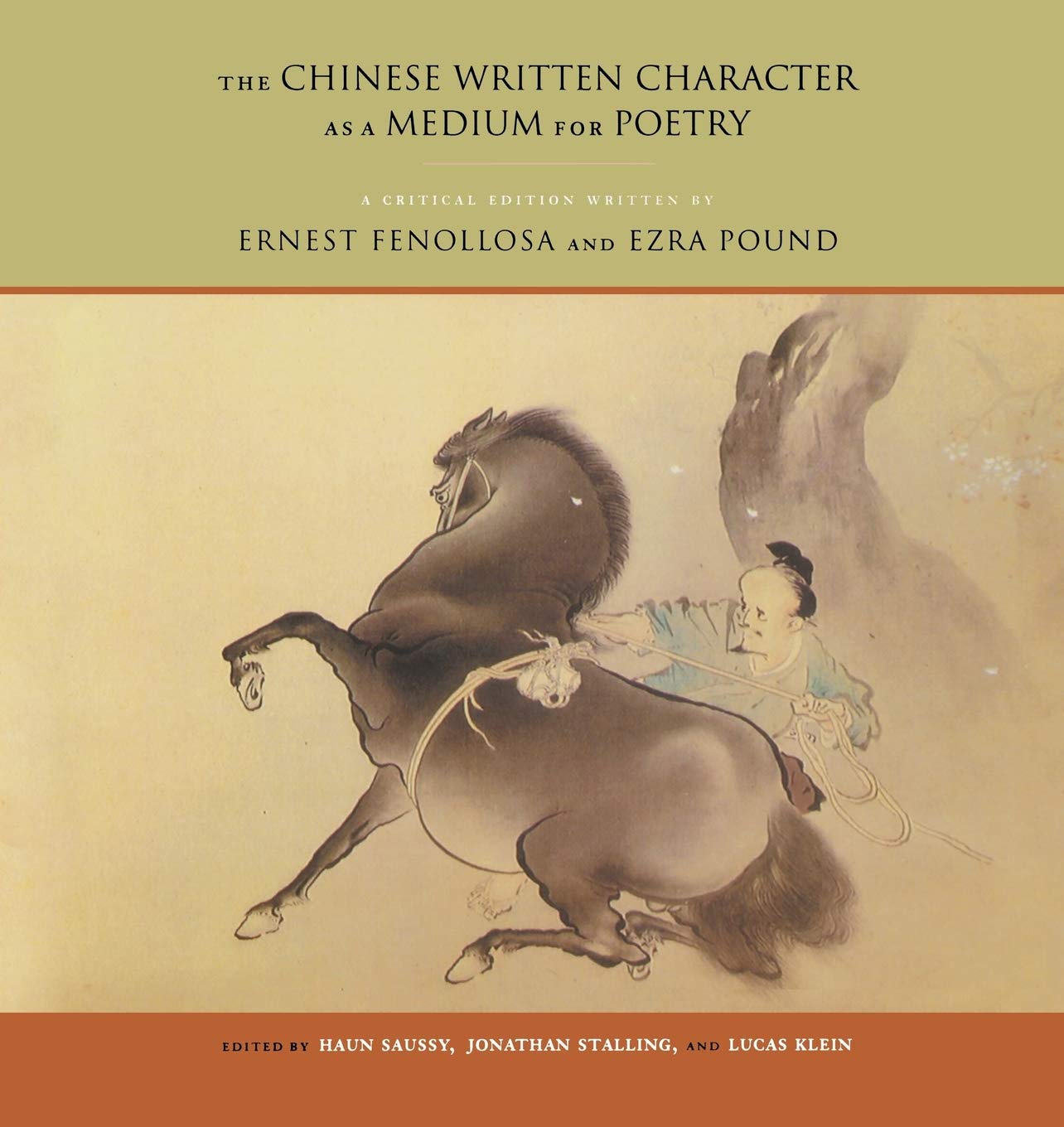
Title
The Chinese Written Character As A Medium For Poetry: A Critical Edition
Sold by Ergodebooks, an authorized reseller.
Returns accepted within 30 days | support@ergodebooks.com
Shipping Information
- Free Standard Shipping — United States only
- Processing Time: 3–5 business days
- Estimated Delivery: 6–10 business days after dispatch
- Double-boxed, fully insured & discreetly packaged
- Tracking number sent via email once dispatched
Returns & Refund
Returns accepted within 30 days of delivery.
Damaged or Defective Item
Free return shipping + replacement or full refund
Wrong Item Received
Free return shipping + replacement or full refund
Change of Mind
Return shipping at customer's expense · 25% restocking fee applies
Payment Option

First Published In 1919 By Ezra Pound, Ernest Fenollosas Essay On The Chinese Written Language Has Become One Of The Most Often Quoted Statements In The History Of American Poetics. As Edited By Pound, It Presents A Powerful Conception Of Language That Continues To Shape Our Poetic And Stylistic Preferences: The Idea That Poems Consist Primarily Of Images; The Idea That The Sentence Form With Active Verb Mirrors Relations Of Natural Force. But Previous Editions Of The Essay Represent Pounds Understandingit Is Fair To Say, His Appropriationof The Text. Fenollosas Manuscripts, In The Beinecke Library Of Yale University, Allow Us To See This Essay In A Different Light, As A Document Of Early, Sustained Cultural Interchange Between North Americaand East Asia.Pounds Editing Of The Essay Obscured Two Important Features, Here Restored To View: Fenollosas Encounter With Tendai Buddhism And Buddhist Ontology, And His Concern With The Dimension Of Sound In Chinese Poetry.This Book Is The Definitive Critical Edition Of Fenollosas Important Work. After A Substantial Introduction, The Text As Edited By Pound Is Presented, Together With His Notes And Plates. At The Heart Of The Edition Is The First Full Publication Of The Essay As Fenollosa Wrote It, Accompanied By The Many Diagrams, Characters, And Notes Fenollosa (And Pound) Scrawled On The Verso Pages. Pounds Deletions, Insertions, And Alterations To Fenollosas Sometimes Ornate Prose Are Meticulously Captured, Enabling Readers To Follow The Quasidialogue Between Fenollosa And His Posthumous Editor. Earlier Drafts And Related Talks Reveal The Developmentof Fenollosas Ideas About Culture, Poetry, And Translation. Copious Multilingual Annotation Is An Important Feature Of The Edition.This Masterfully Edited Book Will Be An Essential Resource For Scholars And Poets And A Starting Point For A Renewed Discussion Of The Multiple Sources Of American Modernist Poetry.
⚠️ WARNING (California Proposition 65):
This product may contain chemicals known to the State of California to cause cancer, birth defects, or other reproductive harm.
For more information, please visit www.P65Warnings.ca.gov.
- Q: What is the page count of this book? A: This book has two hundred forty pages. It provides a comprehensive exploration of Fenollosa's essay on the Chinese written language.
- Q: What are the dimensions of this book? A: The book measures seven point eight inches in length, zero point six inches in width, and eight point nine inches in height.
- Q: What type of binding does this book have? A: This book is a paperback edition. This type of binding is lightweight and flexible, making it easy to handle.
- Q: Who is the author of this book? A: The author is Ernest Fenollosa. He was a pivotal figure in introducing Chinese language concepts to American poetry.
- Q: What is the main theme of this book? A: The main theme focuses on the intersection of language and poetry through the lens of Chinese written characters. It discusses cultural exchange between North America and East Asia.
- Q: How should I read this book? A: You can read this book by exploring its critical edition format. It's suitable for scholars and poetry enthusiasts interested in modernist poetry.
- Q: Is this book suitable for beginners in poetry? A: Yes, it is suitable for beginners. The book provides insights into language and poetic imagery that can benefit novice poets.
- Q: Can I use this book for academic research? A: Yes, this book is an essential resource for academic research. It includes critical annotations and insights into Fenollosa's work.
- Q: How do I keep this book in good condition? A: To keep this book in good condition, store it in a cool, dry place away from direct sunlight. Handle it gently to avoid wear.
- Q: Is there a warranty for this book? A: No, there is no warranty for this book. However, you can typically return it if it arrives damaged or defective.
- Q: What if I receive a damaged copy of this book? A: If you receive a damaged copy, contact the seller for return instructions. Most sellers have return policies for damaged items.
- Q: What makes this edition critical? A: This edition is critical because it restores important features of Fenollosa's work that were previously obscured by Pound's edits.
- Q: How does this book compare to other poetry essays? A: This book stands out due to its unique focus on Chinese language and its influence on American poetry, unlike many Western poetry essays.
- Q: Can this book help improve my poetry writing skills? A: Yes, this book can help improve your poetry writing skills. It explores the relationship between language and imagery, which is essential for poets.
- Q: Is there a glossary of terms in this book? A: Yes, the book includes multilingual annotations that serve as a glossary for readers unfamiliar with specific terms.
- Q: What is the historical significance of this book? A: The book is historically significant as it documents early cultural interchange between North America and East Asia in the context of poetry.